How to Choose a Circular Saw
To choose a circular saw, match its power source and cut depth to your materials and workspace. Then compare handling, bevel settings and the full setup cost.
On this page (10 sections)
- What kind of work will your circular saw handle?
- Should you choose a cordless or corded saw?
- Which of these circular saws suits your work?
- What blade size and cut depth do you need?
- How much bevel capacity is useful?
- How do weight, grip and visibility affect control?
- What setup helps a circular saw cut accurately?
- Which safety features and care checks matter?
- What buying mistakes should you avoid?
- How to choose a circular saw for your next projects
To choose a circular saw, match cut depth, power source and handling to the work you'll do most often. Then check bevel settings, blade requirements and what you need to complete the setup.
Learning how to choose a circular saw starts with your materials, not the largest motor or longest feature list. For common lumber and sheet goods, compare standard 7-1/4 in saws alongside smaller models that meet your depth needs.
For a broader overview of saw types and buying choices, see our circular saw buying guide.
What kind of work will your circular saw handle?
Choose around your most common cut and thickest material. Include occasional jobs that the saw must handle, but don't let an unlikely project dictate every choice.
Write down the actual thickness of your boards or panels, whether cuts run across or along the grain, and whether you need bevels. Nominal lumber names aren't exact measurements, so measure unfamiliar stock.
| Typical work | What to prioritize |
|---|---|
| Plywood and other sheet goods | Stable support, clear cut line and a suitable guide |
| Home repairs and short crosscuts | Manageable handling and quick setup |
| Repeated framing cuts | Required depth, comfortable grip and a suitable blade |
| Angled cuts through thick boards | Capacity at the planned bevel angle |
| Work in several locations | Mobility and a practical power supply |
| Long sessions in one workspace | Continuous power or enough charged batteries |
Consider where the material will sit during the cut. A saw that feels comfortable at waist height may be awkward when you stretch across a full sheet.
A circular saw is useful for straight cuts, but tight curves call for another tool. Match the tool to the cut before choosing between circular saw models.
Should you choose a cordless or corded saw?
Choose cordless for mobility and corded for long sessions near an outlet. Both need a suitable blade and steady feed pressure to cut well.
Cordless power makes sense when you move between a garage, yard and work site. Existing compatible batteries can simplify the choice, but check the exact battery system rather than relying on the brand name.
Battery size also affects carrying weight and balance. Consider the assembled tool with the battery you plan to use, and allow for charging breaks or a spare during longer jobs.
A corded saw avoids battery charging and storage needs. Route its cable behind the saw, clear of the blade path, and check that it can reach the end of the cut without catching.
Use an extension cord with the gauge and length required by the saw's manual. Don't choose one only because its plug fits.
Compare the full setup cost: saw, required battery and charger, suitable blade, work supports and clamps. A tool-only purchase can leave several essentials still to buy.
Our cordless circular saw guide explains battery-related choices in more detail. For differences in motor layout and handling, read worm drive vs sidewinder circular saws.
Which of these circular saws suits your work?
Choose the DCS391B for cordless work within its capacity, the DCS590B for deeper cordless cuts, the SPT77WML-01 for a corded worm drive layout, or the 5280-01 for home projects near an outlet. Handling and the complete setup should settle the choice between models that cover your cuts.
DeWalt DCS391B: for buyers with compatible batteries
The DCS391B suits buyers who want cordless movement and don't need the capacity of a larger saw. Its magnesium shoe and rubber overmolded grip are useful features to consider when comparing support and control.
Choose it if you already have compatible batteries and its cut depth covers your boards at the angles you use. Battery and charger are sold separately, so buyers starting a new tool system need to budget for both.
Skip it if your planned cuts require more depth than it provides. Don't assume a smaller blade automatically makes the assembled saw the easiest option to hold.
DeWalt DCS590B: for deeper cordless cuts
The DCS590B suits buyers who need those cutting depths and want to work without a cord. It has a brushless motor and an electric brake that helps stop blade coasting after trigger release.
Its 57-degree bevel range includes stops at 45 and 22.5 degrees. Those settings matter if your projects call for them; ordinary square cuts don't need the extra range.
Choose it for a cordless setup with capacity matched to thicker work. Skip it if a smaller saw covers your needs or if buying a battery and charger separately makes corded power the more practical choice.
Skilsaw SPT77WML-01: for a corded worm drive setup
The SPT77WML-01 suits buyers who prefer a worm drive layout for repeated lumber cuts. It uses a 7-1/4 in blade and has a cut-ready depth system plus an anti-snag lower guard.
Its magnesium construction keeps weight at 11.5 lb, but you still need to be comfortable moving and guiding that weight. The included 24-tooth carbide blade and wrench cover the basic blade setup.
Choose it because the layout suits your working position and you have outlet access. Skip it if frequent carrying or a preference for a lighter tool matters more than drive style.
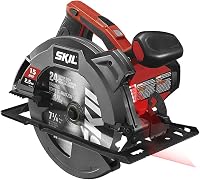
Skil 5280-01: for home projects near an outlet
The 5280-01 suits buyers who want corded power for lumber and sheet goods without adding a battery system. It weighs 8.7 lb and includes a 24-tooth carbide blade, wrench and carry bag.
A single-beam laser provides a visual reference, while the blower helps clear sawdust near the cut line. It also has a guarded trigger, power-on indicator and a positive bevel stop at 45 degrees.
Choose it for a workspace where you can manage the cord throughout each cut. Skip it if you regularly work beyond convenient outlet reach, and don't buy it expecting the laser to physically guide the saw.
What blade size and cut depth do you need?
Choose a saw with enough capacity at your working angle, rather than choosing by blade diameter alone. Bevel cuts reduce usable depth, so a saw that clears a board square may not clear it when tilted.
Check the maximum depth at both 90 and 45 degrees if angled cuts are part of your plans. For steeper bevels, confirm capacity at that specific setting before buying.
Don't plan routine work around flipping a thick board and meeting a cut from the other side. That takes careful alignment and isn't a substitute for suitable capacity.
Blade diameter and arbor size must match the saw's requirements. The blade's speed rating must also meet the tool's requirements; never fit an oversized blade to gain depth.
How to choose a circular saw blade for your cuts
Choose a blade approved for the material and finish you need. Blades with fewer teeth generally favor faster rough cuts, while finer-tooth blades can give cleaner panel edges with a slower feed.
A blade supplied for general wood cutting may not be the best choice for visible plywood edges. Allow for a separate finish blade if clean edges matter to the project.
Don't assume a wood-cutting saw can handle metal just because a metal blade fits. Both the saw and blade must be suitable for the material and method.
Read how to choose and change a circular saw blade before making a swap. Disconnect power first and follow the manual for blade direction, hardware and tightening.
How much bevel capacity is useful?
Choose a bevel range that covers your planned joints and angled cuts. Clear markings, firm locks and useful stops matter more than extra degrees you'll never use.
A bevel tilts the blade relative to the shoe. A miter changes the cut's direction across the board, so these are different adjustments even when both involve a 45-degree angle.
For occasional angled work, check that you can release, set and lock the bevel without struggling. Confirm that the shoe remains supported and that the tilted blade clears the work support beneath it.
Check an important angle on scrap before cutting project parts. Marks and stops help with setup, but a square or suitable angle gauge can confirm the result.
How do weight, grip and visibility affect control?
Choose a saw you can guide with both hands while keeping the shoe supported. Comfortable controls and a clear view of the cut are more useful than a feature you'll struggle to operate.
With the tool disconnected, check whether you can reach the trigger and any lock-off control without twisting your wrist. Hold the normal operating position and consider how you'll reach the end of a cut.
Compare cordless weight with the intended battery attached. Weight figures aren't useful comparisons if one includes the battery and another doesn't.
Blade position affects your view, but a blade-left or blade-right layout doesn't automatically suit every left- or right-handed user. Consider your stance, front-hand position and the direction of the cut.
A laser shows a reference line; it doesn't stop the saw from drifting. Dust blowers help visibility, but they don't collect the dust they move.
For long cuts, use a securely clamped straightedge or compatible guide. Our circular saw guides and guide rails comparison explains the options and the fit checks to make.
What setup helps a circular saw cut accurately?
Start with stable material, a clear blade path and the correct depth setting. Good support keeps the work from moving and reduces the chance of the cut closing on the blade.
Support sheet goods on a suitable cutting surface or supports that keep the panel stable. Check beneath the entire path for hidden screws, clamps, cables and anything else the blade could strike.
Clamp the work where needed, keeping clamps clear of the motor, shoe and blade. Arrange the offcut so it won't trap the blade or fall in a way that pulls the work.
Set depth as the manual directs, usually with only a small amount of blade projecting below the material. Leaving the blade at maximum depth for thin panels exposes more blade than needed.
Mark which side of the line is waste, then place the blade's kerf on that side. Cutting down the center of every mark can leave parts short.
When using a straightedge, account for the distance between the blade and the shoe edge that follows the guide. Verify the offset on scrap, including the correct shoe mark for a bevel cut.
Let the blade reach operating speed before entering the material. Feed steadily without forcing it, and release the trigger if it stalls while holding the saw still until the blade stops.
Our guide to cutting straight with a circular saw covers alignment in more detail. For repeated long sheet cuts, compare the setups in circular saw vs track saw.
Which safety features and care checks matter?
Prioritize a working lower guard, secure adjustments and controls you understand. An electric brake helps reduce coasting, but you must still wait for a complete stop before setting the tool down.
Before use, disconnect power and inspect the blade for damage, the shoe for damage and the adjustment locks for secure operation. Check that the lower guard moves and returns as the manual describes.
Never tie the guard open. Keep both hands in the intended grip positions and stand clear of the blade's cutting path.
Wear eye and hearing protection, and manage dust with controls suited to the material. Check the manual for any supported extraction connection rather than assuming every saw accepts a vacuum.
Clear debris from the shoe, vents and guard area with power disconnected. A damaged blade needs replacement, while resin buildup calls for cleaning by a method approved for the blade.
Follow model-specific care instructions, including any gearbox or lubrication requirements. Don't assume a worm drive saw has the same maintenance routine as another design.
Store the saw dry and protect its cord or battery contacts from damage. For the full cutting sequence, read how to use a circular saw alongside your tool's manual.
What buying mistakes should you avoid?
Avoid choosing by motor numbers, blade diameter or accessories alone. The right saw must cover the cut and remain manageable through the whole job.
- Ranking saws by RPM alone. No-load speed doesn't show how a saw handles every material, blade and feed rate.
- Treating voltage as a cross-brand power score. Battery platform compatibility and the saw's capacity are more useful starting points.
- Ignoring bevel depth. Check angled capacity before planning thick beveled parts.
- Budgeting only for the tool. Include power supplies, blades and safe work support.
- Expecting a laser to replace a guide. A visible line still requires steady steering.
- Buying extra capacity at the cost of control. Larger capability helps only if you can handle the tool safely.
- Forcing a dull or unsuitable blade. Stop and address the blade or setup when cutting becomes difficult.
How to choose a circular saw for your next projects
Choose the model that covers your material, power access and working position. Once those needs are met, use bevel stops, visibility aids and included accessories to break a close tie.
Pick the DCS391B if you want cordless movement, have compatible batteries and can work within its depth limits. Pick the DCS590B if your cordless work needs its greater cutting capacity or broader bevel settings.
Choose the SPT77WML-01 if you prefer its worm drive layout and can manage its weight. Choose the 5280-01 for home projects near an outlet when you want a corded setup with an included blade.
For a first purchase, compare the best circular saws for beginners. Our best circular saws page gives a broader model shortlist.
Do you need a compact circular saw?
Choose a compact saw when its capacity covers your smaller cuts and its handling suits the work. Check supported materials and depth before relying on one for thicker boards.
Our guide to whether mini circular saws are worth it explains those trade-offs. For long sheet cuts with a standard saw, use the DIY track saw guide to plan a compatible guide setup.
Frequently asked questions
What size circular saw should a beginner choose?
A 7-1/4 in saw is a practical starting point for common lumber and sheet goods; a 6-1/2 in model also works if its depth covers your projects, including bevel cuts. Choose the size you can guide steadily with both hands and the shoe supported.
Is a cordless or corded circular saw better?
Choose cordless for work away from outlets and corded for longer sessions where power is nearby; include compatible batteries and a charger in your cordless budget. For a corded saw, plan a clear cable route and use an extension cord that meets the manual's requirements.
Do I need a worm drive circular saw?
You don't need a worm drive saw for basic framing or home repairs; choose one if its handle position, balance and cutting view suit your work. Compare its weight with other designs, especially if you'll carry it often or repeatedly lift it onto a work surface.
How much cut depth do I need?
You need enough depth to pass through your thickest planned material at the angle of the cut; check both square-cut and bevel capacities before buying. Maximum capacity is different from the working depth setting, which should expose only the amount of blade below the work that the manual directs.
What safety features should I look for?
Look for a freely returning lower guard and trigger controls you can operate without shifting your grip; an electric brake helps reduce blade coasting after release. You still need secure work support, clear hand positions and eye and hearing protection, and you must wait for the blade to stop.