How to Change a Circular Saw Blade
To change a circular saw blade, disconnect power, secure the arbor, and remove the bolt as your manual directs. Fit a compatible blade with its arrow matching the saw's rotation arrow, reinstall the flange and bolt, then check blade clearance and guard movement before restoring power.
On this page (9 sections)
- How do you change a circular saw blade safely?
- What should you check before removing the old blade?
- How do you choose the right replacement blade?
- Which direction does the blade face?
- How do you remove and seat the blade correctly?
- Which saw suits you if you also need a replacement tool?
- What checks should you make before cutting?
- What if the bolt is stuck or the blade still cuts poorly?
- What should you choose before changing a circular saw blade?
To change a circular saw blade, disconnect power, remove the arbor bolt as your manual directs, and fit a compatible blade in the marked rotation direction. Reinstall the flange and bolt, then check blade clearance and lower-guard movement before reconnecting power.
You usually need a replacement blade rather than a new saw. Choose the blade for your material and cut, then use the steps below alongside your model's instructions.
How do you change a circular saw blade safely?
Change the blade with the saw unplugged or its battery removed, using the correct wrench and arbor-holding method. Bolt threads, flange arrangements, and lock controls vary, so keep the manual nearby.
- Disconnect power and let the blade stop completely.
- Set the saw on a stable surface and let a hot blade cool.
- Secure the arbor using the method in the manual.
- Loosen the arbor bolt in the specified direction.
- Remove the bolt and outer flange, noting their order and orientation.
- Retract the lower guard as instructed and remove the old blade.
- Clean the flange contact faces and install the compatible replacement in the correct rotation direction.
- Refit the flange and bolt, tighten as directed, and release the arbor lock.
- Check blade clearance and guard movement, then remove the wrench before restoring power.
Wear eye protection and use cut-resistant gloves when handling the removed blade, keeping fingers away from its edges. Remove handling gloves before operating the saw, and never rely on the trigger switch to prevent a start.
What should you check before removing the old blade?
Find the saw's model number and blade-change instructions before loosening anything. Confirm the bolt direction, wrench size, lock location, and required blade dimensions.
Clear a space for the bolt and flange so they cannot roll away. A quick photo before removal can help you remember the arrangement, but the manual remains the guide for reassembly.
How do you hold the arbor when changing a circular saw blade?
Engage the arbor lock only with power disconnected and the blade stopped, following the manual's engagement steps. If the saw uses another holding method, use its specified tools.
Don't jam a screwdriver or scrap of wood between the teeth and housing. That can damage the teeth or saw and leave your hand close to a sharp edge.
How do you choose the right replacement blade?
Choose a blade that matches the saw's approved diameter, arbor opening, speed requirement, and cutting material. Only after those checks should you compare tooth counts and finish quality.
- Diameter: Use a size approved in the saw's manual, not simply one that fits beneath the guard.
- Arbor opening: Match the shaft and mounting arrangement exactly; use adapters only when both manufacturers permit them.
- Speed: The blade's maximum permitted speed must meet or exceed the saw's maximum speed.
- Blade thickness: Follow any kerf and blade-body requirements, especially if the saw has a riving knife.
- Material: Choose a blade approved for the material and for use in your type of saw.
For wood, fewer teeth generally suit faster rough cuts, while more teeth generally suit cleaner crosscuts and sheet edges. Tooth shape and material also matter, so choose by the blade maker's stated use rather than tooth count alone.
A framing blade suits rough lumber work where speed matters more than a clean edge. For visible plywood edges or trim, choose a suitable finish blade and support the work carefully.
Don't assume a wood-cutting saw can cut metal just because a metal blade fits. Read whether a circular saw can cut metal before choosing that setup.
Which direction does the blade face?
Install the blade with its rotation arrow matching the saw's rotation arrow. Use those marks and the manual rather than the side carrying the printed label.
The bolt's loosening direction is a separate check. Don't use the blade arrow to guess which way to turn the wrench.
Our guide to which way a circular saw blade goes explains the direction marks and tooth orientation. If you cannot confirm the direction, stop before assembly.
How do you remove and seat the blade correctly?
Remove the bolt and outer flange with the arbor secured, then keep the mounting parts in their original order. Retract the guard as instructed and lift the blade clear by its body, avoiding the teeth.
Wipe loose dust and debris from the flange contact faces with a dry cloth. Packed debris can prevent the blade from sitting flat and cause wobble.
Inspect the bolt, flanges, and mounting surfaces for damage before fitting the replacement. Don't cover up damaged parts by tightening harder.
Seat the blade fully against the inner flange, then reinstall the outer flange in its required orientation. Start the bolt carefully by hand where the manual allows, avoiding cross-threading.
Tighten using the specified wrench and method. Don't add oil, grease, thread-locking compound, a wrench extension, or an impact tool unless the manufacturer calls for it.
Which saw suits you if you also need a replacement tool?
Keep a working saw if a compatible blade solves the problem. If you also need a tool, choose between these models by power source, blade size, and the features you will use.
DeWalt DCS391B: for cordless cutting
The DeWalt DCS391B 20V Circular Saw suits buyers who want cordless movement and a 6.5-inch blade format. Its magnesium shoe and rubber overmolded grip are useful features to weigh alongside battery compatibility.
Battery and charger are sold separately, so account for both if you aren't already equipped. Skip it if your goal is to use spare 7-1/4-inch blades or work from an outlet without managing batteries.
DeWalt DWE575SB: for corded work with an electric brake
The DeWalt DWE575SB Corded Circular Saw suits buyers who work near power and want an electric brake. It weighs 8.8 lb and includes a carbide-tipped 7-1/4-inch blade and blade wrench.
The brake stops the blade after trigger release, but you must still wait for a complete stop before handling the saw. Skip it if managing an extension cord would interfere with your workspace.
Skil 5280-01: for keeping blade-change tools together
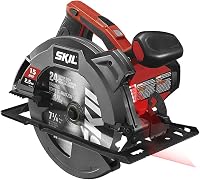
The Skil 5280-01 Corded Circular Saw suits buyers who want a spindle lock and on-tool wrench storage. Its included 24-tooth carbide blade provides a starting point for wood cutting, while the laser and dust blower help you see the cut line.
Those visibility aids don't hold the saw straight or replace workpiece support. Skip it if you need cordless movement or have made an electric brake a requirement.
Our circular saw buying guide explains the wider choices. For help weighing first-tool needs, see circular saws for beginners.
What checks should you make before cutting?
With power disconnected, check blade seating, mounting parts, clearance, and guard return using the manual's inspection steps. Confirm that the arbor lock is released and the lower guard closes freely.
Remove the wrench and loose tools before reconnecting power. Follow the manual's no-load check, keeping yourself clear of the blade path.
Make the first cut in properly supported scrap, with depth set as the manual directs. Release the trigger immediately if you notice unusual vibration, scraping, or noise, then wait for a stop and disconnect power.
Our guide to how to use a circular saw covers support and cutting setup. Once the blade runs correctly, how to cut straight with a circular saw helps with guides and cut-line control.
What if the bolt is stuck or the blade still cuts poorly?
For a stuck bolt, recheck loosening direction, wrench fit, and arbor engagement before applying more force. A rounded bolt, damaged lock, or mounting part that will not release calls for manufacturer support or qualified repair.
Poor cuts don't always mean the blade needs replacing. With power disconnected, inspect for resin buildup, dull edges, damage, and a blade type that does not suit the cut.
Clean a sound blade using the blade maker's approved method, and dry it before storage. Keep spare blades protected so their teeth cannot strike other tools.
Stop using a blade that is cracked, bent, or missing teeth. Don't force a dull blade through the work; arrange suitable sharpening if permitted, or replace it.
What should you choose before changing a circular saw blade?
For how to change a circular saw blade, the decision starts with fit and intended use: choose an approved rough-cut blade for framing work or a suitable finish blade for cleaner visible edges. Keep your current saw if it accepts the blade and its guards and mounting parts work correctly.
If you also need a saw, choose the DCS391B for cordless work, the DWE575SB for corded use with a brake, or the Skil for its spindle lock and stored wrench. Compare broader tool needs in our circular saw buying guide, then complete the installation checks before cutting.
Frequently asked questions
Do you turn a circular saw blade bolt clockwise or counterclockwise?
The loosening direction depends on the saw, so check its manual or a marked bolt-loosening arrow before applying force. The blade's rotation arrow does not necessarily show the bolt direction.
Use the specified wrench with power disconnected, and secure the arbor using the method approved for that model.
How tight should a circular saw blade bolt be?
Tighten the arbor bolt using the method and torque, if given, in your saw's manual. There is no single torque value for every circular saw.
Seat the blade and flanges correctly first, and avoid wrench extensions or impact tools unless allowed by the manufacturer.
Can you change a circular saw blade without an arbor lock?
Yes, if the saw provides another approved way to hold the arbor while loosening the bolt. Some designs use a different wrench arrangement, so follow the exact model's instructions.
Never grip the blade teeth by hand or wedge a tool against them to prevent rotation.
How do you know which way a circular saw blade goes?
Match the blade's rotation arrow to the saw's rotation arrow, following the model's manual. The printed label can face different sides on different blades, so it is not a reliable guide.
If the arrows are missing or unclear, confirm the direction with the manufacturer before installation.