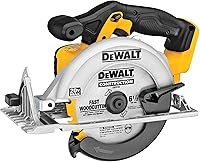
How to Choose a Cordless Circular Saw
Choose a cordless circular saw by matching cut depth to your thickest material, including bevel cuts, then check battery compatibility and handling. Pick a compact model for work within its capacity or a larger saw when you need deeper cuts.
On this page (12 sections)
- What should you check first when choosing a cordless circular saw?
- How much cut depth do you need?
- Is a compact cordless saw enough?
- Which blade size fits general cordless circular saw work?
- Does battery platform matter more than motor speed?
- How much should weight and balance affect your choice?
- Which controls and features are useful?
- When should you choose a full-size cordless saw?
- How should you set up the saw before the first cut?
- Which cutting mistakes should you avoid?
- How do you care for a cordless circular saw?
- How do you choose the right cordless circular saw?
Choose a cordless circular saw by matching cut depth to your thickest regular material, then check battery compatibility, handling and bevel controls. Buy enough capacity for your work without choosing a larger tool solely for its blade diameter.
Start with 3 jobs you expect to do, such as trimming boards, cutting plywood or making angled framing cuts. Our complete circular saw buying guide explains the broader choices between saw styles.
What should you check first when choosing a cordless circular saw?
Start with material thickness, cutting angle and how often you cut. These tell you more about the saw you need than a motor speed or a long feature list.
Measure the actual stock rather than relying on its trade name. Nominal lumber sizes describe a size category, so the number in the name may differ from the thickness you need to cut.
Write down your deepest straight cut and deepest bevel cut separately. A saw that clears a board at 90 degrees may lack the depth to finish an angled cut through that same board.
| Saw size | Consider it for | Check before buying |
|---|---|---|
| 4-1/2 in | Smaller stock and limited workspace | Straight and bevel capacity, handle layout |
| 6-1/2 in | General board and panel work | Actual cut depth, battery fit and shoe adjustments |
| 7-1/4 in | Work that needs greater cut depth | Capacity at your cutting angles and working weight |
Also decide whether you need occasional repair cuts or repeated cutting sessions. A homeowner making a few shelf parts has different charging needs from someone cutting lumber throughout the day.
How much cut depth do you need?
Choose a saw that finishes your usual cut in one pass at the required angle. Plan around its stated cutting capacity, rather than trying to make an undersized saw cover regular work with repeated passes.
The DeWalt DCS590B has a maximum depth of 2-9/16 in at 90 degrees and 2 in at 45 degrees. Those figures give you a clear reference for comparing thicker stock and bevel work.
Allow for the setup as well as the wood. A guide or accessory that raises the shoe above the workpiece reduces how much blade can reach through the material.
Maximum capacity also differs from the depth setting you use for each cut. Set the blade for the material according to the manual, rather than leaving it fully extended for thin panels.
If your work exceeds a saw's capacity often, choose another size or cutting method. Turning stock over to meet a cut from the other side adds alignment work and should not be your normal buying plan.
Is a compact cordless saw enough?
A compact saw is enough when it covers both your straight cuts and bevel cuts. Choose it for a defined set of jobs, rather than assuming a small tool will replace every larger saw.
The DeWalt DCS571B uses a 4-1/2 in blade and a bevel gear design that allows cuts through 2x material at 90 degrees. It can cut 1x dimensional lumber at 45 degrees.
Its removable auxiliary handle gives you another designated grip, while onboard blade key storage keeps the key close for blade changes. An electronic brake and dust port add useful controls for repeated setup and cutting.
Choose the DCS571B for smaller board and panel jobs that fit those limits, especially if you already use compatible DeWalt batteries. Its included rip fence also gives you an option for cuts parallel to a suitable board edge.
Skip it as your main saw if thick bevel cuts are common. Also check that the tool body has room to travel, since a small blade does not mean the entire saw fits every tight spot.
Our mini circular saw guide explains where smaller saws fit and when a standard-size model makes more sense.
Which blade size fits general cordless circular saw work?
A 6-1/2 in saw is worth considering for mixed board and panel work, provided its exact capacity covers your materials. The DeWalt DCS391B and Milwaukee M18 2630-20 offer two battery-platform routes in this size.
The DCS391B has a magnesium shoe, rubber overmolded grip and a bevel range from 0 to 50 degrees. Those features make it a useful candidate for buyers who alternate between square cuts and angled work.
Choose the DCS391B if you already own compatible DeWalt batteries and need a general saw for household projects. Confirm its cutting depth against your stock before treating blade size as proof that it will finish every cut.
Skip it if an electric brake is a deciding requirement and you want a model with that feature confirmed here. The DCS571B and DCS590B both offer one.
The Milwaukee M18 2630-20 has magnesium upper and lower guards, an aircraft aluminum shoe and a soft-grip handle. Milwaukee describes its uses as framing, finishing, carpentry, plumbing and electrical work.
Choose the Milwaukee if you already use compatible M18 batteries and want a saw for varied construction tasks. Its guard and shoe materials are useful points to compare when the tool will move between work areas.
Skip it if you have no M18 equipment and another compatible platform already covers your needs, unless its handling gives you a clear reason to switch. Buying a second battery system adds charging equipment and another set of batteries to manage.
Does battery platform matter more than motor speed?
Battery compatibility usually affects your buying decision more than a small difference in stated RPM. A compatible battery system can reduce what you need to buy and make charging easier across several tools.
Check the exact saw and battery combination in the manufacturer's compatibility guidance. A shared brand name or similar voltage number does not mean two products work together.
All 4 options here are tool-only choices, so budget for compatible batteries and charging equipment if you need them. Include a suitable blade and any cutting guide in that plan.
Plan cordless circular saw runtime around the job
Plan battery needs around your material and cutting schedule. Long cuts through thick wood demand more sustained work than a few short cuts in thin stock.
DeWalt says the DCS571B can cut up to 369 linear feet of 3/4 in OSB using a DCB205 battery. That claim applies to a named battery and task, so it is not a runtime promise for every material.
A higher amp-hour figure generally means more stored charge within a compatible battery range, but runtime still varies with the blade, material and feed rate. Battery choice can also affect working weight and the saw's performance.
For occasional repairs, charging between projects may be enough. For repeated cutting, a compatible spare lets you work while another battery charges, provided the charging schedule keeps up.
Do not rank saws by no-load RPM alone. It describes blade speed without a cut underway and does not tell you how steadily the saw will work through your material.
How much should weight and balance affect your choice?
Judge handling with the intended battery attached, because that is the tool you will lift and guide. Weight matters most when you move between cuts often or work away from a bench.
The DCS571B weighs 6.5 lb, while the Milwaukee weighs 7.3 lb. Confirm whether quoted weights include a battery before comparing them as ready-to-use tools.
If possible, hold the saw with its intended battery before buying. Check whether you can reach the controls, use the designated grips and see the cut line without an awkward stance.
Blade position matters here too. A left- or right-side blade changes your sightline and where the shoe rests, but neither layout removes the need to keep both hands clear of the cutting path.
Think about storage and transport as well. A saw that fits your shelf but leaves no space for spare blades, batteries and its charger may need a different storage plan.
Which controls and features are useful?
Choose controls that make your regular cuts easier to set and repeat. A secure shoe, readable adjustments and accessible handles deserve attention before small convenience features.
Check that the depth and bevel controls lock firmly. A bevel scale gets you close, but careful work may require checking the angle with a square and making a sample cut in scrap.
An electric brake reduces blade coasting after trigger release. Wait for a complete stop before setting the saw down, and never treat a brake as protection from blade contact.
A dust port can help collect sawdust when connected to suitable extraction equipment. Check the adapter and hose fit, then route the hose so it cannot pull the saw off course.
For long panel cuts, a suitable guide may help more than another motor feature. Our guide to circular saw guides and guide rails explains the options and compatibility checks.
When should you choose a full-size cordless saw?
Choose a full-size model when deeper cuts or regular bevel work justify it. The DCS590B is the option here for buyers who need its stated straight and angled cutting capacity.
It has a brushless motor, electronic brake and a bevel range reaching 57 degrees, with stops at 45 and 22.5 degrees. Its blade sits to the right of the motor, and it uses a top handle layout.
Choose the DCS590B for thicker stock and angled work that exceeds the compact model's limits. Its bevel stops also suit projects that call for repeated cuts at those angles.
Skip it if your work mostly involves thin panels and small repairs that a smaller saw already covers. It weighs 9.88 lb, so consider how that figure and your chosen battery fit repeated lifting.
If you cut mostly at a fixed bench near an outlet, compare a corded saw before committing to another battery system. Cordless freedom is most useful when moving the work or managing a cable would slow you down.
How should you set up the saw before the first cut?
Install a suitable blade, secure the material and check the saw's adjustments before connecting the battery. Follow the model's manual for assembly, guard checks and depth settings.
Match the blade diameter, arbor and speed rating to the saw's requirements. Choose a blade intended for the material, rather than assuming a wood blade can handle anything the motor can turn.
For wood, fewer teeth generally favor faster rough cuts, while more teeth can help produce a cleaner edge. Blade design also matters, so choose by the blade's stated use rather than tooth count alone.
Remove the battery before changing the blade. Our guide to changing a circular saw blade covers the process and the checks to make before reconnecting power.
Support the board or sheet so the cut stays open as you move forward. Keep the main shoe supported, allow the offcut to separate without trapping the blade, and check for clearance beneath the work.
Clamp the material and any guide where they cannot obstruct the saw. Mark which side of the line is waste, then account for the blade's kerf so the finished piece stays the intended size.
If you are new to the tool, read how to use a circular saw before making the first cut.
Which cutting mistakes should you avoid?
Avoid forcing the saw, twisting it in the cut or changing direction with the blade engaged. A steady feed and a supported workpiece help the blade follow its path.
Let the blade reach operating speed before entering the material, as directed in the manual. If the saw strains or slows, ease the feed rather than pushing harder.
If the blade binds, release the trigger and hold the saw still until the blade stops. Remove the battery before checking for a pinched kerf, poor support, a dull blade or an incorrect depth setting.
Do not pull a saw backward through the cut while the blade is moving. If you need to restart, follow the manual's procedure for clearing and aligning the blade first.
Another common mistake is correcting a wandering cut by steering sharply. Stop and reset the setup instead, and use these steps for cutting straight with a circular saw to improve your guide and support arrangement.
Wear appropriate eye and hearing protection, manage dust and keep hands away from beneath the material. Stand clear of the likely kickback path and use the grips specified in the manual.
How do you care for a cordless circular saw?
Keep the blade, guards and shoe clean, and inspect them before use. Remove the battery before cleaning or checking parts near the blade.
Clear sawdust from vents and adjustment areas using the method allowed in the manual. Check that the lower guard moves freely and returns properly, without tying or holding it open.
Inspect the blade for damaged teeth, cracks or buildup. A dull or dirty blade can increase cutting effort, so address the blade before assuming the saw needs more power.
Check the shoe and locking controls after a knock or drop. A shoe that no longer sits flat can affect both alignment and support during a cut.
Store batteries away from moisture and temperature extremes, following their charging and storage instructions. Protect the battery terminals from loose metal objects and replace damaged packs through the proper service or recycling route.
How do you choose the right cordless circular saw?
Pick the cordless circular saw that covers your hardest regular cut, then use battery fit and handling to make the final choice. Compare occasional unusual jobs separately so they do not dictate a tool you find awkward every week.
- Choose the DCS391B for general household cutting on a compatible DeWalt platform, after confirming its cut depth.
- Choose the DCS571B for smaller jobs within its straight and bevel limits, with useful compact-saw controls.
- Choose the Milwaukee M18 2630-20 for varied construction work when compatible M18 batteries already make sense for your tools.
- Choose the DCS590B when thicker material and deeper bevel cuts justify its larger format and working weight.
Before ordering, confirm the battery and charger plan, blade requirements and space for your cutting setup. Our best cordless circular saws roundup offers more product comparisons.
If the battery decision is still open, use how to choose a circular saw to weigh cordless convenience against the needs of your workspace.
Frequently asked questions
What size cordless circular saw should I buy?
Choose a blade size that gives your saw enough cut depth for your thickest regular material, including angled cuts; a compact model can cover smaller work, while a larger saw may handle deeper cuts. Check the exact model's capacity at both 90 and 45 degrees before deciding.
Are cordless circular saws powerful enough for framing?
A cordless circular saw can suit framing when its cutting capacity and intended applications match the lumber and cuts involved; plan battery capacity and charging around repeated work. Motor speed alone does not guarantee cutting strength, and a runtime claim for sheet material does not predict runtime in thick lumber.
Should I buy a compact circular saw or a full-size one?
Buy a compact saw when it covers your regular cuts and its handle layout suits your work; choose a larger model when you need deeper straight or bevel cuts. Compare working weight with the battery attached, since a smaller blade does not automatically mean less weight or easier handling.
Do cordless circular saws come with batteries?
Kits may include batteries and a charger, while bare tools require them separately; confirm the package contents and the exact battery platform before buying. If you already own batteries, check compatibility with the saw model rather than relying on a shared brand name or a similar voltage number.
What features matter most on a cordless circular saw?
Cut capacity and battery compatibility matter first, followed by handling and adjustments that stay secure; an electric brake, auxiliary handle, dust port and onboard blade key storage can make regular tasks easier. Choose features around your work, and keep proper material support and guard operation part of every setup.