10 Best Circular Saws (November 2026)
The best circular saws include the DeWalt DCS391B 20V Circular Saw for everyday cordless projects, the DeWalt DCS571B 4-1/2 Inch Circular Saw for small project work, and the DeWalt DWE575SB Corded Circular Saw for outlet-side workshop work.
On this page (6 sections)
The DeWalt DCS391B is the best circular saw for everyday cordless wood cuts, especially if you already have compatible batteries. Choose the DWE575SB for regular work near an outlet, or the compact DCS571B when smaller projects take priority.
Start with the thickest material and steepest bevel you expect to cut, then choose your power source. Those decisions narrow the field faster than motor speed or a long feature list.
For a broader explanation of saw layouts, blade sizes and common uses, read our complete circular saw buying guide.
Our picks at a glance
-
1
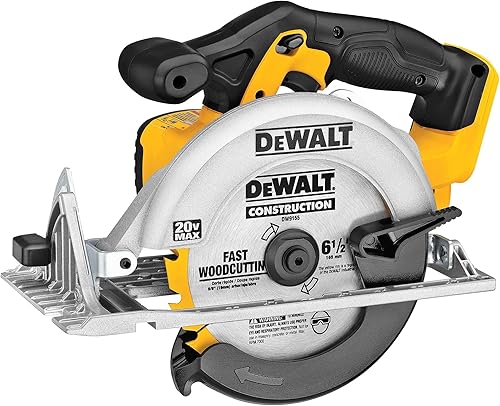 Best for everyday cordless projects
DeWalt DCS391B 20V Circular Saw
8.8/10 our score
See it on Amazon -
2
 Best for small project work
DeWalt DCS571B 4-1/2 Inch Circular Saw
8.6/10 our score
See it on Amazon -
3
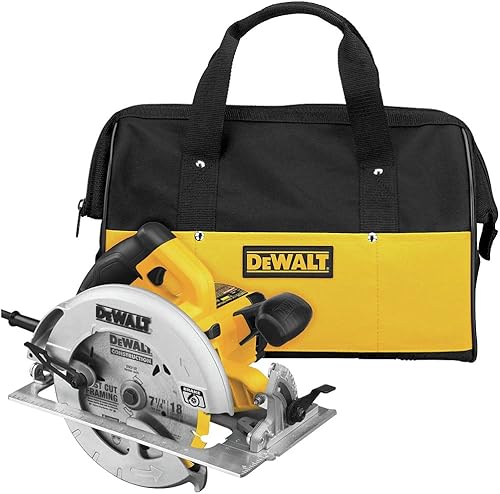 Best for outlet-side workshop work
DeWalt DWE575SB Corded Circular Saw
8.5/10 our score
See it on Amazon
- 4
 Check it
DeWalt DCS578B FLEXVOLT Circular Saw
Best for FLEXVOLT-equipped jobsites - 5
 Check it
Milwaukee M18 2630-20 Circular Saw
Best for M18 tool owners - 6
 Check it
DeWalt DCS590B 20V XR Circular Saw
Best for 20V framing projects - 7
 Best for corded framing crewsCheck it
- 8
 Check it
Skilsaw SPT77WML-01 Worm Drive Saw
Best for worm-drive regulars - 9
 Check it
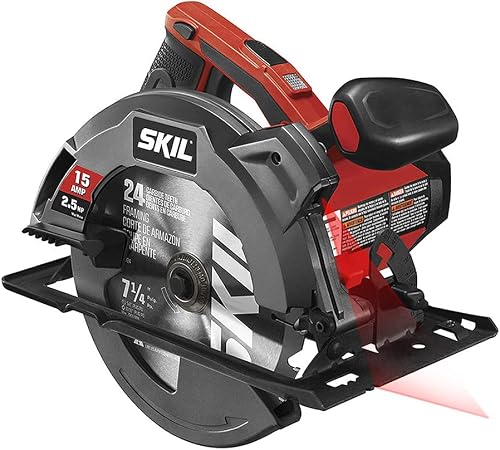
Skil 5280-01 Corded Circular Saw
Best for guided DIY cuts - 10
 Check it
Skil 5080-01 Corded Circular Saw
Best for occasional home repairs
Which best circular saw pick fits your projects?
Choose the DCS391B for general cordless work, the DWE575SB for a corded workshop, or the DCS571B for compact tasks. The remaining picks serve buyers with specific battery systems, framing needs or handling preferences.
PliersPal compared cut capacity, power source, adjustment features and included equipment. The order favors general usefulness, but your existing batteries or need for deeper bevel cuts can make a lower-ranked saw the better purchase.
Use the table to narrow your choices, then read the tradeoffs below. A saw that matches your daily cuts is more useful than one with extra capacity you rarely need.
| Product | Best for | Power | Blade size | Bevel capacity | Our score |
|---|---|---|---|---|---|
| DeWalt DCS391B 20V Circular Saw | everyday cordless projects | 20V MAX battery powered | 6-1/2 in | 0 to 50 degrees | 8.8 |
| DeWalt DCS571B 4-1/2 Inch Circular Saw | small project work | 20V MAX battery powered | 4-1/2 in | 45 degrees | 8.6 |
| DeWalt DWE575SB Corded Circular Saw | outlet-side workshop work | 15 amp corded electric | 7-1/4 in | 8.5 | |
| DeWalt DCS578B FLEXVOLT Circular Saw | FLEXVOLT-equipped jobsites | 60V MAX battery powered | 7-1/4 in | 8.4 | |
| Milwaukee M18 2630-20 Circular Saw | M18 tool owners | 18V battery powered | 6-1/2 in | 8.4 | |
| DeWalt DCS590B 20V XR Circular Saw | 20V framing projects | 20V MAX battery powered | 8.3 | ||
| Makita 5007Mg Circular Saw | corded framing crews | 15 amp corded electric | 0 to 56 degrees | 8.3 | |
| Skilsaw SPT77WML-01 Worm Drive Saw | worm-drive regulars | 15 amp corded electric | 53 degrees | 8.3 | |
| Skil 5280-01 Corded Circular Saw | guided DIY cuts | 15 amp corded electric | 7-1/4 in | 51 degrees with 45 degree stop | 8.2 |
| Skil 5080-01 Corded Circular Saw | occasional home repairs | 13 amp corded electric | 7-1/4 in | 51 degrees | 7.9 |
DeWalt DCS391B 20V Circular Saw: Best for everyday cordless projects
- 6-1/2 in blade
- Magnesium shoe
- 0 to 50 degree bevel capacity
- Battery and charger sold separately
Choose this saw for common wood cuts when cordless movement matters more than full-size blade capacity. It makes particular sense if you already own compatible DeWalt batteries.
Pros
- Magnesium shoe
- Rubber overmolded grip
- Bevel adjustment for angled cuts
Cons
- Battery and charger sold separately
- Smaller blade than the full-size options
The DCS391B fits everyday carpentry and DIY projects where moving freely matters. Boards and panels often need cutting in different places, and a cordless saw lets you bring the tool to a stable work area.
Its 6-1/2 in blade and 0 to 50 degree bevel adjustment cover a useful range of wood-cutting tasks. The magnesium shoe and rubber overmolded grip are practical features for a tool you guide by hand.
Choose it if you want a general-purpose cordless saw without stepping up to a full-size model. It is especially sensible for someone who already has compatible DeWalt batteries and a charger.
Skip it if your project list calls for deeper angled cuts and you haven't confirmed the required capacity. The DCS590B gives you specific square-cut and bevel-depth figures to match against thicker stock.
Battery and charger are separate, so buyers starting from scratch should compare the complete setup with a corded alternative.
DeWalt DCS571B 4-1/2 Inch Circular Saw: Best for small project work
- 4-1/2 in blade
- Brushless motor
- Cuts 2x material at 90 degrees
- Dust port
A compact choice for smaller projects that still require square cuts through 2x lumber. Choose a larger saw if you need bevel cuts through that same stock.
Pros
- Removable auxiliary handle
- Electronic blade brake
- Dust port adaptor and rip fence included
Cons
- 45 degree bevel cuts limited to 1x dimensional lumber
- Battery sold separately
The DCS571B suits smaller projects and short cutting sessions where a compact tool fits the job. Its 4-1/2 in blade still cuts 2x material square because of the bevel gear design.
The important limit appears when you tilt the blade: its 45 degree bevel capability covers 1x dimensional lumber. Someone building with beveled 2x stock should choose a larger saw with enough depth at that angle.
A removable auxiliary handle gives you another grip point, while the electronic brake helps stop the blade after release. The dust port, adaptor and included rip fence also make this more than a small blade attached to a motor.
Buy it for compact work that falls within those limits. Skip it as your only saw if you expect a broad mix of thick lumber and bevel cuts.
Its size doesn't change the need for firm support and controlled handling. Keep the auxiliary handle fitted when the manual calls for it.
DeWalt DWE575SB Corded Circular Saw: Best for outlet-side workshop work
- 15 amp motor
- 7-1/4 in blade
- 57 degree bevel capacity
- Electric brake
A full-size corded choice for lumber and panels when an outlet is close. Its brake, dust blower and common-angle bevel stops suit regular workshop use.
Pros
- Electric brake
- Dust blower
- Cord protection system
Cons
- Needs an outlet and cord management
- Less freedom to move between work areas
The DWE575SB is the strongest fit for a general corded workshop in this group. It combines full-size capacity with an electric brake, without requiring a battery plan.
Its 15 amp motor drives a 7-1/4 in blade, with a maximum cut depth of 2-9/16 in. The bevel range reaches 57 degrees, with stops at 22.5 and 45 degrees for common angled setups.
At 8.8 lb, it is lighter than the Makita and worm-drive corded picks below. That difference deserves attention if you repeatedly lift the saw onto panels or move between benches.
The dust blower helps keep your marked line visible, and the cord protection system addresses pull-out durability. You still need to route the cable so it cannot catch an edge during a cut.
Choose it for repeated lumber and panel work near power. Skip it if you regularly cut where extension-cord access would shape the whole workday.
DeWalt DCS578B FLEXVOLT Circular Saw: Best for FLEXVOLT-equipped jobsites
- 7-1/4 in blade
- 60V MAX platform
- Integrated LED
- Electric brake
Choose this full-size cordless saw for work away from outlets, particularly if FLEXVOLT batteries are already part of your setup. An LED and rafter hook add practical jobsite features.
Pros
- Integrated LED
- Rafter hook
- Bevel stops at 22.5 and 45 degrees
Cons
- Battery and charger sold separately
- Requires compatible FLEXVOLT power
The DCS578B fits full-size cordless work on a FLEXVOLT setup. Choose it when you need to move around a jobsite and already have, or intend to adopt, compatible 60V MAX power.
Its 7-1/4 in blade reaches 2-9/16 in at 90 degrees. A 57 degree bevel range with common-angle stops also gives it scope beyond square crosscuts.
The integrated LED helps illuminate the cutting area, while the rafter hook provides a storage option between cuts. The electric brake helps stop the blade after you release the trigger.
This is a better match for ongoing lumber and panel projects than for someone who needs a few occasional shelving cuts. Starting another battery system for infrequent work adds equipment to charge and store.
Skip it if your goal is to use existing 20V MAX batteries without adding FLEXVOLT power. Battery and charger are sold separately, so confirm the complete power setup before choosing.
Milwaukee M18 2630-20 Circular Saw: Best for M18 tool owners
- 6-1/2 in blade
- 3,500 RPM motor
- Magnesium upper and lower guards
- Aircraft aluminum shoe
A practical addition to an existing M18 setup for boards, panels and general carpentry. Its main buying advantage is battery compatibility for owners already using that system.
Pros
- Soft-grip handle
- Magnesium guards
- Aircraft aluminum shoe
Cons
- Battery and charger not included
- Smaller blade than the full-size options
The Milwaukee M18 2630-20 makes the most sense for existing M18 owners. A saw that shares compatible batteries with your other tools can be a simpler addition than a slightly higher-ranked model on another system.
This 6-1/2 in saw has magnesium upper and lower guards, an aircraft aluminum shoe and a soft-grip handle. Those are useful construction details for a tool used around lumber, work supports and a busy workshop.
Its motor runs at 3,500 RPM. Don't reject it simply because another saw has a higher no-load speed; blade choice, feed pressure and cutting load also affect the job.
Choose it for general carpentry within its capacity when battery compatibility is the main advantage. It arrives as a bare tool, without a battery or charger.
Skip it if you need full-size blade capacity or are starting a battery system solely for this purchase. Compare complete setups rather than buying on brand familiarity alone.
DeWalt DCS590B 20V XR Circular Saw: Best for 20V framing projects
- 7-1/4 in blade
- Brushless motor
- Right-side blade
- Electric brake
A full-size option for DeWalt 20V MAX users who need framing capacity and deeper bevel cuts. Its right-side blade and top handle deserve attention when judging your preferred layout.
Pros
- Brushless motor
- 57 degree bevel capacity
- Electric brake
Cons
- Battery and charger sold separately
- 9.88 lb tool weight
The DCS590B suits DeWalt 20V MAX users who need full-size cutting capacity. It is the clearest alternative here when the smaller DCS391B doesn't cover your planned stock and bevel cuts.
Its maximum depth is 2-9/16 in square and 2 in at 45 degrees. Those figures help you decide whether it can finish your intended cut in a single pass.
A brushless motor, electric brake and 57 degree bevel range round out its main features. The blade sits to the right of the motor, with a top handle layout.
Consider how that arrangement fits your stance and view of the line. Hand preference alone doesn't settle blade-side choice, since support placement and the direction of your cut also matter.
Skip it if low carrying weight is your priority: the tool weighs 9.88 lb before you account for the battery you choose. Battery and charger are sold separately.
Makita 5007Mg Circular Saw: Best for corded framing crews
- 7-1/4 in blade
- 15 amp motor
- Two built-in LEDs
- 56 degree bevel capacity
A corded framing and panel-cutting choice with lights and a blower to help keep the cut line visible. The included case and rip fence also suit a portable workshop setup.
Pros
- Magnesium components
- Built-in LED lights
- Case and rip fence included
Cons
- Cord requires routing around the work
- 10.6 lb tool weight
The Makita 5007Mg suits repeated corded framing and panel work. Choose it when built-in lighting and an included case and rip fence match how you set up and transport your tools.
Its 15 amp motor drives a 7-1/4 in blade. Maximum square-cut depth is 2-1/2 in, and the bevel adjustment reaches 56 degrees with stops at 22.5 and 45 degrees.
Two LEDs illuminate the cut line, while a blower helps clear sawdust from it. These features are useful in a shaded work area, though they don't replace adequate room lighting.
The magnesium components are part of its construction, but the complete tool still weighs 10.6 lb. Compare that with the DWE575SB if you expect frequent lifting rather than long cuts on supported material.
Skip it if moving freely between cutting stations matters more than its lights and included equipment. For a fixed workshop, arrange cord routing before you start handling full sheets.
Skilsaw SPT77WML-01 Worm Drive Saw: Best for worm-drive regulars
- 15 amp motor
- 7-1/4 in blade
- 53 degree bevel capacity
- Magnesium construction
Choose this saw if you prefer a worm-drive layout for repeated lumber cuts. Its depth measurement system and anti-snag lower guard support routine framing work.
Pros
- Cut-ready depth measurement system
- Anti-snag lower guard
- Magnesium construction
Cons
- Cord limits movement
- Heaviest corded option in this group
The SPT77WML-01 is for buyers who specifically want a worm-drive saw. It makes more sense as a deliberate layout choice than as a default first circular saw.
The tool combines a 15 amp motor, 7-1/4 in blade and 53 degree bevel capacity. Its cut-ready depth system helps with setting depth, and the anti-snag lower guard is designed for small cutoff pieces.
Magnesium construction keeps its weight to 11.5 lb, but it remains the heaviest corded pick here. Think about lifting it onto the work as well as guiding it through a cut.
Choose it if you prefer this style for repeated lumber cuts and accept the weight. Skip it if your projects are occasional, your cuts are short, or carrying comfort is a main concern.
Our worm drive vs sidewinder comparison explains the layout differences. Follow this model's manual for any gear lubrication checks rather than assuming every circular saw needs the same care.
Skil 5280-01 Corded Circular Saw: Best for guided DIY cuts
- 15 amp motor
- Single-beam laser guide
- Dust blower
- Carbide-tipped blade included
Choose this corded saw if you want a laser reference and dust blower for following marked cuts. Use a clamped guide when straightness matters more than freehand convenience.
Pros
- Spindle lock
- Carry bag included
- Safety lock and power-on indicator
Cons
- Cord requires management
- Laser does not physically guide the saw
The Skil 5280-01 suits DIY buyers who want extra cut-line references. Its single-beam laser helps with alignment, while the dust blower clears sawdust from the marked path.
The 15 amp motor runs at 5,300 RPM, and the saw includes a 7-1/4 in carbide-tipped blade. Its bevel range reaches 51 degrees, with a stop at 45 degrees.
A spindle lock supports blade changes, and a carry bag keeps the tool together for transport. The safety lock and power-on indicator provide useful controls and status cues.
Choose it if you want those features in a corded saw for boards and sheet goods. Skip it if your main reason for buying is an expectation that the laser will produce straight edges by itself.
A laser doesn't hold the shoe on course. For long plywood rips or matching shelf edges, use a clamped straightedge and account for the blade's kerf.
Skil 5080-01 Corded Circular Saw: Best for occasional home repairs
- 13 amp motor
- 7-1/4 in blade
- 51 degree bevel capacity
- 7 lb weight
A straightforward corded saw for shelving, repairs and occasional workshop projects. Its lower weight makes it worth considering before choosing a heavier framing model.
Pros
- Lightest corded option here
- Spindle lock
- Dust blower
Cons
- Lower amp rating than the other corded picks
- Needs an outlet
The Skil 5080-01 fits occasional repairs, shelving and basic workshop projects. Its 7 lb weight makes it the lightest corded option in this group.
You get a 13 amp motor, 7-1/4 in blade and bevel adjustment up to 51 degrees. A dust blower, spindle lock and onboard wrench storage cover useful everyday needs without a long feature list.
Choose it when a simple corded setup fits your work and you don't want to handle a heavier framing saw. The included 18-tooth carbide blade provides a starting point for wood cuts.
Skip it if your plans center on repeated demanding cuts and you want one of the 15 amp alternatives. Current rating isn't a complete performance measure, but it is a meaningful difference between these corded choices.
For visible shelving edges, select a blade suited to a cleaner finish. Buying a larger motor won't turn a coarse framing blade into a fine-cutting one.
How do you choose the best circular saw for your work?
Choose by required cut depth, power source and handling, in that order. Once those needs are covered, compare brakes, visibility features and included equipment.
What size is best for a circular saw?
A 7-1/4 in saw is a flexible starting point for lumber and panels. A smaller saw is enough when its actual cut depth covers your projects.
Write down the thickest stock you expect to cut and the steepest bevel you'll need. Check the depth at that angle, since tilting the blade reduces usable depth.
Nominal lumber names don't equal finished dimensions. Match capacity to the actual material, including any layers you intend to cut together.
Should you choose corded or cordless power?
Choose corded for regular work near outlets and cordless for frequent moves between cutting areas. Existing compatible batteries can make cordless the easier decision.
For a new battery setup, consider charging time, storage and whether you need a spare to keep working. Match both the battery and charger to the tool's approved system.
For corded work, use an extension cord with the gauge and length required by the manual. Unroll it fully and keep connections away from water and the cutting path.
Which handling details matter most?
Choose a layout that lets you see the line while keeping your body clear of the blade path. Check access to both handles, depth adjustment and bevel locks.
Compare cordless carrying weight with the battery fitted. Tool weights alone don't tell you what you'll lift during a working session.
A brake reduces blade coast time, but you must still wait for a complete stop before setting the saw down. Lights and blowers improve visibility without controlling the direction of travel.
When should you choose a different saw type?
Choose another saw type if the job calls for curves, repeated supported angle cuts or a dedicated rail system. A circular saw's main role is straight cutting with the work properly supported.
For occasional panel cuts, a straightedge may cover your needs. Our circular saw guides and guide rails comparison explains options, including the need to check compatibility before buying a rail.
How should you set up a circular saw before the first cut?
Set up with power disconnected, then check the blade, adjustments and work support before reconnecting. Read the manual for your model's controls and required checks.
Match the blade to the material and finish
Use a blade approved for the saw's diameter, arbor, speed and material. A wood blade doesn't make these saws suitable for metal or masonry.
For wood, fewer teeth generally favor fast rough cuts, while more teeth can improve finish with a slower feed. Choose for the job rather than leaving the included blade installed for every project.
Confirm blade direction and secure the blade as the manual directs. Remove the wrench before reconnecting power.
Set depth, square and bevel
Set the blade just far enough below the material to complete the cut, following the manual's depth guidance. Excess blade exposure adds risk without improving a shallow cut.
Check the blade against the shoe with a square while power is disconnected. Make a trial cut in scrap to confirm the result before cutting a finished part.
Lock both depth and bevel adjustments firmly. A useful angle scale still needs confirmation when two cut faces must fit closely.
Support the work and position the guide
Clamp boards securely and support sheet goods so neither side drops or closes on the blade. Keep clamps and supports clear of the full cutting path.
Measure from the blade to the edge of the shoe that will follow the guide. Place the blade's kerf on the waste side of your mark.
Our guide to cutting straight with a circular saw covers this setup. For grip, stance and starting technique, follow our circular saw use guide.
Which circular saw mistakes cause poor cuts?
The most avoidable problems come from poor support, wrong blade choice and forcing the feed. Correct those before assuming you need a more powerful saw.
Wear eye and hearing protection, and manage wood dust with suitable extraction and respiratory protection. Keep both hands in the positions specified by the manual.
Don't force a slowing blade
Let the blade reach full speed before entering the wood, then feed steadily. If it bogs down, ease pressure rather than pushing harder.
If the saw stalls or binds, release the trigger and hold it still until the blade stops. Disconnect power before investigating the blade, support or cut.
Don't steer sharply inside the kerf
A circular blade can't turn like a jigsaw blade. Twisting the saw to rescue a wandering cut can cause binding and increase kickback risk.
Stop and reassess instead of forcing the blade sideways. Use a guide and a fresh layout line for parts where a straight edge matters.
Don't let the offcut pinch the blade
Plan where both pieces will rest after separation. A falling offcut can tear the edge, while badly placed supports can cause the kerf to close.
Never hold a board across your legs or reach underneath the cutting area. Support and clamp the work before picking up the saw.
How do you keep a circular saw ready for the next job?
Keep the blade clean, guard moving freely and shoe undamaged. Disconnect power before cleaning, adjustments or inspection.
Remove loose sawdust from vents and adjustment areas according to the manual. Check for pitch buildup, damaged teeth and a dull blade when cuts require more effort or leave burn marks.
Inspect the shoe after a drop or hard knock, since damage can affect tracking. Check cord insulation on corded models and follow the battery maker's storage guidance on cordless tools.
Never tie the lower guard open or keep using a saw with a sticking guard. Arrange repair before the next cut.
Follow the model's maintenance schedule, including any worm-drive lubrication requirements. Our circular saw blade change guide covers replacement steps alongside your manual.
Which best circular saw should you buy?
Buy the best circular saw for the cuts you actually make: DCS391B for everyday cordless work, DWE575SB for a corded workshop, or DCS571B for compact projects within its bevel limits.
Choose DCS590B when you need full-size capacity on 20V MAX, or DCS578B for a FLEXVOLT setup. Existing M18 users should give the Milwaukee serious consideration before adding another battery system.
For occasional home repairs, the lighter Skil 5080-01 may be all you need. Choose the Makita, worm-drive Skilsaw or laser-equipped 5280-01 when their specific features match your working style.
Before ordering, match one real project to the saw's depth, power and blade requirements. Our how to choose a circular saw guide helps turn that project list into a final choice.
Our top 3 picks at a glance
-
1
Best for everyday cordless projects
DeWalt DCS391B 20V Circular Saw
8.8/10 our score
See it on Amazon -
2
Best for small project work
DeWalt DCS571B 4-1/2 Inch Circular Saw
8.6/10 our score
See it on Amazon -
3
Best for outlet-side workshop work
DeWalt DWE575SB Corded Circular Saw
8.5/10 our score
See it on Amazon
Frequently asked questions
What size circular saw is best for most people?
A 7-1/4 in circular saw is a useful general size for framing lumber and sheet goods. Choose a smaller model when its cut capacity covers your projects and you prefer its handling.
Check depth at your required bevel angle, since blade diameter alone does not tell you what a saw can cut.
Should I choose a corded or cordless circular saw?
Choose corded for a workshop with reliable outlet access, or cordless when you regularly move between cutting locations. Existing compatible batteries can make a tool-only cordless saw a sensible addition.
If you are starting from scratch, include the battery, charger and any spare battery in your buying decision.
Is a worm-drive circular saw different?
A worm-drive circular saw uses a different gear arrangement from a sidewinder, which changes the tool's shape and handling. Choose by your preferred layout, working position and tolerance for weight.
Our worm drive vs sidewinder guide explains those tradeoffs before you commit to either style.
Can a circular saw make straight cuts?
A circular saw can make straight cuts with a secure workpiece and a suitable straightedge or compatible guide. Measure the blade-to-shoe offset, clamp the guide and keep the shoe against it throughout the cut.
Our guide to cutting straight with a circular saw explains the setup.
What should I check before changing a circular saw blade?
Disconnect power and wait for the blade to stop before changing it. Match the replacement's diameter, arbor and speed rating to the saw's requirements, then follow the manual for direction and tightening.
Our circular saw blade change guide walks through the process alongside your tool's instructions.


