9 Best Circular Saw Guides and Guide Rails (November 2026)
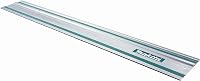
The best circular saw guides and guide rails include the Kreg Rip-Cut Saw Guide KMA2685 for repeat shelf rips, the Makita 55-Inch Guide Rail for Makita plunge saw owners, and the Milescraft 1409 Track Saw Guide for upgrading standard circular saws.
On this page (9 sections)
- How we chose the best circular saw guides
- The best circular saw guides for different cuts
- How do you choose the best circular saw guide for your work?
- Is a guide rail better than a straight edge?
- How should you set up a circular saw guide?
- What helps prevent chipped or crooked guided cuts?
- Which common guide mistakes should you avoid?
- How do you care for saw guides and rails?
- Which circular saw guide should you choose?
The best circular saw guide for repeatable parallel rips is the Kreg Rip-Cut Saw Guide KMA2685, if your side-blade saw fits its sled securely. Choose a stationary clamp edge or compatible track system when the cut needs a straight reference independent of the workpiece edge.
Match the guide to your most common job: repeated shelf widths, long plywood cuts or small project panels. A guide that suits one task can add needless setup to another.
Start with our complete circular saw buying guide if you're still choosing a saw. For rail-based work, read DIY track saw: can a guide rail do the job? and whether a track saw is worth it.
Our picks at a glance
-
1

-
2

-
3
 Best for upgrading standard circular saws
Milescraft 1409 Track Saw Guide
8.3/10 our score
See it on Amazon
- 4
 Best for long plywood ripsCheck it
- 5
 Check it
WEN CT9502 100-Inch Guide Rail
Best for extending track saw setups - 6
 Check it
Kreg Straight Edge Guide XL KMA4700
Best for mixed portable tool work - 7
 Best for small project crosscutsCheck it
- 8
 Check it
Kreg Rip-Cut Saw Guide KMA2400
Best for worm drive rip setups - 9
 Best for narrow strips and circlesCheck it
How we chose the best circular saw guides
We prioritized saw fit, useful working reach and the way each guide controls the cut. The Kreg KMA2685 leads for repeat edge-guided rips, while stationary guides serve cuts that need a separate reference.
PliersPal compared the supplied specifications and features, including mounting restrictions, clamps, extensions and alignment aids. The order reflects each guide's fit for its intended work, so a lower-ranked short guide may still suit your projects better than a long system.
Three different designs appear here: moving rip guides, stationary clamp edges and tracks that engage a compatible saw base. Read the guide-type column before comparing dimensions, because rip width and rail length measure different things.
| Product | Best for | Guide type | Working reach | Saw fit | Our score |
|---|---|---|---|---|---|
| Kreg Rip-Cut Saw Guide KMA2685 | repeat shelf rips | Sled and edge guide | Up to 48 in rip width | Compatible side-blade circular saws | 8.7 |
| Makita 55-Inch Guide Rail | Makita plunge saw owners | Plunge saw rail | 55 in rail length | Named Makita plunge saws; select other saws with adapter | 8.5 |
| Milescraft 1409 Track Saw Guide | upgrading standard circular saws | Track with universal saw base | 50 in cutting range; optional extensions | Most circular saws with blades up to 7-1/4 in | 8.3 |
| BORA NGX 100-Inch Guide Rail | long plywood rips | Clamp edge | 100 in assembled length | Circular saw base follows the edge | 8.2 |
| WEN CT9502 100-Inch Guide Rail | extending track saw setups | Track saw rails | 100 in combined rail length | WEN CT1065 and compatible Evolution, Makita and Festool track saws | 8.0 |
| Kreg Straight Edge Guide XL KMA4700 | mixed portable tool work | Clamped straight edge | Materials up to 8 ft | Most circular saws, jigsaws and trim routers | 7.6 |
| BORA 36-Inch Guide Rail | small project crosscuts | Clamp edge | 36 in guide; work surfaces up to 1-1/2 in thick | Circular saws, routers and jigsaws | 7.2 |
| Kreg Rip-Cut Saw Guide KMA2400 | worm drive rip setups | Sled and edge guide | Up to 48 in rip width | Compatible circular saws, worm drive saws and jigsaws | 7.0 |
| Milescraft 1403 Saw Guide | narrow strips and circles | Base-mounted edge guide | 1 to 14 in rip width | Most circular saws and jigsaws | 6.9 |
The best circular saw guides for different cuts
Choose by cut type first and score second. The following picks cover repeated parallel rips, cuts across sheet material and rails for existing plunge saw systems.
Kreg Rip-Cut Saw Guide KMA2685: Best for repeat shelf rips
- Sled-mounted edge guide
- Up to 48 in cut width
- Fits compatible left- or right-bladed saws
Choose this edge-following guide for repeated parallel rips from a straight workpiece edge. Your saw must sit flat and clamp securely in the sled.
Pros
- Supports repeated cuts at a set width
- Works with compatible corded or cordless saws
Cons
- Does not fit worm drive saws
- Plastic, bulky or odd-shaped upper guards may interfere
The Kreg KMA2685 is the pick for making several shelves or panels the same width from a straight reference edge. Set the blade-to-edge distance, then keep that setting for each matching piece.
Its large edge-guide handle helps you maintain contact with the material as the saw advances. Unlike a stationary track, the guide travels with the saw, so you don't need to move and align a long rail for every parallel rip.
The important restriction is mounting: worm drive saws do not fit this model. Plastic upper guards and bulky housings can also prevent the sled from sitting flat or clamping securely.
Skip it when the workpiece edge is bowed, damaged or unsuitable as a reference. Following that edge can carry its errors into the cut; a stationary guide gives you an independent straight line.
For repeat work, make a sample cut in scrap and measure the finished piece before committing the full batch.
Makita 55-Inch Guide Rail: Best for Makita plunge saw owners
- 55 in rail
- Fits Makita XPS01, XPS02 and SP6000J
- Supports straight or bevel cuts
A direct match for the named Makita plunge saws when you need a rail for sheet material. Other tool combinations require the correct compatible adapter.
Pros
- Designed to interact with compatible saw bases
- Supports sheet-material ripping
Cons
- Not a universal rail for ordinary circular saws
- Rail length must allow for saw travel at both ends
The Makita rail makes the most sense if you already use an XPS01, XPS02 or SP6000J plunge saw. It engages the compatible saw base for straight or bevel cutting and suits sheet-material work.
Its role is different from a clamp edge that the saw merely rides beside. The saw and rail form a matched guiding system, so the base interface matters more than the brand name alone.
Select ordinary circular saws require Makita saw guide rail adapter 196953-0. Select routers use adapter 194579-2, and neither adapter makes every tool compatible.
Choose it when the supported saw-and-rail combination matches your work. Skip it as a speculative accessory for an unidentified circular saw, since a plain clamp edge has fewer mounting requirements.
Before a bevel cut, confirm rail clearance and cutting-line position using the saw's instructions. Don't assume a setup established for square cuts remains correct after tilting the blade.
Milescraft 1409 Track Saw Guide: Best for upgrading standard circular saws
- 50 in cutting range
- Fits most circular saws up to 7-1/4 in
- Includes T-track clamps
A track-and-base system for compatible ordinary circular saws, with a cutting strip for alignment. Optional extensions support longer work.
Pros
- All-metal base and rail construction
- Adjustable glide tension
- Cutting strip helps reduce chipping
Cons
- Most worm drive saws are incompatible
- Joining two complete guides requires additional rail connectors
The Milescraft 1409 suits someone who wants track-guided cutting with an existing standard circular saw. Its base fits most saws with blades up to 7-1/4 in, but most worm drive models are excluded.
The red cutting strip provides a blade-path reference and helps reduce chipping. Included T-track clamps secure the rail, while Glide Adjusters let you set the base's sliding tension.
Choose this over an edge-following rip guide when you need to place the cutting path across a sheet without relying on its outer edge. The all-metal base and rail construction also make rigidity a clear part of this system's design.
Skip it if mounting a base feels unnecessary for occasional short cuts. A clamp edge can be simpler when your saw already has a suitable base edge.
Plan extensions as a complete system: joining 2 full 1409 guides requires additional rail connectors. Our guide to cutting straight with a circular saw covers alignment and support.
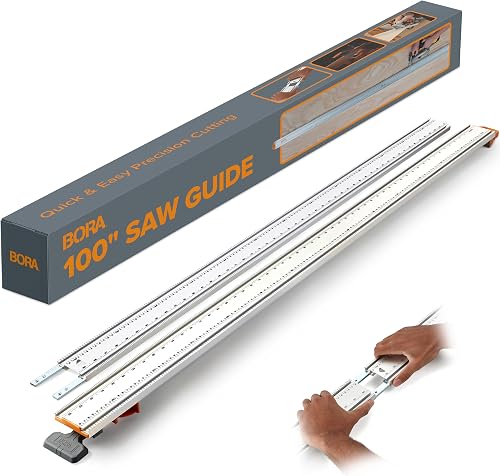
BORA NGX 100-Inch Guide Rail: Best for long plywood rips
- 50 in clamp edge plus 50 in extension
- One-sided Quick Lock adjustment
- Dual T tracks
A long stationary edge for guiding a circular saw across large sheets. The joined sections include connectors and a clamp handle that adjusts from one side.
Pros
- Long reach for sheet work
- Also works with routers and jigsaws
Cons
- Requires blade-offset setup
- Joint alignment needs attention
The BORA NGX is a practical choice for long plywood rips with an ordinary circular saw. Its clamp edge provides a stationary reference without requiring a track-compatible saw base.
The kit combines a 50 in section and matching extension, with connectors for the joint. One-sided Quick Lock adjustment helps when reaching around a large sheet would interrupt setup.
Choose it if you regularly break down large panels and have room to support them. Its dual T tracks also give it uses with compatible accessories, and the edge can guide routers and jigsaws.
Skip the full-length arrangement for small parts when it makes clamping awkward or crowds your bench. A shorter guide is easier to position if all your cuts fit within its reach.
Pay attention to the joint before cutting. Align both sections into one straight reference, then check that the saw base passes the connection without catching or pulling away.
WEN CT9502 100-Inch Guide Rail: Best for extending track saw setups
- Two 50 in tracks
- Joining adapters with four set screws
- Designed for WEN CT1065
A joined rail set for compatible track saws when shorter rails interrupt long cuts. The supplied adapters connect the tracks.
Pros
- Two tracks and joining adapters included
- Supports compatible track saw systems
Cons
- Does not adapt an ordinary circular saw to a track
- WEN CT992F clamps are sold separately
The WEN CT9502 suits an existing compatible track saw setup that needs longer reach. It is designed for the WEN CT1065 and also supports compatible Evolution, Makita and Festool track saws.
The set contains 2 tracks and joining adapters with 4 set screws. Those adapters connect the rail sections; they do not mount an ordinary circular saw onto the track.
Choose it when your saw's exact rail interface is confirmed and you want to complete longer cuts without moving the guide. WEN CT992F clamps are separate, so include the required workholding in your buying decision.
Skip it for a conventional circular saw that lacks a matching base. A familiar saw brand on a compatibility list doesn't mean every saw from that brand fits.
When assembling the rails, check the running surfaces at the joint as well as the cutting edge. A small step can interrupt the saw's movement even when the sections appear straight from above.
Kreg Straight Edge Guide XL KMA4700: Best for mixed portable tool work
- For material up to 8 ft
- Retractable cutline indicator
- GripMaxx anti-slip clamp
A long straight edge for a workshop that uses several portable cutting tools. Its cutline indicator helps position the guide for the chosen tool.
Pros
- Works with either circular saw blade orientation
- Cutline indicator assists placement
Cons
- Full setup needs space
- Changing tools requires checking the cutting offset
The Kreg Straight Edge Guide XL suits a workshop using several portable tools on large panels. It works with most circular saws, jigsaws and trim routers, rather than serving only one saw interface.
Its retractable cutline indicator helps place the guide, and the anti-slip clamp secures it to the workpiece. The system accommodates material up to 8 ft, making it worth considering for extended cuts.
Choose it if you want a long straight reference and value an alignment aid. It also accommodates either circular saw blade orientation.
Skip it when your work is mostly small panels or narrow boards. The extra length creates more setup to manage without improving a cut that already fits a short guide.
Calibrate the indicator for the tool you're using. A router base and a circular saw base won't necessarily put the cutting edge at the same distance from the guide, even when both follow it correctly.
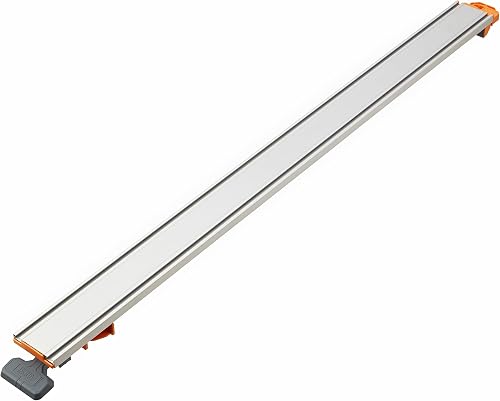
BORA 36-Inch Guide Rail: Best for small project crosscuts
- 36 in clamp edge
- One-sided locking lever
- Accepts a separate NGX extension
A shorter stationary edge for project panels that fit its reach and clamp opening. A separate NGX extension adds length for larger jobs.
Pros
- Manageable length for smaller workpieces
- Aluminum construction
Cons
- Limited reach without an extension
- Clamp opening limits workpiece thickness
The shorter BORA guide suits small project panels and crosscuts that fit its working reach. Its one-sided locking lever lets you secure the aluminum edge without adjusting clamps at both ends.
Choose it when a long rail would overhang the bench or interfere with nearby work. It also serves as a reference for routers and jigsaws, making it useful beyond circular saw cuts.
The clamp fits work surfaces up to 1-1/2 in thick. Check the actual clamping points, especially if your setup includes extra layers beneath the panel.
Skip it for cuts that require moving the guide halfway through. Repositioning breaks the continuous reference and can leave a visible change in direction.
A separate NGX extension provides a route to longer work. If large-sheet cutting is already your main task, compare the complete longer kit before choosing the short guide and building outward.
Kreg Rip-Cut Saw Guide KMA2400: Best for worm drive rip setups
- Sled-mounted edge guide
- Up to 48 in cut width
- Kreg specifies worm drive and jigsaw compatibility
Consider this model when you need an edge-following guide and use a worm drive saw. Confirm that the specific saw housing and guard allow secure, flat mounting.
Pros
- Kreg specifies worm drive compatibility
- Supports left- or right-bladed saws
Cons
- Bulky or odd-shaped guards can prevent mounting
- Plastic upper guards may interfere
The Kreg KMA2400 is the model to consider when you want edge-guided rips with a worm drive saw. Kreg specifies worm drive and jigsaw compatibility for this model, unlike the KMA2685 above.
That distinction makes the model number important. Don't transfer a compatibility statement from one Rip-Cut guide to the other because their names and general layouts look similar.
Choose it for parallel rips when your saw mounts flat and the workpiece has a straight edge to follow. Left- and right-bladed saws are supported, subject to a secure fit.
Skip it if the guard or motor housing prevents proper clamping. Plastic upper guards and bulky or odd-shaped guards still need attention, even with the broader stated tool compatibility.
Before powering the saw, check that the mounted assembly leaves the guard free to work. A guide should support the saw without forcing a guard aside or requiring you to loosen a critical attachment.
Milescraft 1403 Saw Guide: Best for narrow strips and circles
- Rip widths from 1 to 14 in
- Reversible edge guide
- Jigsaw circles up to 24 in diameter
A compact option for narrow parallel rips, with a separate circle-cutting use when attached to a jigsaw. It needs a suitable reference edge for straight ripping.
Pros
- Supports narrow repeat cuts
- Adds jigsaw circle guidance
Cons
- Cannot cover wider rip settings
- Does not create an independent straight reference across a sheet
The Milescraft 1403 suits narrow repeated rips and jigsaw circle work. Its straight-cut settings cover widths from 1 to 14 in, which makes it useful for strips and smaller panel parts.
The reversible edge guide follows the stock edge, and the universal base plate works with most circular saws and jigsaws. With a jigsaw, the circle setup covers diameters up to 24 in.
Choose it if those 2 jobs match your projects and you don't need a rail placed across the workpiece. The circle feature belongs to the jigsaw setup, not the circular saw.
Skip it for wider rip settings or for straightening an uneven board edge. Like the Kreg rip guides, it relies on the reference edge you give it.
Narrow parts also need a workable support plan. Check that the saw base, guide and clamps remain supported and clear throughout the cut rather than assuming a small finished width makes the operation simple.
How do you choose the best circular saw guide for your work?
Choose the guide design that matches your reference surface, then confirm saw fit and reach. This prevents buying a long rail when you actually need repeat-width control, or a rip guide when your sheet has no straight edge.
Match the best circular saw guide to your cut
An edge-following guide is efficient for parallel parts cut from a known straight edge. It controls the blade's distance from that edge, so it suits repeated widths without laying out every cut separately.
A stationary clamp edge works better when the cutting line must stand on its own. Mark the desired line, allow for the saw's blade offset and position the guide to create that path.
A fitted track system adds a base-to-rail interface. Choose one when your saw is compatible and that guided movement suits the amount of panel work you do.
Check the whole saw, not just blade size
A compatible blade diameter doesn't prove that a sled will fit. Look at the base shape, guard clearance, motor housing and mounting points together.
The saw should sit flat, clamp firmly and move through the full cut without interference. For a worm drive saw, use the exact model's compatibility guidance rather than treating all universal guides alike.
Separate rip width from cutting length
Rip width is the distance between the reference edge and blade. It doesn't tell you how far an edge-following guide can travel along a board.
Stationary rail length measures the guide itself. Allow enough reach for the saw to start and finish while supported as the system requires, and don't equate every nominal rail dimension with usable cutting range.
Is a guide rail better than a straight edge?
A fitted track provides a defined base-to-rail path, while a straight edge requires you to keep the saw base against it. Either can guide a straight cut when correctly set up.
A clamp edge has fewer saw-mounting parts, but you must account for blade offset and maintain contact. A track-and-base system adds fit checks, calibration and sometimes a small loss of available cutting depth.
For occasional work, a straight board secured with clamps can provide a useful reference if the board is truly straight. Repeated panel cutting makes dedicated clamps, alignment aids and a fitted base more useful.
See our DIY track saw guide for ways to guide an ordinary circular saw. Our circular saw vs track saw comparison explains when a dedicated saw system makes more sense.
How should you set up a circular saw guide?
Start with stable material, a clear blade path and power disconnected. Mount and adjust the guide before bringing the saw into a powered cutting position.
- Support the work. Use a suitable bench, supports or sacrificial surface so the sheet stays stable and the blade won't contact anything unintended.
- Mark the kept piece. Identify the waste side and account for the blade's kerf, which removes material along the cut.
- Set the guide. Use the calibrated cutting strip or indicator where provided; for a plain edge, measure the offset from the guiding side of the base to the relevant blade edge.
- Secure and check. Lock the rail or sled, clear clamps from the tool path and check the full travel with power disconnected.
- Confirm on scrap. Make a sample cut, measure the result and correct the setup before cutting finished material.
Set blade depth according to the saw and guide instructions. A sled or track can raise the saw above the workpiece, so read the actual blade projection rather than relying on an old depth setting.
Support the offcut so it won't drop early or pinch the blade. Our circular saw use guide explains the operating basics that still apply when you add a guide.
What helps prevent chipped or crooked guided cuts?
Use a suitable sharp blade, steady feed and consistent guide contact. A guide controls direction, but it can't correct a damaged blade or unstable material.
For a clamp edge, keep light, steady contact between the saw base and guide. Excess sideways pressure can twist your approach, while losing contact allows the saw to drift away.
With a fitted track, adjust play as the system's instructions require. The saw should travel freely without unnecessary side movement, so don't tighten adjustable parts until motion becomes stiff.
Keep cords and extraction hoses clear of rail ends, clamps and supports. A snag can interrupt feed or pull the saw sideways at the point where you're trying to hold a steady line.
Cutting strips can support alignment and help limit surface chipping, but blade choice still matters. If you need a different blade for plywood or another material, follow our circular saw blade change guide.
Which common guide mistakes should you avoid?
Avoid copying an unchecked setup across several parts. One wrong offset or shifted reference edge can spoil an entire batch before you notice the error.
- Following a rough edge. An edge-following guide reproduces the reference it follows; establish a straight reference first or use a stationary guide.
- Putting the kerf on the wrong side. Mark the waste clearly so the finished piece keeps its intended width.
- Forcing a saw through resistance. Stop and find the cause rather than pushing against a tight slide, snagged hose or binding cut.
- Trusting a loose rail joint. Align and secure connected sections before use, then check that the saw crosses the joint freely.
- Changing tools without recalibrating. A different saw, blade or base setup can change the relationship between guide and cut.
- Running out of reach. Choose a setup that completes the cut continuously; don't plan to move the guide with the blade engaged.
If a setup needs adjustment, stop, let the blade come to a complete halt and disconnect power. Restart only after checking the workpiece, guide and blade path again.
How do you care for saw guides and rails?
Keep contact surfaces clean and rails straight. Dust trapped under a guide can affect its grip, while debris on a running surface can interrupt saw movement.
Brush away sawdust after use and wipe the rail with a suitable cloth. Follow the guide's instructions for cleaning sliding pads, rubber strips and clamp surfaces rather than applying an oily lubricant that may attract dust or reduce grip.
Check connector screws, sled attachments and clamp parts before the next job. Store long sections supported and protected from impacts, with small connectors and hardware kept together.
If a guide takes a hard knock, check its straightness and sliding action before using it on finished work. Replace damaged parts instead of trying to force a bent reference back into service.
Which circular saw guide should you choose?
The best circular saw guide is the one that fits your saw and completes your usual cut in one stable setup. Make the choice from your work pattern:
- Repeated shelf or panel widths: choose the Kreg KMA2685 when your side-blade saw mounts securely and you have a straight reference edge.
- Long cuts with a regular circular saw: choose the BORA NGX clamp edge, or the Milescraft 1409 if you want a fitted track-and-base arrangement.
- Small project panels: choose the shorter BORA when its reach and clamp opening cover the work.
- An existing plunge or track saw: match the Makita or WEN rails to the exact saw model.
- Worm drive edge-guided work: check the Kreg KMA2400's fit rather than substituting the KMA2685.
- Narrow rips plus jigsaw circles: choose the Milescraft 1403 if its width range covers your parts.
Before buying extensions, decide whether you want to keep adapting your current saw or move to a dedicated system. Compare our best track saws for that decision, and use the complete circular saw guide to check the wider tool options.
Our top 3 picks at a glance
-
1
-
2
-
3
Best for upgrading standard circular saws
Milescraft 1409 Track Saw Guide
8.3/10 our score
See it on Amazon
Frequently asked questions
Can you use a guide rail with any circular saw?
No, the saw and guide must fit each other.
Clamp edges guide the side of a saw base, while sled systems need secure mounting and track saw rails need a matching base or approved adapter. Check guard clearance, blade position and full travel before making a cut.
What length circular saw guide should you buy?
Buy enough working reach for the whole cut.
A stationary rail needs room for the saw to enter and finish while remaining properly guided, so nominal rail length is not always usable cutting length. For an edge-following rip guide, match its width capacity to your required blade-to-edge distance.
Are guide rails the same as track saws?
No, a rail is a guide, while a track saw is a saw built for a matching rail system.
Some accessories fit ordinary circular saws, but their mounting and operation differ. Our circular saw vs track saw comparison explains which system fits occasional sheet work or regular panel cutting.
How do you keep a circular saw guide from moving?
Secure a stationary guide as its instructions require, and check for movement before powering the saw.
Clear dust from contact surfaces and keep clamps outside the tool path. An edge-following guide moves with the saw, so maintain contact with the reference edge; our straight-cut setup guide explains the process.