Circular Saw vs Track Saw: Which Do You Need? (November 2026)
The circular saw vs track saw choice comes down to your usual work: choose a circular saw for varied DIY cuts or a track saw for frequent, precise panel cuts. A circular saw with a straightedge can cover occasional sheet cutting.
On this page (12 sections)
- Circular saw vs track saw: what is the main difference?
- Who should buy a circular saw, and who should skip it?
- Who should buy a track saw, and who should skip it?
- Which saw makes cleaner cuts in plywood?
- Which saw handles thicker material and bevel cuts?
- How do you set up either saw for an accurate cut?
- Does the track come with the saw?
- Is a track saw safer than a circular saw?
- What mistakes cause poor cuts with either saw?
- How should you care for the saw and rail?
- Is a track saw worth buying for a small workshop?
- Circular saw vs track saw: which should you choose?
Choose a circular saw for varied DIY work or a track saw for frequent, precise cuts in panels. The circular saw vs track saw decision depends less on motor size than on what you cut and how much help you need keeping the blade on line.
A regular circular saw suits repairs, lumber cuts and occasional plywood with a guide. A track saw earns its place when straight edges must fit together cleanly in cabinets, shelves or other panel projects.
The 3 saws below represent those choices. All are corded, so battery compatibility won't decide this comparison.

Circular saw vs track saw: what is the main difference?
A track saw rides on a compatible rail, while a regular circular saw follows your hand or a separate guide. Both use circular blades, but the guide system changes how you lay out and make a cut.
With a regular saw and straightedge, you position the guide away from the cut line by the blade-to-base offset. That distance can change when you use the opposite side of the base or alter the bevel.
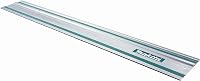
A track system pairs the saw base with the rail. Once its splinter strip is trimmed as directed, that edge can show where the blade will cut, reducing repeated offset measurements.
Track saws also commonly use a plunge action that lowers the blade into the work. This helps with permitted interior cuts, though corners still need planning because a round blade cannot leave a square inside corner.
Which wins the circular saw versus track saw choice for beginners?
A circular saw is the better first buy for mixed home projects. A beginner building mostly cabinets or plywood furniture can benefit more from a track saw's guided path.
Neither tool removes the need to learn depth settings, material support and blade control. Our circular saw buying guide explains the main tool types before you commit to a system.
Who should buy a circular saw, and who should skip it?
Buy a regular circular saw for varied cuts in different places, especially when panels are only part of the job. Skip it as your main finish-panel tool if repeated guide measurements would slow your work.
It suits cutting boards for repairs, shortening construction lumber and breaking sheets into manageable pieces. You can move between tasks without finding room for a long rail each time.
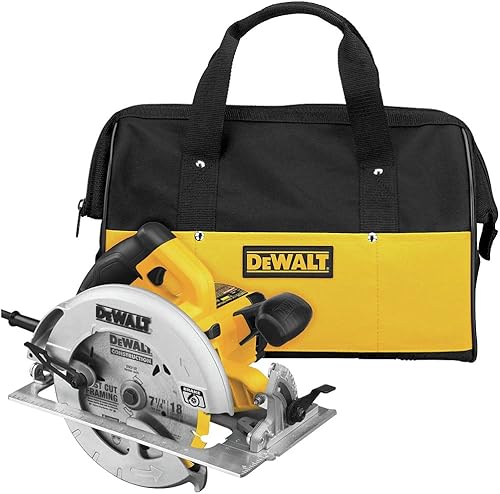
The DeWalt DWE575SB fits this role with a 15 amp motor, an electric brake and an integrated dust blower. Its 8.8 lb weight also matters if you carry the saw between work areas.
Its blower helps keep the marked line visible; it does not collect dust. Plan cleanup and dust control separately rather than treating line visibility as extraction.
A regular saw becomes less convenient when nearly every cut needs a finished edge and exact alignment. You can achieve accurate work with a guide, but each setup asks you to check the offset and secure the straightedge.
For a first tool, our best circular saws for beginners guide helps you focus on features that support straightforward use.
Who should buy a track saw, and who should skip it?
Buy a track saw for frequent panel sizing and visible straight edges. Skip the system if most jobs are short lumber cuts or you have no practical place to support sheets and store rails.
Cabinet builders and furniture makers benefit from bringing the saw to a stationary panel. This can be easier than moving a large sheet through a fixed saw, especially when working alone.
A rail also helps when a cut crosses a panel at an angle that is awkward to follow by eye. You still need accurate marks at both ends; the track follows the line you give it.
The Makita SP6000J suits finish-focused work with variable speed control from 2,000 to 5,200 rpm. Electronic speed control helps maintain speed under load, while soft start eases startup.
The DeWalt DWS520K suits buyers who want compatible dual edged tracks and a depth scale that accounts for track thickness. Its included 48-tooth finishing blade supports its panel-cutting role.
Rail systems are less appealing when you repeatedly change locations for small cuts. Carrying, placing and protecting the rail adds work even when the actual cut is brief.
Which saw makes cleaner cuts in plywood?
A track saw makes clean, straight plywood cuts easier to repeat, but blade choice and support still control the edge quality. Straightness and tear-out are separate problems.
A rail controls the saw's path. A sharp blade suited to the panel, proper feed speed and support near the cut help keep the surface fibers from breaking away.
Makita says the SP6000J and optional rail produce accurate cuts with minimal tear-out. Its depth stop allows a preliminary 1/16 in scoring cut before the full-depth pass.
DeWalt describes the DWS520K's zero-clearance track system and dual anti-splinter edges as supporting splinter-free cuts. Worn splinter strips or a poor blade choice can still leave a rough edge.
For visible work, check the setup on scrap from the same panel material. Inspect both faces so you know which surface needs extra support or protection.
A circular saw with a clamped guide remains useful for occasional plywood. Follow our guide on how to cut straight with a circular saw before deciding that your current tool needs replacing.
Which saw handles thicker material and bevel cuts?
The DWE575SB has the greatest stated cutting depth here, while both guided options suit common panel work. Check depth at your actual bevel angle and account for any rail beneath the base.
The DeWalt circular saw cuts up to 2 9/16 in deep and bevels to 57°, with stops at 45° and 22.5°. That gives it room for thicker stock and steeper bevels than these panel-focused options.
The Makita has stated capacities of 2 3/16 in at 90° and 1 9/16 in at 45°, plus a bevel range of -1° to 48°. Confirm usable depth with your chosen rail.
The DWS520K cuts 2 1/8 in at 90° and 1 5/8 in at 45° on its track. Its scale accounts for rail thickness, which simplifies depth setting for guided work.
| Product | Best for | Power | Bevel capacity | Depth at 90° | Our score |
|---|---|---|---|---|---|
| DeWalt DWE575SB Corded Circular Saw | general DIY | 15 amp corded | 57° | 2 9/16 in | 8.5 |
| Makita SP6000J Plunge Saw | cabinet projects | 12 amp corded | -1° to 48° | 2 3/16 in | 7.9 |
| DeWalt DWS520K Track Saw Kit | frequent panel cutting | 12 amp corded | 2 1/8 in on track | 7.2 |
Don't choose by amperage alone. Blade condition, material, cutting depth and feed speed all affect how smoothly a saw gets through the work.
How do you set up either saw for an accurate cut?
Support the material first, then set the saw and guide. Neither tool can hold a line reliably if the work shifts, rocks or pinches the blade.
Use a stable work surface that supports the panel and offcut without letting the cut close. A suitable sacrificial surface can support sheet goods while allowing the blade to pass through.
With power disconnected, set depth according to the manual and confirm the blade clears the work without reaching hidden supports. Lock the depth and bevel settings before reconnecting power.
For a circular saw, measure from the blade's cutting edge to the base edge that will follow the guide. Clamp the straightedge at that offset, keeping both clamps outside the motor and base path.
For a track saw, align the correct rail edge with your marks and secure it as instructed. Check the rail fit adjustments so the saw moves freely without excess sideways play.
Plan entry and exit space as well as the cut itself. The saw needs enough supported travel to start and finish without tipping, and the cord must reach without pulling against your hands.
Before cutting, check the full route for clamps, hoses and other obstructions. Wait for full blade speed before entering the material, then feed steadily without forcing the motor.
Does the track come with the saw?
Neither of these options should be treated as a complete saw-and-rail package. The Makita's guide rail is optional, and the DeWalt kit's stated contents do not include a track.
The DWS520K includes the saw, finishing blade, blade wrench and kit box. Its kit name should not be your basis for assuming a rail arrives with it.
Compare a complete setup: saw, compatible rail, any needed clamps, suitable blade and work support. Dust extraction may add a hose or adapter, depending on the system you choose.
Check rail length against your longest planned cut, including the travel needed at both ends. If joining rails, follow the system's alignment procedure so the connection doesn't introduce a bend.
Existing rails are useful only if they fit the saw correctly. Our circular saw guides and guide rails guide explains guide choices for regular circular saws.
Is a track saw safer than a circular saw?
A track does not remove kickback risk or make poor support safe. Both saw types need correct setup, a clear blade path and the operating steps in their manuals.
The DWS520K includes a riving knife and continuous anti-kickback mechanism designed to help reduce kickback risk when engaged. Those features support correct technique rather than replacing it.
Keep your hands away from the cut path and wear suitable eye, hearing and dust protection. Don't reach under the work or move the offcut while the blade is turning.
A plunge saw also needs a controlled start. Follow its instructions for positioning and lowering the blade, especially for an interior cut where material surrounds the blade.
If the saw binds, release the trigger and hold it still until the blade stops. Disconnect power before finding the cause; forcing forward or pulling a spinning blade backward can worsen the problem.
What mistakes cause poor cuts with either saw?
The most common problems start with weak support, a shifting guide or the wrong blade. Correct those before blaming the saw's power or buying a different tool.
- Cutting on the wrong side of the mark: Allow for the blade's kerf, which is the width of material it removes.
- Trusting a guide without checking it: Confirm a straightedge is straight and a rail joint is aligned.
- Using a dull or unsuitable blade: Match the blade to the material and the finish you need.
- Forcing the feed: A struggling cut calls for checking depth, blade condition and material support.
- Ignoring bevel clearance: Tilting the saw changes its shape and can bring the motor or guard near clamps.
- Expecting a square plunge-cut corner: Stop at the correct marks and finish the corner with a suitable tool.
For repeated parts, mark all pieces from a consistent reference edge. Small layout errors can accumulate even when every individual cut is straight.
How should you care for the saw and rail?
Keep the blade, base and guide surfaces clean, and store rails where they cannot bend. Small buildups or damaged guide edges can affect travel and alignment.
Disconnect power before cleaning, adjusting or changing blades. Remove dust and resin using methods approved for the tool, and keep vents clear without disturbing guards or safety parts.
Inspect the cord, blade and moving guards before use. A damaged blade, loose setting or guard that fails to move correctly needs attention before the next cut.
Keep grit off the underside of a rail so it doesn't scratch finished panels. Check splinter strips for wear, and replace or trim them according to the rail instructions when necessary.
Store long tracks flat or properly supported. Avoid dropping them into a pile of tools where an edge can be dented.
Is a track saw worth buying for a small workshop?
A track saw can suit a small shop if you can create temporary panel support. The rail needs storage, but the cutting area does not have to remain set up all week.
Think about working space separately from storage space. A compact saw still needs a clear area around a large sheet, including room for you to follow the cut safely.
A regular circular saw is easier to store without a rail. If occasional sheet cuts are your only concern, a straightedge may be the most practical first step.
Our track saw value guide helps weigh repeated panel work against the extra equipment. A DIY track saw guide covers what a regular saw and guide can accomplish.
If panels dominate your projects, compare track saw options by the complete rail system and usable cutting depth. A saw that fits your work surface and storage plan is easier to use regularly.
Circular saw vs track saw: which should you choose?
Choose the DWE575SB for varied repairs and lumber work, the SP6000J for cabinet panels with speed adjustment, or the DWS520K for repeated cuts with compatible dual edged tracks. Base the choice on your next several projects.
Keep a regular circular saw and add a guide if sheet cutting is occasional. Move to a track system when setting straightedges, checking offsets and protecting finished edges become regular parts of nearly every job.
If you already have a circular saw, identify the problem you need to solve before replacing it. A better blade or firmer support can fix problems that a rail alone cannot.
For lumber-focused work, worm drive vs sidewinder saws is the useful next comparison. It explains another choice within circular saws once you know a panel-focused system isn't your priority.
Frequently asked questions
Is a track saw better than a circular saw?
A track saw is better for frequent straight cuts in panels, while a circular saw is more useful for varied DIY work; choose by the work you repeat most. If you only cut a few sheets each year, a circular saw with a clamped straightedge may cover your needs.
Can a circular saw cut straight without a track?
Yes, a circular saw can cut straight with a clamped straightedge or suitable guide. Measure the offset between the blade and the edge of the base, then position the guide accordingly; support the workpiece and check clamp clearance before cutting, since an accurate guide cannot correct a shifting panel.
Can you use a track saw without a track?
Use a track saw without a track only if its manual permits that operation; an optional rail does not tell you which unsupported cuts are allowed. Check the instructions for your exact model, including plunge technique and workpiece support, and choose a regular circular saw if freehand cutting is your main task.
Which saw is better for plywood?
A track saw is usually the better fit for plywood when straight, clean edges are part of the finished project; a circular saw with a guide works well for rough breakdown and occasional panels. With either tool, use a suitable sharp blade and support both sides of the cut.
Do track saws replace table saws?
A track saw can replace a table saw for some sheet breakdown and panel sizing jobs, but not every task; a table saw can be more convenient for repeated narrow cuts with suitable guards and guides. Think about your workpiece sizes and repeat cuts before choosing one tool to cover both roles.