How to Cut Straight with a Circular Saw
To cut straight with a circular saw, support the material, mark the waste side, and use a secure straightedge or compatible guide. Keep the base flat and feed steadily without pushing sideways.
On this page (9 sections)
- How do you set up a circular saw for a straight cut?
- How do you mark and support the workpiece?
- How do you cut straight with a circular saw and a guide?
- Which saw guide should you choose?
- How should you move the saw through the cut?
- Why does a circular saw cut crooked even with a guide?
- Can you cut straight without buying a guide?
- How should you care for the saw and guide?
- Which setup should you use for your next straight cut?
To learn how to cut straight with a circular saw, start with stable support, an accurate mark, and a secure guide. Keep the saw base flat and move forward steadily without forcing the blade or pushing it sideways.
The right guide depends on the cut: a straightedge follows a marked line, an edge guide follows the material's edge, and a compatible rail engages the saw base. Choose the setup before buying an accessory.
How do you set up a circular saw for a straight cut?
Set the blade depth just beyond the material, using the clearance your saw manual specifies. Unplug the saw or remove its battery before changing depth, bevel, blade, or guide settings.
Use a blade suited to the material and cut, with sharp, undamaged teeth. A guide cannot correct a blade that binds or a loose base adjustment.
Check that the blade is secure and the depth and bevel locks hold firmly. For square cuts, check the blade-to-base angle with power disconnected rather than trusting the scale alone.
Follow how to change a circular saw blade if a replacement is needed. Wear eye and hearing protection, manage dust, and review how to use a circular saw before starting.
How do you mark and support the workpiece?
Support the keeper and offcut so they stay stable without closing the cut on the blade. Don't place supports where the material can sag inward and pinch it.
For sheet goods, a flat sacrificial foam sheet can support the full panel. Set the depth so the blade enters the foam without reaching the floor or bench beneath it.
Mark both ends of the cut and connect them with a straight line. Use a square for crosscuts and check measurements from a reliable reference edge.
Mark the waste side clearly. The blade removes a strip called the kerf, so placing it through the middle of your line can leave the finished piece too small.
Plan the full saw path, including entry and exit. Keep clamps, cords, and supports clear, and secure small pieces rather than holding them by hand.
How do you cut straight with a circular saw and a guide?
Match the guide to both your saw and your reference line. A clamped straightedge establishes a path across the work, while an edge-following guide copies an existing edge.
How to cut straight with a circular saw using a straightedge
Measure from the blade's cutting edge to the side of the base that will touch the guide. Use that offset to place the straightedge parallel to your mark, leaving the kerf on the waste side.
Clamp a rigid, straight board or purpose-made guide at both ends. With power disconnected, check that the base, motor housing, and guard can pass the clamps without interference.
Make a trial cut in scrap with the same setup, then measure the result. Recheck the offset after changing the blade, bevel angle, or side of the base used against the guide.
Keep an edge guide against a straight reference
An edge guide is useful for repeated parallel rips because it sets the distance between the blade and the material's edge. It will copy a bowed or damaged edge, so establish a straight edge first if needed.
Keep the guide in contact without forcing it sideways. Follow its setup instructions and verify the first finished piece before cutting a batch.
Which saw guide should you choose?
Choose by saw fit, cut type, and required travel before comparing extra features. Rip width is the distance from an edge to the blade; guide length determines how far a saw can follow a straightedge or rail.
Kreg Rip-Cut for repeated sheet rips
Choose the Kreg for parallel rips from an already straight edge, especially when several pieces need the same width. Its sled and edge guide suit that job better than laying out and clamping a separate straightedge for each cut.
It works with regular side-blade saws, corded or cordless, when the base and guard allow secure sled clamping. Both left- and right-bladed configurations are supported.
Skip it for worm drive saws. Plastic upper guards and bulky or oddly shaped guards can also prevent a flat, secure fit, so check your saw before choosing it.
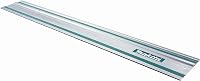
Makita rail for compatible plunge saws
Choose the Makita rail if you use an XPS01, XPS02, or SP6000J plunge saw and want a rail that interacts with the saw base. It supports straight or bevel cutting and suits sheet-material work.
Select other circular saws require the 196953-0 saw guide rail adapter and confirmed compatibility. Skip this rail if you expect an ordinary saw to ride it without a matching connection.
Allow enough rail beyond the work for the saw to engage before entry and remain guided at exit. Don't treat the rail's overall length as guaranteed usable cut length.
BORA clamp edge for occasional guided cuts
Choose the BORA if you want a straightedge for your existing circular saw without fitting a sled. Its one-sided locking lever helps when reaching across the work would make setup awkward.
It clamps to work surfaces up to 1.5 in thick and also serves as a guide for routers and jigsaws. Additional NGX components can extend it and are sold separately.
Skip the standalone guide for cuts beyond its reach or stock beyond its clamping capacity. The saw still needs the correct offset and steady base contact; the clamp edge does not capture the saw.
Milescraft for narrow parallel rips
Choose the Milescraft for straight edge cuts from 1 to 14 in wide. That measurement describes rip width, not the length of the board you can cut.
Its reversible edge guide suits different saw configurations, and its jigsaw circle-cutting function may help if your projects include curves. Circle cutting is for jigsaws, not circular saws.
Skip it for wider rips or work with no straight reference edge. Confirm that the base plate fits securely without obstructing the guard.
Compare more options in best circular saw guides and guide rails. For a shop-made setup, see whether a DIY track saw can do the job.
How should you move the saw through the cut?
Start with the base supported and the blade clear of the material, then let the blade reach full speed before entering. Hold the designated handles and keep your hands away from the blade path.
Feed steadily with light contact against the guide. Pushing sideways can twist the blade, while forcing the feed can slow the saw and roughen the cut.
Keep the base flat through the exit rather than lifting the rear early. Plan your stance so you can finish without overreaching or leaning across the blade.
If the saw binds or drifts, release the trigger and hold it still until the blade stops. Disconnect power before correcting the setup, and never pull backward with the blade spinning.
Why does a circular saw cut crooked even with a guide?
A guide only works if it stays fixed and the saw stays flat against it. Check the cause of the error before applying more pressure.
- Straight but wrong size: recheck the base offset and which side of the line carries the kerf.
- Curved cut: check for guide movement, loss of contact, or a crooked reference edge.
- Angled edge: check the bevel lock and whether the base tipped during travel.
- Burning or slowing: stop and check blade condition, feed pressure, and support that may pinch the kerf.
Don't try to steer a spinning blade back onto the line. Stop, reassess the setup, and decide whether the piece has enough spare material for another pass.
Can you cut straight without buying a guide?
Yes, a rigid straight board and clamps can guide occasional cuts. Freehand cutting also suits short, rough cuts where a small error won't affect the fit.
For freehand work, follow a clear line and keep the base supported. The front notch is a reference, so verify its relationship to the actual cut on scrap.
A dedicated rail system becomes more useful when you frequently break down sheets or need closely fitting parts. Read circular saw vs track saw and is a track saw worth it? before changing systems.
How should you care for the saw and guide?
Keep contact surfaces clean and check locks before each session. Sawdust under a sled, base, or rail can affect how the parts sit together.
Disconnect power before brushing debris away from the blade area. Check the guide for damage, remove buildup using approved cleaning methods, and store long guides where they won't bend.
After changing a blade or disturbing the guide setup, verify the cut on scrap. That quick check helps catch an offset error before it spoils a finished part.
Which setup should you use for your next straight cut?
For how to cut straight with a circular saw, choose the simplest guide that fits the job: a clamped straightedge for occasional cuts, an edge guide for repeated parallel rips, or a compatible rail for guided sheet work.
Pick Kreg for wider edge-guided rips, Milescraft for narrow ones, BORA for a separate clamp edge, and Makita for a matching rail setup. If you're still choosing the saw itself, start with our circular saw buying guide.
Frequently asked questions
How do I cut a straight line with a circular saw?
Use a secure straightedge or compatible guide, with the blade positioned on the waste side of your mark; support the work and offcut so neither shifts or closes the kerf. Keep the saw base flat, let the blade reach full speed, and feed forward without forcing or twisting it.
Why does my circular saw cut crooked?
Crooked cuts often come from a shifting guide, a tilted base, sideways pressure, or a dull blade; an edge guide also follows any curve in the reference edge. Disconnect power, check the blade and locked adjustments, then recheck the guide and material support before making another cut.
Can I use a circular saw without a guide?
Yes, you can follow a pencil line for short cuts or rough work where small errors are acceptable; keep the base supported and watch the blade's path rather than relying only on the front notch. For long cuts or parts that must fit closely, use a secure guide.
What is the best guide for cutting plywood straight?
Choose a clamped straightedge for occasional plywood cuts, a compatible rail for guided sheet work, or an edge guide for repeated parallel rips; check saw fit and usable travel before buying. An edge guide needs a straight reference edge, while a clamped straightedge can establish a new one.