8 Best Circular Saws for Home Use (November 2026)
The best circular saws for home use include the DeWalt DCS391B 20V Circular Saw for everyday cordless projects, the DeWalt DCS571B 4-1/2 Inch Circular Saw for small repair projects, and the DeWalt DWE575SB Corded Circular Saw for regular workshop projects.
On this page (9 sections)
- How we chose circular saws for home use
- Compare these home circular saws
- The best circular saws for home use
- What matters when choosing a home circular saw?
- How do you choose between a compact and full-size saw?
- What should you check before the first cut?
- Which circular saw mistakes cause poor home-project cuts?
- How do you care for a circular saw between projects?
- Which circular saw should you choose for home use?
The best circular saw for home use here is the DeWalt DCS391B if you already own compatible DeWalt batteries and a charger. For a workshop with power nearby, the DWE575SB is the stronger buying choice, while the compact DCS571B suits smaller repairs within its cutting limits.
Start with the hardest cut you expect to make regularly, such as beveling a board or ripping plywood. Then choose the power source and tool format that suit your workspace.
Our complete circular saw buying guide explains the wider category. You can also compare our best cordless circular saws and best corded circular saws if you've already settled on a power source.
Our picks at a glance
-
1
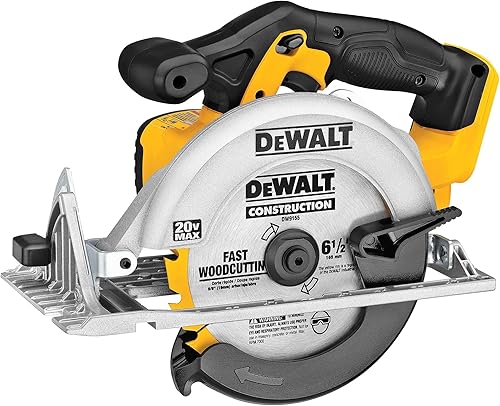 Best for everyday cordless projects
DeWalt DCS391B 20V Circular Saw
8.8/10 our score
See it on Amazon -
2
 Best for small repair projects
DeWalt DCS571B 4-1/2 Inch Circular Saw
8.6/10 our score
See it on Amazon -
3
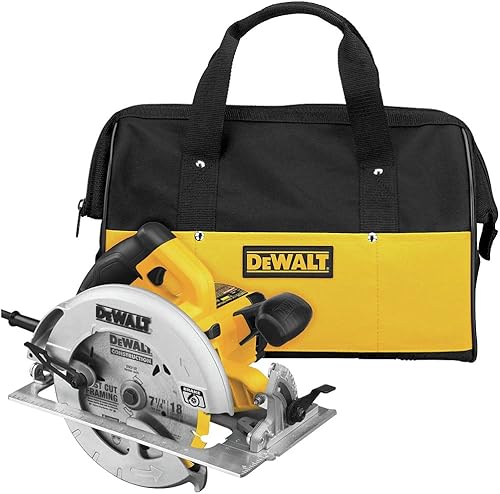 Best for regular workshop projects
DeWalt DWE575SB Corded Circular Saw
8.5/10 our score
See it on Amazon
- 4
 Check it
Milwaukee M18 2630-20 Circular Saw
Best for M18 battery owners - 5
 Best for garage lumber projectsCheck it
- 6
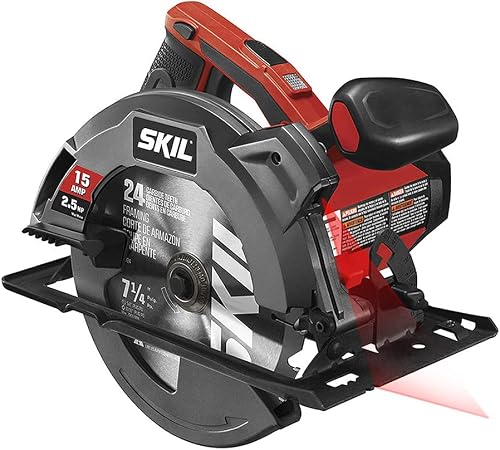 Check it
Skil 5280-01 Corded Circular Saw
Best for following marked cuts - 7
 Check it
Ryobi ONE+ P505 5-1/2 Inch Circular Saw
Best for ONE+ household repairs - 8
 Check it
Skil 5080-01 Corded Circular Saw
Best for occasional shelf building
How we chose circular saws for home use
We compared cutting capacity, power source, handling features and included equipment against common home projects. Battery compatibility matters heavily because a bare tool makes more sense when you already have its power supply.
The scores reflect each saw's features and fit for household woodwork. A lower-ranked saw can still be your better choice if it matches your existing tools or a specific job.
We favored practical differences over headline speed. No-load RPM alone cannot tell you how a saw will handle a particular board, blade or feed rate.
Brakes, clear sightlines and useful adjustment stops deserve attention, too. They affect the work you do between cuts, rather than simply adding another number to compare.
Compare these home circular saws
Choose between mobility and a fixed power supply first, then compare capacity and handling features. The table keeps the main specifications together so you can narrow the field before reading each recommendation.
| Product | Best for | Power | Blade | Bevel | Our score |
|---|---|---|---|---|---|
| DeWalt DCS391B 20V Circular Saw | everyday cordless projects | 20V battery powered | 6-1/2 in | 0 to 50 degrees | 8.8 |
| DeWalt DCS571B 4-1/2 Inch Circular Saw | small repair projects | 20V battery powered | 4-1/2 in | Up to 45 degrees | 8.6 |
| DeWalt DWE575SB Corded Circular Saw | regular workshop projects | 15 amp corded | 7-1/4 in | Up to 57 degrees | 8.5 |
| Milwaukee M18 2630-20 Circular Saw | M18 battery owners | 18V battery powered | 8.4 | ||
| Makita 5007Mg Circular Saw | garage lumber projects | 15 amp corded | 7-1/4 in | 0 to 56 degrees | 8.3 |
| Skil 5280-01 Corded Circular Saw | following marked cuts | 15 amp corded | 7-1/4 in | Up to 51 degrees | 8.2 |
| Ryobi ONE+ P505 5-1/2 Inch Circular Saw | ONE+ household repairs | 18V battery powered | 5-1/2 in | Up to 50 degrees | 8.0 |
| Skil 5080-01 Corded Circular Saw | occasional shelf building | 13 amp corded | 7-1/4 in | Up to 51 degrees | 7.9 |
The best circular saws for home use
The DCS391B is the leading cordless choice for an existing DeWalt setup. The remaining picks address compact repairs, other battery systems and workshop use near an outlet.
DeWalt DCS391B 20V Circular Saw: Best for everyday cordless projects
- 20V battery powered
- 6-1/2 in blade
- 0 to 50 degree bevel capacity
- Battery and charger sold separately
A practical cordless choice for homeowners with compatible DeWalt batteries. Its magnesium shoe and rubber overmolded grip suit a range of home wood projects.
Pros
- Cordless movement between work areas
- Magnesium shoe
- Bevel adjustment for angled cuts
Cons
- Battery and charger sold separately
- Less compelling if you have no DeWalt batteries
The DCS391B suits homeowners moving between shelves in the garage, boards on a driveway and repairs in the yard. Its cordless format avoids dragging a cable between those work areas.
The 6-1/2 in blade and 0 to 50-degree bevel range make it a broader home-project choice than a tool selected only for thin panels. Check the required cutting depth before planning thick stock or angled cuts.
A magnesium shoe and rubber overmolded grip are useful parts of its design. During setup, pay attention to how the shoe rests on the board and whether your hand position gives you a clear view.
Buy it if you already use compatible DeWalt batteries and need one saw for varied wood projects. Skip it if you're starting from scratch and expect to work beside an outlet, since the separate battery and charger add equipment to buy and store.
DeWalt DCS571B 4-1/2 Inch Circular Saw: Best for small repair projects
- Brushless cordless motor
- 4-1/2 in blade
- Cuts 2x material at 90 degrees
- Tool only
A compact option for repair boards and smaller wood projects. Its electronic blade brake, auxiliary handle and dust port add useful control and cleanup features.
Pros
- Compact format
- Removable auxiliary handle
- Electronic blade brake
Cons
- Battery and charger not included
- Beveled cuts need closer capacity checks
The DCS571B suits repair boards, small builds and homeowners who prefer its compact tool format. Its removable auxiliary handle gives you another grip option, while the dust port provides a connection point for suitable dust collection.
Its 4-1/2 in blade can cut 2x lumber at 90 degrees and 1x lumber at a 45-degree bevel. That distinction matters: enough depth for a square cut doesn't promise enough depth for the same board tilted.
The electronic blade brake is another useful feature between cuts. Still, keep the saw supported until the blade stops, and check that the lower guard closes before setting it down.
Choose it when its documented capacity covers your normal work and you have compatible power equipment. Skip it as your only saw if thicker bevel cuts are routine, and don't choose a compact tool just because you assume it requires less care.
DeWalt DWE575SB Corded Circular Saw: Best for regular workshop projects
- 15 amp corded motor
- 7-1/4 in blade
- 57 degree bevel capacity
- Electric brake
A full-size workshop choice for lumber, panels and angled cuts. It combines an electric brake with a dust blower and an aluminum base.
Pros
- Electric brake
- Bevel stops at common angles
- Dust blower clears the cut line
Cons
- Needs a suitable outlet
- Cord needs room behind the saw
The DWE575SB is the corded pick for homeowners who build regularly in one workspace. It suits a cutting station where you can support lumber or panels and route the power cord behind the saw.
Its 15 amp motor, 7-1/4 in blade and 2-9/16 in cutting-depth capacity provide a full-size setup for home woodwork. The bevel reaches 57 degrees, with stops at 22.5 and 45 degrees for common angled cuts.
An electric brake and dust blower add practical benefits, and the tool weighs 8.8 lb. The brake helps stop the blade after trigger release; the blower clears the sightline rather than collecting dust.
Choose it for repeated workshop projects without battery charging breaks. Skip it if most jobs involve moving far from outlets, or if managing a cord would complicate your cutting area more than charging a battery would.
Milwaukee M18 2630-20 Circular Saw: Best for M18 battery owners
- 18V cordless bare tool
- Magnesium upper and lower guards
- Aircraft aluminum shoe
- Battery and charger not included
A sensible addition to an existing Milwaukee M18 tool collection. Magnesium guards, an aluminum shoe and a soft-grip handle support its appeal for home carpentry.
Pros
- Fits an existing M18 battery setup
- Magnesium upper and lower guards
- Soft-grip handle
Cons
- Battery and charger not included
- Starting a new battery system adds equipment
The Milwaukee M18 2630-20 makes the clearest sense for an existing M18 household. Keeping compatible tools on one battery system reduces the chargers and spare packs you need to manage.
Its magnesium upper and lower guards, aluminum shoe and soft-grip handle are the main design details worth comparing. The motor runs at 3,500 RPM, but that number alone isn't a reason to favor or reject it.
Choose it for home carpentry when cordless movement and battery reuse matter. Before committing to a project, confirm cutting depth and blade requirements in the manual, especially for angled or thicker cuts.
Skip it if you have no M18 equipment and only need a saw beside a workbench a few times a year. A corded option may serve that pattern with fewer separate components, since this bare tool includes neither battery nor charger.
Makita 5007Mg Circular Saw: Best for garage lumber projects
- 15 amp corded motor
- 7-1/4 in blade
- LED lights at the cut line
- Up to 56 degree bevel capacity
A corded choice for a garage workspace where lumber and sheet goods are regular projects. Cut-line lights, a dust blower and an included rip fence help with setup and visibility.
Pros
- LED cut-line lights
- Includes a case and rip fence
- Bevel stops at common angles
Cons
- Weighs 10.6 lb
- Corded operation limits reach
The Makita 5007Mg suits a garage workspace used for lumber and sheet goods. Its 2 built-in LED lights and dust blower help keep a marked line visible, particularly when the tool casts a shadow over the work.
It has a 15 amp motor and a 7-1/4 in blade. The bevel range reaches 56 degrees, with stops at 22.5 and 45 degrees.
The included rip fence helps guide cuts parallel to a suitable board edge. A case and hex wrench also give you a place to start with storage and blade changes.
Choose it when visibility and the included accessories match regular workshop jobs. Skip it if carrying and repositioning a 10.6 lb saw will be awkward for you; the lighter corded models here deserve a closer look for that reason.
Skil 5280-01 Corded Circular Saw: Best for following marked cuts
- 15 amp corded motor
- 7-1/4 in carbide-tipped blade included
- Single-beam laser guide
- 51 degree bevel capacity
A corded saw for DIY buyers who want a laser path indicator and dust blower. It includes a blade, wrench and carry bag.
Pros
- Laser guide and dust blower
- Guarded trigger and power-on indicator
- Includes blade, wrench and carry bag
Cons
- Cord limits movement
- Laser does not physically guide the saw
The Skil 5280-01 suits home builders who want a visible path indicator while following marked cuts. Its single-beam laser and dust blower address visibility in different ways: one marks a path, while the other clears loose sawdust.
A 15 amp motor powers the included 7-1/4 in carbide-tipped blade. Bevel adjustment reaches 51 degrees, with a positive stop at 45 degrees.
The saw also has a safety lock, guarded trigger and power-on indicator. Those features help you recognize and control its powered state, but disconnect it before blade work or adjustments as directed by the manual.
Choose it if you'll use the laser as an aid alongside careful marking and work support. Skip it if your main goal is repeatable, straight plywood cuts and you expect the laser to steer the tool; a clamped guide serves that purpose.
Ryobi ONE+ P505 5-1/2 Inch Circular Saw: Best for ONE+ household repairs
- 18V cordless bare tool
- 5-1/2 in blade
- Bevel adjusts up to 50 degrees
- Battery not included
A household repair option for homeowners with compatible Ryobi ONE+ batteries. Rubber overmolded handles and a transparent lower guard support grip and visibility.
Pros
- Uses compatible ONE+ 18V batteries
- Extra side handle
- Transparent lower guard
Cons
- Battery and charger not included
- Check depth before planning thicker cuts
The Ryobi P505 suits smaller household wood projects when you already have compatible ONE+ batteries. Its 5-1/2 in blade gives it a different capacity profile from the full-size corded choices, so check depth before planning your cuts.
Rubber overmolded handles provide grip surfaces, and the extra side handle gives you a second holding point. The transparent lower guard helps you see the work around the blade without moving the guard out of the way.
Bevel adjustment reaches 50 degrees. As with any saw, the maximum angle and the depth available at that angle are separate buying questions.
Choose it for portable household repairs that fit its capacity and your existing battery setup. Skip it if you're starting a new tool collection mainly for long panel cuts or thick stock, where a full-size option may better match your regular work.
Skil 5080-01 Corded Circular Saw: Best for occasional shelf building
- 13 amp corded motor
- 7-1/4 in blade
- 51 degree bevel capacity
- Spindle lock for blade changes
A straightforward corded choice for occasional shelving and wood projects. It provides a dust blower, adjustable bevel and on-tool blade wrench storage.
Pros
- 7 lb tool weight
- Spindle lock for blade changes
- Dust blower
Cons
- Cord limits movement
- Lower amperage than the 15 amp options
The Skil 5080-01 is a straightforward choice for occasional shelving and wood projects near an outlet. At 7 lb, it is lighter than the other corded models in this group.
Its 13 amp motor, 7-1/4 in blade and bevel adjustment up to 51 degrees cover a useful set of basic workshop needs. The dust blower helps clear the marked line, while the spindle lock and stored wrench support blade changes.
Choose it when you want a simple corded setup and don't need the 5280-01's laser. Put equal thought into a suitable blade and stable work supports, since those affect results on even a small shelving job.
Skip it if your plans call for the DWE575SB's brake or the Makita's cut-line lights. Also avoid treating lower amperage as a precise measure of cutting ability; blade condition, material and feed rate matter.
What matters when choosing a home circular saw?
Choose by your regular materials, required cutting depth and available workspace. Extra bevel range or a laser should come after those basic needs.
Is a cordless circular saw best for home use?
Cordless is best when moving between work areas is a regular part of the job. Reusing compatible batteries also makes a bare tool easier to justify.
Look beyond the saw itself and plan where you'll charge and store its batteries. A partly charged pack can interrupt a long project, so follow the tool manual's battery recommendations rather than assuming any pack will suit every task.
Corded power fits a cutting station with suitable electricity nearby. Choose an extension cord with the rating and length recommended by the saw's manual, and keep plugs and connections away from wet conditions.
What blade size and cutting depth do you need?
Match actual cutting depth to material thickness, including any bevel angle you need. A larger diameter usually allows greater depth, but the saw's design determines its usable capacity.
Nominal lumber sizes can mislead new buyers. A common 2x4 is typically about 1-1/2 in thick, so compare actual dimensions with the saw's depth specification.
Don't plan on flipping thick stock to finish a cut as a substitute for suitable capacity. Aligning separate passes adds difficulty, and a tool that completes your normal cut in one pass is the better starting point.
Which blade suits home wood projects?
Use a blade approved for the saw and intended material. Diameter, arbor size and speed rating must match the manual's requirements.
A lower tooth count generally favors faster cuts in framing lumber. A suitable higher-tooth-count blade can improve the edge on plywood or shelving, though it may cut more slowly.
No wood blade makes these saws suitable for every material. Don't fit a metal or masonry blade without confirming that both the saw and blade are approved for that use.
How much should handling and visibility matter?
Handling matters whenever you need to keep the shoe flat while following a line. Consider the grip layout, access to controls and the total weight with a battery attached.
A laser, light or blower can help you see, but none physically steers the saw. For technique, see how to cut straight with a circular saw.
For long panel cuts, compare circular saw guides and guide rails before spending more on visibility features. A stable guide gives the shoe an edge to follow.
How do you choose between a compact and full-size saw?
Choose compact for jobs within its depth limits, and full-size when greater capacity better fits your regular cuts. Small format alone doesn't tell you whether a tool suits your grip or workspace.
For repair boards and short cuts, the DCS571B deserves attention. For repeated plywood breakdown and varied lumber work near an outlet, start with the full-size corded choices.
A compact saw still needs firm support under its shoe. On narrow pieces, plan how you'll support and secure the board without putting clamps, fingers or supports in the blade path.
If you're new to the tool, our circular saw guide for beginners explains the first choices. Our guide to using a circular saw covers basic operation.
What should you check before the first cut?
Secure the work, set the saw correctly and clear the blade path before connecting power. Wear suitable eye and hearing protection, and use dust control appropriate to the material and workspace.
Support the board without trapping the blade
Arrange supports so the work stays stable and the cut doesn't close around the blade. Blade pinching can cause kickback, which is a sudden movement of the saw toward the operator.
For sheet goods, support the panel across its area with a suitable cutting surface or support system. Check beneath the full cutting path for fasteners, supports and anything else the blade could reach.
Set depth, angle and guide position
Set the depth so the teeth project only as far below the material as the manual recommends. Excess blade exposure adds risk without helping a normal through-cut.
Lock the depth and bevel adjustments, then check the angle with a square when accuracy matters. Printed scales and stops are starting points, especially before cutting parts that must fit together.
Position a straightedge using the distance from the blade to the edge of the shoe that will follow it. Account for the kerf, which is the strip of material the blade removes.
Check the blade and lower guard
With power disconnected, inspect the blade and confirm that the lower guard moves and returns correctly. Don't use a damaged blade or defeat a guard that catches or sticks.
Our guides explain which way a circular saw blade goes and how to change a circular saw blade. Follow the model's manual for the exact blade-change steps.
Which circular saw mistakes cause poor home-project cuts?
The most common avoidable problems are poor support, the wrong blade and forcing the cut. Correcting those issues usually helps more than moving to a saw with a higher speed figure.
Starting with the blade against the wood
Position the shoe securely with the blade clear of the material. Let the motor reach operating speed before feeding forward, following the manual's starting procedure.
Keep both hands in the intended grip positions. Never reach beneath the work or move a hand ahead of the saw to steady a loose piece.
Forcing the saw or correcting sideways
Feed at a steady rate that lets the blade cut without heavy pressure. If the motor labors or the blade binds, release the trigger and hold the saw steady until the blade stops.
Disconnect power before investigating the cause. Don't pull a spinning blade backward or twist the saw sideways to recover a drifting cut.
Trusting a laser instead of the cut layout
Mark the waste side and keep the kerf there. Otherwise, even a straight cut can leave a shelf too short or a fitted panel too narrow.
Make a practice cut in scrap of the same thickness before cutting a finished part. Confirm the guide offset, bevel and edge quality while corrections are still easy.
How do you care for a circular saw between projects?
Keep the blade, shoe and guard clean, and store the saw dry. Disconnect power before cleaning or inspection, and follow the manual's care instructions.
Remove loose sawdust from accessible areas without packing it farther into the tool. Resin buildup on a blade can increase drag, so use a blade-cleaning method approved for that blade.
Inspect cords, grips, adjustment locks and the shoe before the next project. A bent shoe or loose adjustment can spoil alignment even when the pencil line is clear.
Replace a damaged or dull blade rather than forcing it through wood. For cordless models, follow the battery maker's storage guidance and check the charge before starting work.
Which circular saw should you choose for home use?
Choose the DCS391B for varied cordless projects with existing DeWalt batteries, or the DWE575SB for regular cutting at a powered work station. Pick the DCS571B when compact repair work fits its square-cut and bevel limits.
Existing M18 owners should consider the Milwaukee, while ONE+ households can keep the Ryobi on their shortlist. For corded alternatives, choose Makita for its lights and included accessories, Skil 5280-01 for its laser aid, or 5080-01 for occasional shelf projects.
The best circular saw for home use is the one that completes your regular cuts with a manageable setup. Leave room in that setup for a suitable blade, secure supports and a guide.
For options beyond household projects, see our best circular saws.
Our top 3 picks at a glance
-
1
Best for everyday cordless projects
DeWalt DCS391B 20V Circular Saw
8.8/10 our score
See it on Amazon -
2
Best for small repair projects
DeWalt DCS571B 4-1/2 Inch Circular Saw
8.6/10 our score
See it on Amazon -
3
Best for regular workshop projects
DeWalt DWE575SB Corded Circular Saw
8.5/10 our score
See it on Amazon
Frequently asked questions
What is the best circular saw for home use?
The DeWalt DCS391B is the best fit here for homeowners with compatible DeWalt batteries who want cordless movement; choose the DWE575SB if you work near an outlet and want a full-size corded saw. Your regular materials, required cutting depth and existing tools should decide between them.
Should I choose a corded or cordless circular saw for home projects?
Choose cordless for moving between work areas, especially if you already own compatible batteries and a charger; choose corded for a fixed workspace with suitable power nearby. Include the battery, charger, extension cord and work supports in your plan so the saw is ready for your projects.
Is a compact circular saw enough for DIY projects?
A compact saw is enough when it can complete your regular cuts at the required depth and angle. The DeWalt DCS571B can cut 2x lumber square and 1x lumber at a 45-degree bevel; check capacity at the angle you need before choosing it for thicker projects.
What should I check before buying a circular saw for home use?
Check cutting depth, power source, grip layout and blade compatibility first; then confirm which accessories you need, including a suitable blade, work supports and a guide for long cuts. A saw that fits your material and workspace is more useful than extra features you rarely use.


