9 Best Corded Circular Saws (November 2026)
The best best corded circular saws include the DeWalt DWE575SB Corded Circular Saw for mixed project work, the Makita 5007Mg Circular Saw for shaded work areas, and the Skilsaw SPT77WML-01 Worm Drive Saw for worm drive framers.
On this page (9 sections)
- How we chose these corded circular saws
- Corded circular saws compared
- Best corded circular saws by use
- What should you check before buying a corded saw?
- Is a worm drive or sidewinder better for corded work?
- How should you set up a corded circular saw?
- Which mistakes cause rough cuts or kickback?
- How do you care for a corded circular saw?
- Which corded circular saw should you choose?
The DeWalt DWE575SB is the best corded circular saw for most buyers, combining manageable weight with an electric brake and useful bevel adjustments. Choose the Skilsaw SPT77WML-01 if you prefer a worm drive, or the Skil 5080-01 for occasional projects where low weight comes first.
Corded power makes sense for lumber and sheet-good work near a suitable outlet. You avoid battery charging, but you need a clear cord path and enough slack to finish each cut without pulling on the saw.
Start with your thickest material, usual cutting angle and work area. If you're still choosing a saw type, our complete circular saw buying guide explains the category, while worm drive vs sidewinder circular saws covers the two layouts.
Our picks at a glance
-
1
-
2

-
3

- 4
 Check it
Skil 5280-01 Corded Circular Saw
Best for visible layout lines - 5
 Check it
Skilsaw SPT67WL-01 Sidewinder Saw
Best for repeated panel cuts - 6
 Check it
Skil 5080-01 Corded Circular Saw
Best for occasional shelf projects - 7
 Best for square framing cutsCheck it
- 8
 Check it
Skilsaw SPT77W-01 Worm Drive Saw
Best for rafter framing work - 9
 Check it
Skil 5180-01 Corded Circular Saw
Best for weekend lumber projects
How we chose these corded circular saws
We compared cutting capacity, handling weight, bevel adjustments and useful controls to match each saw to a specific job. Brakes, lights, cord reach and included accessories helped separate models with similar motor ratings.
The scores reflect those features and their fit for corded woodcutting. A higher score doesn't mean every buyer needs that model: a lighter home-project saw can be the better choice for a few shelf cuts.
Small differences in maximum bevel angle rarely decide ordinary square cuts. We give more buying weight to features you'll use throughout a project, such as comfortable handling and a clear view of the cut.
Corded circular saws compared
Compare weight and working capacity first, then look at convenience features. The table helps narrow the group, while the write-ups explain why each model belongs on a particular buyer's shortlist.
| Product | Best for | Motor | Weight | Bevel capacity | Our score |
|---|---|---|---|---|---|
| DeWalt DWE575SB Corded Circular Saw | mixed project work | 15 amp | 8.8 lb | 57 degrees | 8.5 |
| Makita 5007Mg Circular Saw | shaded work areas | 15 amp | 10.6 lb | 56 degrees | 8.3 |
| Skilsaw SPT77WML-01 Worm Drive Saw | worm drive framers | 15 amp | 11.5 lb | 53 degrees | 8.3 |
| Skil 5280-01 Corded Circular Saw | visible layout lines | 15 amp | 8.7 lb | 51 degrees | 8.2 |
| Skilsaw SPT67WL-01 Sidewinder Saw | repeated panel cuts | 15 amp | 8.6 lb | 56 degrees | 8.0 |
| Skil 5080-01 Corded Circular Saw | occasional shelf projects | 13 amp | 7 lb | 51 degrees | 7.9 |
| Makita 5007F Circular Saw | square framing cuts | 15 amp | 45 degrees | 7.9 | |
| Skilsaw SPT77W-01 Worm Drive Saw | rafter framing work | 14.2 lb without blade, cord and wrench | 51 degrees | 7.8 | |
| Skil 5180-01 Corded Circular Saw | weekend lumber projects | 14 amp | 7.2 lb | 51 degrees | 7.6 |
Best corded circular saws by use
The DeWalt is the best general-purpose choice, while the remaining picks serve more specific work patterns. Follow the use cases below rather than choosing only by motor rating or maximum speed.
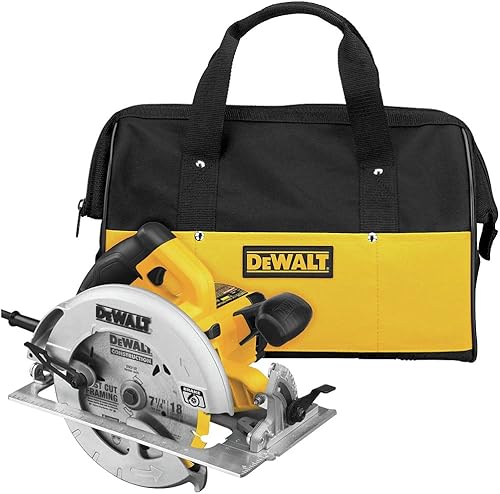
DeWalt DWE575SB Corded Circular Saw: Best for mixed project work
- 15-amp motor
- 8.8 lb
- 57-degree bevel capacity
- Electric brake
The most balanced choice here for buyers moving between framing, sheet goods and bevel cuts. Its electric brake adds a useful feature for work that involves frequent starts and stops.
Pros
- Electric brake slows the blade after trigger release
- Bevel stops at 22.5 and 45 degrees
- Dust blower helps keep the line visible
Cons
- Less cut depth at a bevel than at a square setting
- A cord still needs clearance throughout each cut
1. DeWalt DWE575SB: best corded circular saw for mixed projects
Buy the DWE575SB if one saw needs to cover rough lumber, plywood breakdown and occasional bevel work. Its 8.8 lb weight and electric brake make a useful combination when a project involves repeated cuts and repositioning.
The brake stops the blade after trigger release, but keep the saw supported until rotation has fully stopped. It doesn't prevent kickback or replace correct material support.
Its bevel range reaches 57 degrees, with stops at 22.5 and 45 degrees, and maximum cut depth is 2-9/16 in. The aluminum base and dust blower address two everyday needs: supporting the saw and keeping your mark visible.
Skip it if your main goal is the lowest carrying weight for occasional cuts, or if you already prefer a worm drive layout. For long panel work, pair it with suitable support and follow our advice on how to cut straight with a circular saw.
Makita 5007Mg Circular Saw: Best for shaded work areas
- 15-amp motor
- 5,800 RPM
- Two built-in LED lights
- 56-degree bevel capacity
A framing-focused choice for buyers who value cut-line lighting and a supplied case and rip fence. Its magnesium components come with more weight than the DeWalt.
Pros
- Two LEDs illuminate the cutting area
- Includes a case and rip fence
- Bevel stops at 22.5 and 45 degrees
Cons
- Heavier than the DeWalt DWE575SB
- Rip fence does not replace full support for sheet goods
2. Makita 5007Mg Circular Saw
Choose the 5007Mg for cut-line lighting and a framing-focused accessory package. Its 2 LEDs illuminate the cutting area, while a blower helps keep sawdust from hiding your mark.
The magnesium construction weighs 10.6 lb, so this isn't the pick for buyers chasing the lowest weight. Its square-cut capacity is 2-1/2 in, and the bevel adjusts to 56 degrees.
The included case, rip fence, hex wrench and 24-tooth blade give you a practical starting kit. A rip fence is useful when following a suitable straight board edge, but it won't correct a crooked reference edge or support a large panel.
Skip this model if you're mainly making short, occasional cuts and would rather handle a lighter tool. Read our DWE575SB vs Makita 5007Mg comparison if lights and accessories are pulling you toward Makita but the DeWalt's brake appeals too.
Skilsaw SPT77WML-01 Worm Drive Saw: Best for worm drive framers
- 15-amp motor
- Magnesium construction
- 53-degree bevel capacity
- Cut-ready depth system
The better fit of these two worm drives when carrying weight matters. Its depth system and anti-snag lower guard suit repeated lumber cuts.
Pros
- Lighter than the SPT77W-01
- Cut-ready depth system
- Lower guard designed to reduce snagging on small cutoffs
Cons
- Heavier than the sidewinder options
- Less bevel range than the Makita 5007Mg
3. Skilsaw SPT77WML-01 Worm Drive Saw
Choose the SPT77WML-01 if you prefer a worm drive for framing but want less weight than the SPT77W-01 below. Its magnesium construction brings the weight to 11.5 lb, and the Cut Ready system gives you a reference for depth adjustments.
The anti-snag lower guard is designed to move more smoothly around small cutoffs. That feature doesn't remove the need to secure the main piece and keep hands clear of the offcut.
Its 53-degree bevel range covers common angled work and extends beyond a standard 45-degree setting. Check actual cutting depth at your chosen angle before planning a one-pass cut.
Skip it if most of your work involves moving a saw between benches or making only a few light cuts. Our worm drive vs sidewinder guide explains the handling differences to consider before committing to either layout.
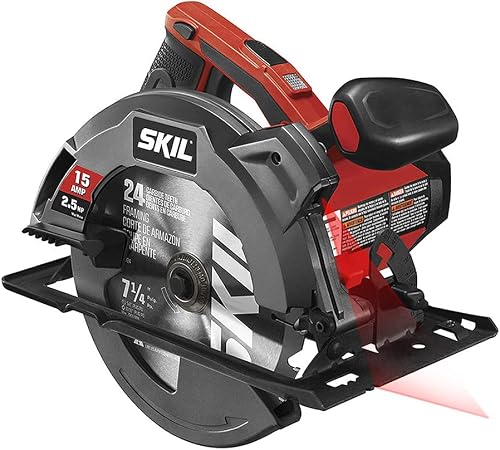
Skil 5280-01 Corded Circular Saw: Best for visible layout lines
- 15-amp motor
- 5,300 RPM
- Single-beam laser guide
- 51-degree bevel capacity
A useful choice for DIY buyers who want a laser reference alongside a dust blower. Use a clamped guide when a long cut needs a straight edge.
Pros
- Single-beam laser reference
- Spindle lock for blade changes
- Includes a blade, wrench and carry bag
Cons
- Laser does not physically guide the saw
- Heavier than the Skil 5080-01 and 5180-01
4. Skil 5280-01 Corded Circular Saw
Choose the 5280-01 if a laser reference helps you follow marked cuts during DIY projects. The single-beam laser and dust blower serve different purposes: one supplies a reference, while the other helps expose the surface beneath it.
A laser doesn't steer the base or guarantee a straight edge. Before cutting valuable material, make a scrap cut to learn how the beam and base notches relate to the blade's kerf.
The saw weighs 8.7 lb and includes a 24-tooth carbide blade, wrench and carry bag. Its spindle lock helps with blade changes, and the guarded trigger adds a control you'll need to learn before starting work.
Skip it if you're buying mainly for long, straight plywood cuts and expect the laser to replace a guide. Our best circular saw picks cover other models if your priorities extend beyond a corded tool.
Skilsaw SPT67WL-01 Sidewinder Saw: Best for repeated panel cuts
- 15-amp motor
- 8.6 lb
- 56-degree bevel capacity
- 10 ft cord
A light sidewinder for buyers making repeated cuts near a bench or sheet-support setup. Its longer cord can help keep the extension connection away from a panel edge.
Pros
- Low weight among the 15-amp choices
- 10 ft cord
- Bevel stop at 45 degrees
Cons
- Heavier than the lighter-duty Skil options
- Long cord still needs routing clear of supports
5. Skilsaw SPT67WL-01 Sidewinder Saw
Choose the SPT67WL-01 for repeated panel and lumber cuts where a light full-size saw suits your workflow. It pairs an 8.6 lb body with a 10 ft cord, which can help keep an extension connection away from a sheet edge.
That extra reach matters most when you have a fixed cutting station. Plan the cord route before starting so it won't catch a support, snag a corner or tighten near the end of a rip.
The bevel reaches 56 degrees, and Skilsaw says its Dual-Field motor is designed to dissipate heat. Neither feature is a reason to force the blade through a cut when feed resistance increases.
Skip it if occasional small projects make the lighter Skil 5080-01 sufficient. Also choose the DeWalt instead if an electric brake is a higher priority than cord reach.
Skil 5080-01 Corded Circular Saw: Best for occasional shelf projects
- 13-amp motor
- 7 lb
- 51-degree bevel capacity
- Spindle lock
The lightest pick here for occasional shelving and home-shop work. Plan to match the blade to the finish you need, especially on visible plywood edges.
Pros
- Lowest weight in this group
- Spindle lock and stored blade wrench
- Dust blower helps expose the cut line
Cons
- Lower motor rating than the other picks
- Included 18-tooth blade favors rougher work over fine finish cuts
6. Skil 5080-01 Corded Circular Saw
Choose the 5080-01 for occasional shelves and home-shop projects when carrying and positioning weight matter most. At 7 lb, it's the lightest model in this group.
Its 13-amp motor suits a buyer whose project list centers on routine wood cuts rather than frequent demanding rips. The dust blower, spindle lock and stored wrench cover useful basics without making the tool complicated.
The included 18-tooth carbide blade is a starting point for general cutting. For visible plywood edges or finer crosscuts, choose a compatible blade designed for that material and finish.
Skip this saw if you're planning frequent framing work or long cuts through dense stock. Our circular saw beginner picks can help if you're deciding between a simple first saw and features you may use later.
Makita 5007F Circular Saw: Best for square framing cuts
- 15-amp motor
- 5,800 RPM
- Two built-in LED lights
- 45-degree bevel capacity
A framing option for buyers who want lights, a dust blower and a heavy-gauge aluminum base. Its bevel range covers common angles but stops short of the other picks.
Pros
- Two built-in LEDs
- Shaft lock for blade replacement
- Lower guard designed for bevel and narrow cuts
Cons
- Cannot bevel beyond 45 degrees
- Shallower square-cut capacity than the Makita 5007Mg
7. Makita 5007F Circular Saw
Choose the 5007F for square framing cuts and common bevels when you want built-in lighting. Its 2 LEDs and dust blower help keep the cutting area visible, while the heavy-gauge aluminum base supports the tool on the work.
Its key limit is angle capacity: the bevel stops at 45 degrees. Cutting depth is 2-3/8 in at 90 degrees and 1-3/4 in at 45 degrees, so angled cuts need a separate thickness check.
The lower guard is designed for bevel and narrow cuts. The shaft lock and flat motor housing also support blade-changing tasks, with the tool unplugged and positioned as the manual directs.
Skip it if your plans call for bevels beyond its range or thicker one-pass cuts than it allows. When switching from framing to finish work, follow our guide on how to change a circular saw blade.
Skilsaw SPT77W-01 Worm Drive Saw: Best for rafter framing work
- Worm drive
- Dual-Field motor
- 51-degree bevel capacity
- Integrated saw hook
A worm drive for buyers who have a use for an integrated rafter hook. Its higher carrying weight makes the lighter SPT77WML-01 more appealing for frequent repositioning.
Pros
- Integrated saw hook
- Cut Ready depth system
- Motor designed by Skilsaw to improve cooling
Cons
- Heavier than the SPT77WML-01
- Stated weight excludes blade, cord and wrench
8. Skilsaw SPT77W-01 Worm Drive Saw
Choose the SPT77W-01 if an integrated rafter hook fits your framing workflow and you accept a heavier worm drive. The hook gives you a storage option between cuts when used on suitable support according to the manual.
Its stated 14.2 lb weight excludes the blade, cord and wrench. That makes it a poor choice for buyers seeking a light saw for carrying between small projects.
The Cut Ready depth system helps with depth setup, and bevel capacity reaches 51 degrees. Skilsaw says the Dual-Field motor is designed to improve cooling, but blade condition and a sensible feed rate still matter.
Skip it unless you have a clear reason to favor this model's hook and layout. The lighter SPT77WML-01 is the stronger starting point for most buyers choosing between these 2 worm drives.
Skil 5180-01 Corded Circular Saw: Best for weekend lumber projects
- 14-amp motor
- 7.2 lb
- 51-degree bevel capacity
- Dust blower
A straightforward saw for weekend lumber and plywood work when low weight takes priority over extra visibility features. It sits between the 5080-01 and the heavier 15-amp options in motor rating.
Pros
- Low carrying weight
- Spindle lock for blade changes
- Includes a 20-tooth carbide blade
Cons
- Lower motor rating than the 15-amp choices
- Included blade is better suited to general cutting than fine plywood edges
9. Skil 5180-01 Corded Circular Saw
Choose the 5180-01 for weekend lumber and plywood projects when you want low weight and straightforward controls. Its 14-amp motor and 7.2 lb weight place it between the lightest Skil and the larger motor options here.
The dust blower helps keep your mark exposed, and the spindle lock supports blade changes. A 20-tooth carbide blade and wrench are included.
Its 51-degree bevel range has a stop at 45 degrees. Use a square to verify the setup when a joint needs to fit closely, rather than relying only on the angle scale.
Skip it if built-in lighting, a laser reference or the DeWalt's brake would solve a regular need. It makes more sense for a buyer who wants basic woodcutting capability than someone building a frequent-use framing setup.
What should you check before buying a corded saw?
Start with material thickness, working angle and comfortable handling. These decide whether a saw can do the job; extra visibility features come after that.
Check depth at the angle you'll use
A saw's maximum square-cut depth doesn't carry over to bevel cuts. Tilting the blade reduces the thickness it can cut through, so check capacity at the actual angle in your plan.
Leave room for the blade to project below the material as directed in the manual. If a planned cut pushes the saw's limits, choose a suitable tool or cutting method before buying.
Match the blade to the job
These are 7-1/4-inch saws, but diameter is only part of blade compatibility. The arbor fit, speed limit, kerf and intended material must also suit the saw.
Lower tooth counts generally favor faster rough wood cuts, while suitable higher-tooth-count blades can give cleaner crosscuts and plywood edges. A sharper, better-matched blade often helps more than choosing between similar motor ratings.
Give handling more weight than maximum speed
A lighter saw is easier to carry, but comfort also depends on handle position, balance and your view of the cut. If possible, handle the saw unplugged before buying and check that you can reach both grips comfortably.
No-load RPM doesn't rank cutting strength by itself. Blade design, feed rate and material resistance all affect the cut, so don't choose solely because one motor spins faster.
Budget space for support and a guide
A circular saw needs a stable surface under the material and a clear path below the blade. Include clamps, suitable supports and a straightedge in your work-area plan.
For long panel cuts, our guide to circular saws and guide rails explains accessories that help control direction. Lights and lasers aid visibility, but a straight guide gives the base a physical reference.
Is a worm drive or sidewinder better for corded work?
Choose a sidewinder for compact handling, or a worm drive if you prefer its longer body and rear-handle layout. Both can serve framing work, so the choice should follow your grip and cutting setup.
The worm drives in this group weigh more than the lighter sidewinder options. That difference matters when you carry the saw often or reset it for many short cuts.
A familiar layout can help you stay consistent, but drive style doesn't fix poor support or an unsuitable blade. Compare the whole setup before assuming that a heavier saw will produce a better cut.
How should you set up a corded circular saw?
Set up support, blade depth and cord clearance before connecting power. A few checks before the first cut prevent many avoidable interruptions.
- Inspect the unplugged saw. Check the cord, blade and base, and confirm the lower guard moves and returns freely.
- Secure the material. Support it so the pieces won't shift, close the kerf or trap the blade as the cut ends.
- Set depth and bevel. Follow the manual for blade projection, then tighten both adjustment locks.
- Position the guide. Account for the distance between the blade and the base edge that follows your straightedge.
- Check the full path. With power disconnected and the blade clear, check that the motor housing, clamps and cord won't obstruct travel.
- Prepare yourself. Wear eye and hearing protection, manage dust exposure and keep both hands on the intended grips.
Connect power only after the setup is ready. Keep the cord behind the travel path with enough slack for the whole cut, and stand clear of the blade's line.
Let the blade reach full speed before entering the wood, then feed steadily without forcing it. Our guide to using a circular saw explains the cutting sequence in more detail.
Which mistakes cause rough cuts or kickback?
The main mistakes are poor support, excessive blade depth and forcing the cut. Correct the cause rather than trying to push through rising resistance.
Supporting a board so it sags into the blade can pinch the kerf. Support the main piece securely and arrange the offcut so it can separate without trapping the blade.
Steering sideways to recover a missed line can bind the blade. If the saw drifts, release the trigger, hold it still until the blade stops, then disconnect power before resetting.
A dull or unsuitable blade can leave burn marks, splintering or a cut that needs too much pressure. Check blade condition and material suitability before blaming the motor.
Never pull a spinning blade backward through the cut or secure the lower guard open. Keep hands away from underneath the work, where the blade and moving offcut are harder to judge.
How do you care for a corded circular saw?
Keep the blade, guard and adjustment points clean, and inspect the cord before each session. Unplug the saw before cleaning, changing blades or making adjustments.
Remove loose sawdust from vents and the base with a brush. Deal with pitch buildup using a method approved for the blade, and avoid cleaners that could damage nearby plastic parts.
Check that depth and bevel locks hold securely and that the base hasn't been bent by a drop. If the guard sticks or the cord insulation is damaged, stop using the saw until it is repaired.
Follow the manual for any drive lubrication or service requirements, especially with a worm drive. Store the saw dry and protect the cord from tight bends, sharp edges and being used as a carrying handle.
Which corded circular saw should you choose?
Choose the best corded circular saw for your repeated task, then confirm blade and capacity needs before ordering. A useful feature earns its place when it solves something you'll face regularly.
- Mixed projects: choose the DeWalt DWE575SB for its brake and manageable weight.
- Shaded cutting areas: choose the Makita 5007Mg for its lighting and accessory package.
- Worm drive framing: start with the lighter SPT77WML-01.
- Frequent panel work: consider the SPT67WL-01 for its low weight and cord reach.
- Occasional shelf projects: choose the Skil 5080-01 if low carrying weight comes first.
If outlet access will restrict where you work, compare these choices with our best cordless circular saws. For a fixed cutting area, put the rest of your effort into a sharp blade, stable support and a guide suited to the cut.
Our top 3 picks at a glance
-
1
-
2
-
3
Frequently asked questions
What is the best corded circular saw for most people?
The DeWalt DWE575SB is the best fit for most buyers because it combines manageable weight, an electric brake and a broad bevel range. Choose it for varied lumber and sheet-good projects near an outlet.
Buyers who prefer a worm drive should start with the lighter Skilsaw SPT77WML-01.
Are worm drive saws better than sidewinders?
Neither layout is better for every job. Worm drives generally have a longer body and rear handle, while sidewinders are more compact.
Choose a layout you can guide comfortably with both hands, then compare depth and weight.
Both worm drives in this roundup weigh more than its lighter sidewinder choices.
How much power should a corded circular saw have?
A 15-amp motor is a sensible starting point for frequent framing and demanding wood cuts. The lower-amp Skil options fit occasional home projects where low weight matters.
Amps describe electrical draw, so also check cutting depth, blade choice and the power supply rather than treating amperage as a complete performance measure.
Do corded circular saws need an extension cord?
An extension cord is needed only when the saw cannot reach a suitable outlet with enough slack for the full cut. Follow the manual's wire-gauge and length requirements, inspect the cord and keep connections clear of the cutting area.
A long, undersized cord can cause voltage drop and poor operation.
What should you check before buying a corded circular saw?
Check cut depth at your working angle, comfortable handling, blade compatibility and access to a suitable outlet. Then compare brakes, lights and adjustment controls.
For long panel cuts, plan the support and guide as part of the setup; our guide to cutting straight explains how to position a straightedge.