DeWalt DWE575SB vs Makita 5007Mg Circular Saws: Which Is Better? (November 2026)
In the DeWalt DWE575SB vs Makita 5007Mg comparison, choose DeWalt for lighter handling and an electric brake. Choose Makita for cut-line lighting and an included rip fence.
On this page (12 sections)
- DeWalt DWE575SB vs Makita 5007Mg: which fits your work?
- Which specifications should decide this comparison?
- Who should buy the DeWalt, and who should skip it?
- Who should buy the Makita, and who should skip it?
- Do bevel range and cutting depth change the choice?
- How should you set up either saw for accurate cuts?
- What helps either saw cut straight and cleanly?
- Which included accessories will you actually use?
- What care keeps these saws ready for the next job?
- Which common buying and cutting mistakes should you avoid?
- Is the Skil 5280-01 worth considering instead?
- DeWalt DWE575SB vs Makita 5007Mg: the final decision
Choose DeWalt for lighter handling and an electric brake, or Makita for cut-line lighting and an included rip fence in the DeWalt DWE575SB vs Makita 5007Mg matchup. For most buyers moving between small projects, DeWalt is the stronger starting choice.
Both are corded 15 amp circular saws that use 7-1/4 in blades. Your decision should turn on how you work: frequent carrying favors DeWalt, while following pencil marks in shadowed areas favors Makita.
Neither saw removes the need for a suitable blade, firm material support and a clear cutting path. Those basics will affect your results more than a small difference in maximum bevel angle.
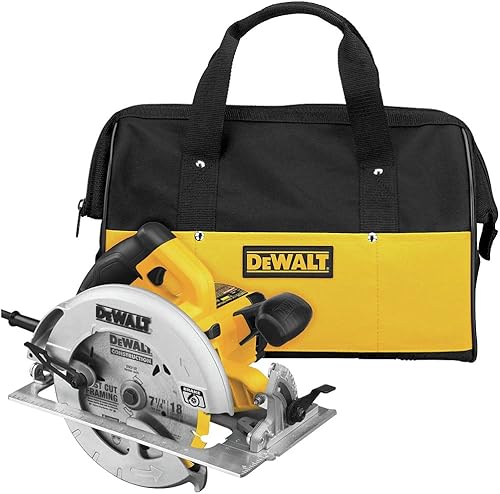

DeWalt DWE575SB vs Makita 5007Mg: which fits your work?
The DeWalt suits mobile project work, while the Makita suits buyers who put cut-line visibility first. Start with your next few jobs, then choose the features that solve a recurring problem.
For shelves, repairs and framing tasks spread around a work area, carrying and positioning the saw happen often. DeWalt's lower weight is useful each time you move it, and its brake stops the blade after trigger release.
Makita makes more sense if shadows regularly hide your cut mark or you want the included fence for narrow rips. Its case also gives you a place to keep the saw and accessories together between jobs.
Skip either model if reaching an outlet is a regular obstacle. A cord that cannot reach safely is a bigger problem than choosing between these feature sets.
If you're still comparing tools, our best corded circular saws guide covers other options. The broader circular saw buying guide explains which saw types fit different jobs.
Which specifications should decide this comparison?
Weight, visibility and accessories deserve more attention than motor speed for most buyers choosing between these saws. Their common blade size and motor rating put them in the same broad category.
| Product | Best for | Weight | Bevel capacity | Cut depth | Our score |
|---|---|---|---|---|---|
| DeWalt DWE575SB Corded Circular Saw | frequent carrying | 8.8 lb | 57°, stops at 45° and 22.5° | 2-9/16 in | 8.5 |
| Makita 5007Mg Circular Saw | shadowed cut lines | 10.6 lb | 56°, stops at 45° and 22.5° | 2-1/2 in at 90° | 8.3 |
| Skil 5280-01 Corded Circular Saw | laser-guided cuts | 8.7 lb | 51°, stop at 45° | 8.2 |
DeWalt runs at 5,200 RPM and Makita at 5,800 RPM. Those figures alone do not tell you which will cut faster or leave a cleaner edge in your material.
Blade design, sharpness, cutting depth and feed rate all affect the cut. Don't choose Makita solely for its higher speed, or assume equal motor amperage means identical cutting behavior.
DeWalt DWE575SB vs Makita 5007Mg: weight or lighting?
DeWalt weighs 8.8 lb, compared with 10.6 lb for Makita. That 1.8 lb gap is a practical reason to choose DeWalt when carrying the saw is a large part of the job.
Makita has 2 built-in LEDs, and both saws have dust blowers. The lights illuminate your mark, while the blowers move loose sawdust away from it.
If you usually cut at a bright, fixed bench, lighting may be less valuable than easier carrying. If the saw or your body often casts a shadow over the line, Makita's added light addresses that problem directly.
Who should buy the DeWalt, and who should skip it?
Buy the DeWalt if you move the saw often and want an electric brake. It fits buyers who value easier transport more than an included fence or case.
The brake is useful between cuts, but wait for the blade to stop fully before setting the saw down. Keep control of the tool through the end of each cut and allow the lower guard to cover the blade.
DeWalt uses an aluminum base and a ball-bearing lower guard. DeWalt says its guard design improves performance during bevel cuts and shim cuts, which makes that design relevant if those tasks are common in your work.
Skip DeWalt if your main frustration is seeing the pencil line and built-in lighting is a firm requirement. Also consider Makita if you specifically want a package with a case and rip fence rather than a contractor bag.
Don't pay attention only to carrying weight if you struggle with the grip or controls. Before choosing, make sure you can reach and lock the adjustments comfortably with the saw unplugged.
Who should buy the Makita, and who should skip it?
Buy the Makita if shadows interfere with your cut line or you want its included fence and case. Those are stronger reasons to choose it than the motor-speed difference.
Its magnesium components are part of a design Makita describes as well balanced. Balance is personal, so consider where you'll stand and how you'll support the work rather than assuming the material alone makes the saw easier to control.
The lights are useful when marking and cutting must happen under changing light. They still leave you responsible for making a clear mark and keeping your viewing position outside the blade path.
Skip Makita if frequent carrying already makes you reluctant to bring out a full-size saw. Its extra weight is a poor trade if you rarely need the added lighting or accessories.
For long panel cuts, don't choose it just because a rip fence is included. A fence follows an existing edge, so a bowed or rough reference edge can send the cut off course.
Do bevel range and cutting depth change the choice?
Only let capacity decide the purchase when your planned material or angle needs it. DeWalt reaches 57° and Makita reaches 56°, with both offering stops at 45° and 22.5°.
That 1° difference is unlikely to matter for routine square cuts and common bevels. For a specific angled joint, check both the angle and the remaining cutting depth before choosing the tool.
DeWalt gives a 2-9/16 in depth capacity, while Makita specifies 2-1/2 in at 90°. Confirm DeWalt's capacity at the same angle before treating the small difference as a buying advantage.
A tilted blade has less vertical reach through the workpiece. Measure actual stock thickness, since a material's trade name does not always describe its true dimensions.
After adjusting the bevel, recheck depth and guide clearance with the saw unplugged. Clamp your setup, then make a practice cut in matching scrap to confirm the angle and finished size.
How should you set up either saw for accurate cuts?
Support the material, fit the right blade and set the cutting depth before plugging in the saw. A stable setup gives either model a better chance of following your intended path.
Read the manual for the saw's controls, guard operation and blade requirements. Wear eye and hearing protection, and use suitable dust protection for the material and work area.
With the saw unplugged, check that the blade is secure, the base is sound and the depth and bevel locks hold. The lower guard must move freely and return to its covering position.
Set depth according to the manual, with only the required amount of blade extending below the workpiece. Excess blade exposure does not improve accuracy and increases the exposed cutting area.
Support the sheet or board so the cut cannot close around the blade or let the waste piece break away unpredictably. Keep the blade path clear below the work, including clamps, benches and hidden fasteners.
Route the cord behind you and clear of the cut, with enough slack to finish. Use an extension cord rated for the saw and its required length, following the manual.
For the full cutting sequence, see how to use a circular saw. Practice on scrap before cutting the finished part.
What helps either saw cut straight and cleanly?
Use a suitable blade and a secure guide when the finished edge matters. Lights, blowers and lasers help you see a path; they do not hold the saw on it.
Mark the waste side of the line and allow for the blade's kerf, which is the material removed by the teeth. Cutting down the center of a measured line can leave the finished piece too small.
For a clamped straightedge, measure the distance from the blade to the base edge that will follow the guide. Confirm that offset on scrap, and check that clamps won't block the motor or base during the cut.
Let the blade reach operating speed before entering the material, then feed steadily without forcing it. If the saw binds or stalls, release the trigger and hold it still until the blade stops before investigating.
Our guide on how to cut straight with a circular saw explains alignment in more detail. For longer panel cuts, compare the options in our circular saw guide and rail picks.
Which included accessories will you actually use?
Makita's fence and case matter most if you need both from the start. DeWalt's package makes sense if you already have a guide and prefer bag storage.
DeWalt includes a carbide-tipped blade, blade wrench, instruction manual and contractor bag. Makita includes a 24-tooth carbide-tipped blade, hex wrench, rip fence and case.
A framing-style blade suits different priorities from a blade chosen for a fine plywood edge. Choose a compatible blade for the material and finish instead of expecting one included blade to cover every project.
A rip fence is useful for cuts parallel to a straight reference edge, within its adjustment range. It cannot straighten that edge or replace adequate support under a large panel.
Before counting any guide as an advantage, check that it fits the saw and the planned bevel setting. Also leave room to use clamps without obstructing the saw's travel.
What care keeps these saws ready for the next job?
Keep the blade, base, guard and cord in good condition. Routine checks help prevent a small problem from spoiling the next cut.
Unplug the saw before cleaning, adjustments or blade changes. Remove loose sawdust as directed in the manual, keeping ventilation openings and moving guard parts clear.
Inspect the blade for damaged teeth, heavy buildup or dull cutting edges. A blade that needs extra pushing, scorches wood or leaves a worsening edge deserves attention before more cutting.
Use the correct replacement blade and follow the manual's mounting and tightening procedure. Our guide to changing a circular saw blade covers the steps and common fitting errors.
Check the cord for cuts, crushed sections and damage near the tool or plug. DeWalt's cord protection does not remove the need to inspect it or justify pulling the saw by its cord.
Store either saw dry, with the blade guarded and the cord loosely arranged. Remove a damaged tool from use until it can be repaired properly.
Which common buying and cutting mistakes should you avoid?
Don't use one headline specification as a shortcut for choosing the whole saw. The wrong work setup can erase the benefit of either model's features.
Choosing by RPM alone is one mistake. Match the blade to the job and judge the package by the problems you need it to solve.
Treating maximum depth as the correct depth setting is another. Set exposure for the material in front of you, then lock the adjustment before cutting.
A blower also does not replace dust control or protective equipment. It moves debris away from the mark, so plan where that debris will go and keep other people clear.
Finally, don't reach across the cutting path to rescue a loose offcut. Stop and improve the support arrangement before making the cut.
Is the Skil 5280-01 worth considering instead?
Consider the Skil if a projected laser line fits how you work better than cut-line lighting. It offers a different visual aid without changing the need for a clear mark and stable setup.
The Skil weighs 8.7 lb and has a 15 amp motor running at 5,300 RPM. Its bevel range reaches 51°, with a positive stop at 45°.
It includes a dust blower, spindle lock, on-tool wrench, carbide blade and carry bag. The spindle lock helps with blade changes, while the laser provides a visible alignment reference.
Choose it for that combination rather than its tiny weight advantage over DeWalt. Skip it if a planned bevel exceeds its range or if you want light on the actual pencil mark instead of a projected line.
DeWalt DWE575SB vs Makita 5007Mg: the final decision
Pick DeWalt for frequent carrying and the electric brake; pick Makita for shadowed cut lines and the included fence and case. In the DeWalt DWE575SB vs Makita 5007Mg decision, those differences are more useful than chasing a small capacity or speed advantage.
Before ordering, write down your next 3 projects and the feature each one needs. If neither saw solves the main problem, broaden your search with our best corded circular saw guide.
If your main goal is long, guided cuts in sheet goods, compare a circular saw with a track saw before choosing. The way the saw follows a guide may matter more for that work than the differences between these 2 models.
Frequently asked questions
Which saw is lighter, the DeWalt DWE575SB or Makita 5007Mg?
The DeWalt DWE575SB weighs 8.8 lb, compared with 10.6 lb for the Makita 5007Mg. Choose DeWalt if you often carry the saw between work areas.
For cutting comfort, also consider your grip, the support under the workpiece and whether the cord can move freely behind the saw.
Which has a wider bevel range?
The DeWalt reaches 57°, while the Makita reaches 56°, and both have positive stops at 45° and 22.5°. That small range difference should decide your choice only if a planned cut needs it.
Check cutting depth at the required angle, since tilting a circular saw reduces its available depth.
Does the Makita 5007Mg have a cut-line light?
The Makita 5007Mg has 2 built-in LEDs that illuminate the cut line, plus a dust blower to move sawdust away from the mark. Those features suit work where shadows make a pencil line hard to follow.
Keep general work lighting in place so you can also see supports, clamps and cords.
Which saw has a deeper cut at 90 degrees?
Makita specifies 2-1/2 in at 90°, while DeWalt gives a 2-9/16 in depth capacity without an angle attached in the supplied specifications. Confirm DeWalt's capacity at your working angle before relying on that difference.
For thick stock, measure the actual material and check the manual before planning a single-pass cut.
Are the DeWalt DWE575SB and Makita 5007Mg cordless?
Both are corded electric circular saws with 15 amp motors, so each needs an outlet and a clear cord path. Choose a battery model if power access regularly limits where you can work.
Our guide to cordless circular saws explains the alternatives and the battery choices to consider.


