6-1/2-Inch vs 7-1/4-Inch Circular Saws: Which Size? (November 2026)
Pick a 7-1/4-inch saw for full-depth cuts through 2x lumber; pick a 6-1/2-inch saw when weight and one-hand control matter more than depth. The 6 1/2 vs 7 1/4 circular saw choice comes down to the thickest board you cut and how long you hold the tool.
On this page (8 sections)
Pick a 7-1/4-inch saw for full-depth cuts through 2x lumber; pick a 6-1/2-inch saw when weight and one-hand control matter more than depth. The 6 1/2 vs 7 1/4 circular saw question really has two answers, and your thickest regular cut decides which one is yours.
Blade size sets blade depth. A larger blade reaches deeper and leaves a longer cutting edge in the wood, while a smaller blade spins less mass and keeps the saw lighter in your hand.
Each size also leans toward a power source. Most 6-1/2-inch saws on the market are cordless, and most 7-1/4-inch saws are corded, so the size choice often pulls the power choice along with it.
6-1/2 vs 7-1/4 circular saw: the two side by side
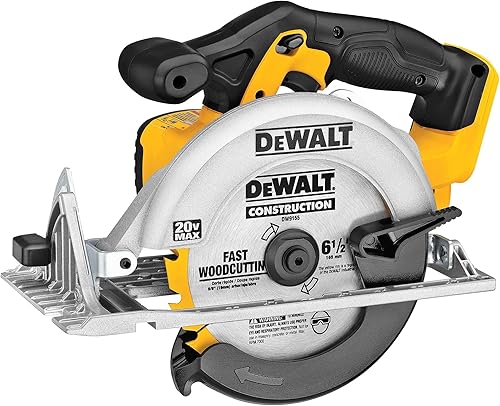
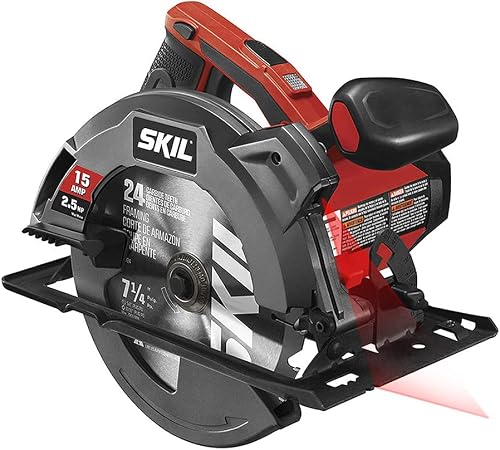
The larger saw cuts deeper and runs from a cord; the smaller one is lighter and often cordless. The DeWalt DCS391B, the SKIL 5280-01 and the SKIL 5080-01 show the two camps clearly.
The DeWalt carries a 6-1/2-inch blade, a 5,150 rpm motor and a 0 to 50 degree bevel. Its magnesium shoe and rubber overmolded grip are built around balance and long-term cut accuracy.
The SKIL 5280-01 steps up to a 7-1/4-inch blade on a 15 amp motor at 5,300 rpm, with a 51-degree bevel, a positive stop at 45 degrees and a single-beam laser guide.
The SKIL 5080-01 keeps the 7-1/4-inch blade but comes down to a 13 amp motor and 7 pounds, against 8.7 pounds for the 5280-01. Both SKIL saws run on a cord, and the DeWalt runs on a 20V battery sold separately.
| Feature | DeWalt DCS391B | SKIL 5280-01 | SKIL 5080-01 |
|---|---|---|---|
| Blade size | 6-1/2 in | 7-1/4 in | 7-1/4 in |
| Power | 20V battery, tool only | 15 amp corded | 13 amp corded |
| Speed | 5,150 rpm | 5,300 rpm | |
| Bevel | 0 to 50 degrees | 51 degrees, 45 stop | 51 degrees, 45 stop |
| Weight | 3.16 kg (about 7 lb) | 8.7 lb | 7 lb |
| Extra | Magnesium shoe | Laser guide, dust blower | Spindle lock, dust blower |
The table shows the trade plainly. The DeWalt wins on weight and freedom from an outlet.
The two SKIL saws win on depth and motor size, and the 5280-01 adds the laser guide the others don't have.
Why blade size sets your maximum cut depth
A 7-1/4-inch blade reaches about 2-3/8 inches deep at 90 degrees, and a 6-1/2-inch blade reaches about 2-1/8. That quarter inch of extra depth decides a surprising number of jobs.
A standard 2x4 is 3-1/2 inches wide and about 1-1/2 inches thick. Both saws cut through the 1-1/2-inch face in a single pass, so neither struggles with a flat 2x4.
Flip that 2x4 on edge and the math changes. The saw now crosses 3-1/2 inches of wood, which neither blade reaches in one pass, so both sizes need a second cut or a different tool.
Where the larger blade earns its keep is thick stock and stacked material. A 4x4 post, doubled 2x stock or a deep rafter cut needs the extra depth the 7-1/4-inch blade gives.
Bevels shrink depth on both saws, because a tilted blade cuts a shallower slot. The gap between the sizes stays roughly the same as you angle the shoe.
If your work is mostly plywood, trim and 1-by stock, the smaller blade clears everything. If you frame, build decks or cut heavy posts, the depth becomes the deciding factor.
Which size wins for cordless convenience?
The 6-1/2-inch saw wins for cordless work, and the DeWalt DCS391B is the pick here. Smaller blades draw less from a battery, and the lighter body is easier to run one-handed.
The DeWalt weighs 3.16 kg, about 7 pounds, before you add a battery. Its 5,150 rpm motor spins fast enough for demanding cuts, and the rubber overmolded grip gives you balance and control.
The 0 to 50 degree bevel covers most angled cuts on trim and sheet goods. A keyless blade change lets you swap blades without hunting for a wrench.
The catch is the battery. The DCS391B ships as a tool only, so you need a 20V pack and charger on hand or in the same order.
A corded saw never asks for that.
Cordless pays off on roofs, in backyards and anywhere a cord would drag across the work. For a look at how this size fits a broader cordless setup, see our guide to circular saw vs jigsaw tasks where a smaller blade stays useful.
When does the 7-1/4-inch saw win?
The 7-1/4-inch saw wins whenever depth, power or long framing passes matter more than portability. The SKIL 5280-01 is the stronger of the two larger saws in this comparison.
Its 15 amp motor at 5,300 rpm is the biggest power plant here. The 51-degree bevel and the positive stop at 45 degrees speed up common cuts, while the single-beam laser and dust blower keep the line of cut visible.
The 24-tooth carbide blade in the box suits fast ripping and crosscutting in framing lumber. Spindle lock and an on-tool wrench make blade changes simple.
The SKIL 5080-01 takes the budget slot. Its 13 amp motor is less punchy, but it drops to 7 pounds and still carries the 7-1/4-inch blade, 51-degree bevel and dust blower.
Choose the 5280-01 when you want the most power and the laser guide. Choose the 5080-01 when you want the larger blade in a lighter body for home workshop cuts.
The trade is the cord. Both need an outlet, so long runs across a yard or up a ladder mean extension cords and careful routing.
Weight and control: which saw tires you less?
The 6-1/2-inch saw tires you less in overhead and one-hand work, while the 7-1/4-inch saw steadies long cuts. Weight and blade mass both shape how the saw feels.
The DeWalt's magnesium shoe keeps the base light without giving up strength. That matters for jobsite durability and for keeping the saw flat on the work through repeated cuts.
The SKIL 5080-01 at 7 pounds narrows the weight gap from the bigger saw, so a corded buyer can get 7-1/4-inch depth without the full heft of the 8.7-pound 5280-01.
Blade mass is the quieter factor. A larger blade stores more momentum, which helps carry the saw through a long rip, but it also adds kickback energy if the blade binds.
For trim, fence boards and quick cuts at odd angles, the smaller saw's control wins. For long rips in plywood or repeated framing passes, the larger saw's stability and power keep the cut straighter.
Which size fits your work?
Buy the 6-1/2-inch size for trim, sheet goods and cordless freedom, and the 7-1/4-inch size for framing and deep cuts. Your regular material decides faster than any spec sheet.
Choose the DeWalt DCS391B if you cut trim and sheet goods
The DeWalt suits remodelers, trim carpenters and anyone working where an outlet is far away. A 6-1/2-inch blade handles plywood, 1-by stock and most finish cuts.
The light body and 50-degree bevel make it a natural for angled trim and quick site cuts. Its cordless design keeps the work area clear of cords.
Skip it if your week includes 4x4 posts, deep rafters or long framing runs. That work wants the larger blade and the steady corded power behind it.
Choose the SKIL 5280-01 if you frame and want the laser
The 5280-01 suits deck builders, framers and DIYers cutting dimensional lumber. The 15 amp motor and 7-1/4-inch blade give it the depth and power for heavy stock.
The laser guide and dust blower help on long cut lines where sawdust hides the pencil mark. The 45-degree positive stop speeds up the most common bevel.
Skip it if you need to work far from power or hold the saw overhead for long stretches. The cord and the 8.7-pound body both push back in those spots.
Choose the SKIL 5080-01 if you want the larger blade on a budget
The 5080-01 suits home workshop users who want a 7-1/4-inch blade without the weight of the bigger SKIL. At 7 pounds it's easier to manage on a bench or sawhorses.
The spindle lock and on-tool wrench make blade changes quick, and the 51-degree bevel covers angled cuts. It's the entry-level route into full-size depth.
Skip it if you cut thick hardwood all day; the 13 amp motor has less headroom than the 15 amp 5280-01. The heavier saw carries that load better.
How bevel capacity changes the choice
Both SKIL saws bevel to 51 degrees and the DeWalt to 50, so the bevel range is close across all three. Bevel matters less than depth when you compare sizes.
A 45-degree bevel is the everyday angle for trim and rafter cuts. All three saws reach it, and both SKIL models have a positive stop there so the shoe locks at the common angle.
The SKIL saws' extra degree to 51 gives a little more room on steep cuts. The DeWalt's 50 degrees is close enough that the difference rarely decides a job.
Remember that a beveled blade cuts shallower. If you plan to bevel through thick stock, start with the larger blade so the tilted cut still reaches full depth.
Which size should you buy?
For most buyers, the size question answers itself once you name your deepest common cut: the DeWalt DCS391B is the best overall pick for lighter, cordless work, and the SKIL 5280-01 is the best for deep corded cuts. The 6 1/2 vs 7 1/4 circular saw decision stops being close at that point.
Choose the DeWalt DCS391B if you cut plywood, trim and 1-by stock and want one-hand control without a cord. It scores highest here at 8.8 because it balances weight, a 5,150 rpm motor and a 50-degree bevel in a body you can carry up a ladder.
Choose the SKIL 5280-01 if you frame, build decks or cut stock that needs full 7-1/4-inch depth. The 15 amp motor, laser guide and 45-degree stop make it the deepest, most powerful saw in this group.
Choose the SKIL 5080-01 if you want that larger blade in a lighter, lower-cost body for bench work. It gives up motor power but keeps the depth and the 51-degree bevel.
Whichever size you pick, buy the best blade you can afford for your main material. That single upgrade changes cut quality more than the difference between these three saws.
Our circular saw vs track saw guide helps if you need long, straight sheet-goods cuts, and circular saw vs miter saw explains when crosscuts belong on a different tool.
Frequently asked questions
Is a 6-1/2-inch circular saw big enough for 2x4 lumber?
A 6-1/2-inch saw cuts about 2-1/8 inches deep at 90 degrees, enough to sever a 2x4 laid flat in one pass. Standing the 2x4 on edge and cutting the wider face exceeds both blades' depth, so either size needs a second pass or a different tool.
How much deeper does a 7-1/4-inch saw cut than a 6-1/2-inch one?
Expect roughly a quarter inch more depth from the larger blade at 90 degrees, so a 7-1/4-inch saw reaches about 2-3/8 inches and a 6-1/2-inch saw about 2-1/8. The gap grows when you bevel the blade.
Is a 6-1/2-inch saw easier to control?
Yes, usually. The 6-1/2-inch DeWalt here weighs about 7 lb without a battery, and a smaller blade carries less rotating mass.
That helps with one-hand trim cuts, but the bigger 7-1/4-inch saws stay steadier in long framing passes.
Can a 6-1/2-inch saw use a 7-1/4-inch blade?
No. Blade size is set by the saw's guard and arbor, and a 6-1/2-inch saw takes 6-1/2-inch blades only.
Match the blade to the saw, then match the saw to your deepest regular cut.