Is a Track Saw Worth It?
A track saw is worth it for frequent panel work, door trimming, and furniture parts that need clean, straight edges. For occasional rough cuts, a circular saw and guide usually make more sense.
On this page (8 sections)
- Is a track saw worth it for your projects?
- What does a track saw do better than a circular saw?
- When is a track saw not worth it?
- What should you compare before buying?
- Which track saw options fit different needs?
- How do you set up a track saw for a clean cut?
- What mistakes and care needs should you expect?
- How do you decide if a track saw is worth it?
A track saw is worth it for frequent panel work, door trimming, and furniture parts that need clean, straight edges. If you mainly make rough cuts or build a few simple projects each year, a circular saw and guide usually make more sense.
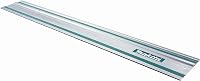
The main benefit is bringing the saw to a large, supported sheet instead of moving that sheet through a stationary saw. The rail controls the cutting path, while plunge action allows internal cuts when the tool's instructions permit them.
Is a track saw worth it for your projects?
Buy a track saw when clean panel edges and long cuts are routine jobs. Its value grows when simpler guide setups take too long to align or leave edges that need extra work.
Cabinet sides, plywood shelves, furniture panels, and door trimming are strong reasons to consider one. You can position the rail for a rip, crosscut, or angled cut without needing a fence parallel to the panel's edge.
Frequency alone is not the whole decision: a single large cabinet project may involve dozens of useful cuts. Think about the work ahead, rather than how many days each year you'll use the saw.
If your plans mainly involve framing lumber and general repairs, start with our circular saw buying guide.
What does a track saw do better than a circular saw?
A dedicated track saw offers a fitted rail interface and controlled plunge action. A circular saw can make accurate straight cuts too, but a straightedge requires you to account for the distance between its blade and base edge.
On track systems with a trimmed splinter strip, that strip marks the cutting edge and supports nearby surface fibers. A suitable blade and steady feed still matter, especially on plywood veneer and coated panels.
Plunge action helps with internal openings, but a round blade cannot leave square inside corners. Stop within your marked limits and finish corners with a suitable tool instead of extending the cuts past them.
Our circular saw vs track saw comparison explains which design fits different jobs.
When is a track saw not worth it?
Skip it when most cuts are short, rough, or infrequent. Setting up a rail for each piece can add work without improving an edge that will be hidden anyway.
A track saw also does not replace every table saw task. Repeated narrow strips need careful workholding and rail support, while a suitable table saw fence can make that workflow more direct.
You still need room to support the sheet and its offcut, even if you don't have space for a stationary saw. Portable equipment saves storage space, but it doesn't remove the need for a stable cutting area.
Before adding another saw, compare circular saw guides and rails with the setups in our DIY track saw guide.
What should you compare before buying?
Choose the complete cutting system, including its rail, blade, clamps, and power supply. The saw alone won't tell you whether the setup fits your projects.
- Rail length: Allow enough rail beyond both ends of the workpiece for the saw to stay engaged throughout the cut, following its manual.
- Compatibility: Confirm the exact rail and clamp fit; similar-looking tracks are not proof of compatibility.
- Cut depth: Check capacity on the rail and at your intended bevel angle, since both can reduce usable depth.
- Blade choice: Match the blade to the material, finish, diameter, arbor, and speed limits required by the saw.
- Power: Corded tools suit work near an outlet; cordless tools need compatible batteries and a charging plan.
- Dust collection: Check hose fit and routing so the hose won't pull the saw sideways or catch during a cut.
If you plan to join rails, include the proper connectors and a way to check their alignment. A small kink at the joint can spoil a long edge.
Is a track saw worth it for repeated cuts?
It is worth it when alignment and edge cleanup consume more time than cutting. A rail makes a straight path easier to repeat, but you still need to mark or measure each part's width.
For a run of matching cabinet parts, plan how you'll locate every cut before choosing accessories. A straight cut and an accurately sized part are separate goals.
Which track saw options fit different needs?
Choose WEN for a straightforward corded setup, Makita for speed control and scoring, DeWalt for its track system and anti-kickback features, or Milwaukee for cordless work. Each choice still needs a compatible rail and proper work support.
WEN CT1065: for occasional panel projects near an outlet
The WEN suits a home workshop that needs plunge cuts and guided panel work without adding a battery platform. Its straight-cut capacity is 2-1/3 in, with 1-5/8 in available at a 45-degree bevel.
It includes a 6.5 in, 24-tooth carbide-tipped blade and works with the WEN CT9502 100 in track and CT992F clamps. The track is separate, so include it in your buying plan.
Skip this option if cordless operation is central to your work. For fine panel edges, choose the blade around the required finish rather than assuming the included blade suits every material.
Makita SP6000J: for furniture and cabinet panels
The Makita suits panel work where speed adjustment and a preliminary scoring cut are useful. Its dial covers 2,000–5,200 RPM, and electronic control maintains speed under load.
A built-in depth stop allows a 1/16 in preliminary cut before cutting through. Capacity is 2-3/16 in at 90 degrees and 1-9/16 in at 45 degrees; the compatible guide rail is optional.
Skip it if you mainly need quick rough cuts or require battery power. Its controls add the most value when your material and finish needs call for them.
DeWalt DWS520K: for guided work with anti-kickback features
The DeWalt suits buyers who want a riving knife and continuous anti-kickback mechanism alongside a dedicated track system. These features help address blade pinching and backward movement when correctly engaged.
Its depth scale accounts for track thickness, with on-track capacity of 2-1/8 in at 90 degrees and 1-5/8 in at 45 degrees. Included components are the saw, 48-tooth blade, wrench, and kit box, so plan for the track separately.
Skip it if you need cordless mobility. Safety features still require correct support, feed direction, and operating technique.
Milwaukee M18 FUEL: for mobile work with compatible batteries
The Milwaukee suits mobile carpentry and remodeling where managing a power cord slows setup. It uses an 18 V platform and comes as a bare tool, so you need a compatible battery and charger.
Adjustable cams control rail fit, while a micro-adjust depth knob helps refine the setting. A riving knife helps reduce material pinching, and bevel stops are set at 22.5, 45, and 48 degrees.
Skip it if you prefer corded work and have no reason to add battery equipment. Cordless power also doesn't remove the need to manage a dust hose when using extraction.
How do you set up a track saw for a clean cut?
Start with stable support, a secure rail, and the correct blade depth. Poor work support can pinch the blade even when the rail follows a straight line.
Support the panel and offcut so neither drops or closes the cut around the blade. A flat sacrificial surface can help, provided the setup follows the saw's instructions and keeps the blade clear of hidden objects.
With power disconnected or the battery removed, check blade condition, rail fit, and depth. Account for rail thickness unless the saw's scale already does so, then set only the blade exposure the manual calls for.
Position the rail on the correct side of your marks so the blade's kerf comes out of the waste. Secure it as required, check the cord and hose path, and follow the prescribed plunge and feed sequence.
For a straightedge setup instead, see how to cut straight with a circular saw.
What mistakes and care needs should you expect?
Avoid unsupported offcuts, forced feeding, and loose rail fit. These can cause binding, poor edges, or loss of control.
Don't increase feed pressure to compensate for a dull or unsuitable blade. Disconnect power before checking the blade or clearing debris, and follow the manual for cleaning and replacement.
Keep rail channels and contact surfaces free of chips, and inspect the splinter strip for damage. Store rails where they won't bend, then check joints and alignment whenever you connect sections.
For bevel cuts, check clearance and workholding again before starting. Don't assume a setup that supported a square cut will support an angled cut equally well.
How do you decide if a track saw is worth it?
A track saw is worth it when your next projects need enough accurate panel cuts to justify the full setup. Count the rail, work support, dust connection, and power equipment alongside the saw.
Choose WEN for corded panel work, Makita for scoring and speed control, DeWalt for its track system and anti-kickback features, or Milwaukee for cordless mobility. Keep your circular saw and guide if occasional straight cuts are the main task.
Before ordering, write down your longest cut, thickest material, and usual bevel angle. Use those requirements with our track saw guide to narrow the choice.
Frequently asked questions
Is a track saw worth it for a beginner?
A track saw is worth it for a beginner whose projects involve plywood cabinets, shelves, or furniture panels; the rail helps guide the cut, but you still need proper support, secure rail placement, and safe blade handling. For occasional rough cuts, start with a circular saw and guide.
Can a circular saw with a guide replace a track saw?
A circular saw with a suitable guide can replace a track saw for many straight cuts; a dedicated plunge track saw adds a fitted rail interface and controlled plunge action for internal cuts. Choose based on how often you cut panels and how much setup each job requires.
What jobs are track saws best for?
Track saws are best for breaking down sheet goods, trimming doors, and cutting straight edges on furniture panels; they bring the saw to a supported workpiece, which helps when handling large sheets. For repeated narrow strips or lots of short framing cuts, another saw setup may be more efficient.
Do you need a track for a track saw?
You need a compatible track to get the guided cutting that makes a track saw useful; check rail compatibility, usable length, and clamp requirements before buying. Some models can also work without a rail, but their flat base alone does not provide the same fixed cutting path.