How Much Does a Circular Saw Cost?
A circular saw costs anywhere from the budget tier to the premium tier, and the spread comes mostly from power source, blade size and construction. Corded 7-1/4 inch saws sit at the low end, cordless saws cost more because a battery system drives the price, and worm drive saws land in the middle to upper range.
On this page (8 sections)
- What drives the price of a circular saw?
- How much does a corded circular saw cost?
- How much does a cordless circular saw cost?
- How much does a worm drive circular saw cost?
- Which circular saw size fits your budget?
- Is a more expensive circular saw worth it?
- How much should you set aside beyond the saw?
- What's the best circular saw value at each price tier?
A circular saw costs anywhere from the budget tier to the premium tier, and the spread comes mostly from power source, blade size and construction. Corded 7-1/4 inch saws sit at the low end, cordless saws cost more because a battery system drives the price, and worm drive saws land in the middle to upper range.
The short version: you pay more for a saw when you buy portability or torque. That means a cordless saw or a worm drive, not necessarily a bigger blade.
Below is what each type of circular saw costs and what that money buys you.
What drives the price of a circular saw?
The motor and power source set the price first, then the blade size and the materials around the shoe and housing. A 15-amp corded motor with a stamped shoe is the cheapest way to make a real saw.
Add a battery platform and the cost jumps.
Cordless saws carry the tool plus the cost of the battery system. Magnesium shoes and housings cost more than steel or plastic, and worm drive gearboxes add machining.
A larger blade also needs more motor, more guard and a heavier base.
Those four factors explain almost every price gap. When you compare two saws, check the amp rating or RPM, the blade size, the shoe material and whether a battery is included.
That tells you more than the price alone.
How much does a corded circular saw cost?
A corded circular saw is the lowest-cost way into the tool, so it's the price tier most first-time buyers land in. It plugs into any outlet, so there's no battery or charger in the total.
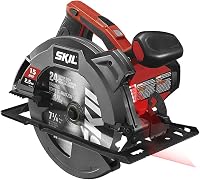
The Skil 5280-01 shows what this tier looks like in practice.
Its 15-amp motor turns at 5,300 RPM and the 7-1/4 inch carbide-tipped blade comes with it. The 51° bevel capacity with a positive stop at 45° handles common cuts, and a dust blower keeps the line visible.
Skil includes a wrench and a carry bag too.
That set of features is why corded saws suit garage and shop work. The trade-off is the cord: you need an outlet within reach, and long runs across a driveway or yard mean dragging an extension cord.
How much does a cordless circular saw cost?
A cordless circular saw costs more than a corded one because you're buying into a battery system. The saw, battery and charger add up, and the saw alone is a smaller part of the total.
If you already own batteries in that brand's system, the cost drops to just the bare tool.
The DeWalt DCS391B is a bare tool, sold without battery or charger. Its 5,150 RPM motor and 6-1/2 inch carbide-tipped blade cut framing lumber and sheet goods.
A magnesium shoe holds cut accuracy, and the rubber over-molded grip helps balance on the job.
Buying into a battery platform is a real commitment, so it makes sense when you'll buy more tools from the same brand. For occasional cuts at a bench, the corded saw is the better spend.
Our guide to the best circular saws for beginners covers that choice in more detail.
What does the battery add to the total?
The battery and charger are separate purchases for a bare tool, and together they often cost more than the saw. Factor that in before you compare a cordless saw's price with a corded one.
If you own several tools in one system, the batteries are shared, so the per-tool cost falls over time.
How much does a worm drive circular saw cost?
A worm drive saw sits in the middle to upper price range among corded saws, because the gearbox and magnesium build cost more to make. The Skilsaw SPT77WML-01 is the lightest worm drive saw, at 11.5 pounds.
Its 15-amp motor drives the blade through long rips.
The motor sits behind the blade, which puts more torque into the cut and gives the saw a longer reach across a sheet. A cut-ready depth system helps set depth quickly, and the anti-snag lower guard runs smoothly on small cut-off pieces.
The magnesium housing keeps the motor cooler.
That extra machinery is the cost. A worm drive weighs more than a sidewinder of the same blade size and asks for a firmer hand.
For framing crews and deck builders cutting all day, the extra torque earns its keep. For a weekend project, a corded sidewinder does the job for less.
Which circular saw size fits your budget?
Blade size matters more to price than most buyers expect. A 7-1/4 inch saw is the standard size and cuts through 2x lumber at 90° in one pass.
The DeWalt cordless here uses a 6-1/2 inch blade, which saves weight and cost but limits depth.
A 6-1/2 inch blade still handles most trim and sheet goods work. Check the depth of cut against the lumber you plan to use.
If you regularly cut 2x4s or thicker stock, a 7-1/4 inch blade gives you more margin.
Smaller saws are lighter and easier to control. Larger blades cut deeper and cost more, both in the saw and in replacement blades.
Match the size to your most common cut and skip the rest.
Is a more expensive circular saw worth it?
Spend more when the saw's features solve a problem you actually have. A laser guide helps when you freehand cuts, and a magnesium shoe matters if you'll carry the saw around a site all day.
A worm drive earns its cost when you rip long boards often.
Skip the upgrade if you cut sheet goods on a bench a few times a year. A budget corded saw with a carbide blade covers that work.
Put the saved money toward a straight edge or a guide instead.
The real cost of a cheap saw can show up later in blade changes and wobbly cuts. A saw with a spindle lock and a solid shoe is easier to keep cutting straight.
That's a practical reason to move up a tier, not just a bigger number on the box.
How much should you set aside beyond the saw?
Budget for a blade, safety gear and a straight edge on top of the saw itself. The blade in the box is often a general-purpose 24-tooth model.
A finer-tooth blade for finish cuts and a rip blade for long cuts cost extra.
Safety glasses and hearing protection belong in the total. So does a straight edge or a track guide if you want clean cuts without marking every line.
Those accessories change the final number more than the saw's badge does.
Check what comes in the box before you compare prices. A saw that includes a blade, wrench and bag needs fewer add-on purchases.
That's one reason the Skil 5280-01 is a practical first buy. Read our how to choose a circular saw guide to line up the features that matter for your work.
What's the best circular saw value at each price tier?
Pick the Skil 5280-01 for the lowest total cost, since it plugs in and ships with a blade. That makes it the best value if you cut at a bench and don't need a battery platform.
For a cordless setup you already own batteries for, the DeWalt DCS391B is the right buy.
Choose the Skilsaw worm drive when long rips and heavy lumber are your routine. The extra torque and 53° bevel pay off in that work, and the lighter 11.5 pound build helps when you carry it.
Compare all three in our roundup of the best circular saws before you decide.
The price of a circular saw comes down to one question: do you need to cut away from an outlet? If no, a corded saw costs less and does the job.
If yes, the battery system is part of what a circular saw costs, and the saw is only one line on the bill. When you've picked your saw, our how to use a circular saw walkthrough covers safe, straight cuts.
Frequently asked questions
Why do cordless circular saws cost more than corded ones?
The tool itself isn't the main expense; the battery platform is. A cordless saw needs a compatible battery and charger, and if you aren't already in that system, the kit price adds up quickly.
Is a worm drive saw worth the extra cost?
Yes if you cut long boards and heavy lumber all day. A worm drive puts the motor behind the blade for more torque and a longer reach, which makes long rips easier, but the saw is heavier to carry and handle.
What is the cheapest way to start cutting?
Buy a corded 7-1/4 inch saw with a carbide blade in the box. It plugs into an outlet you already have, so you avoid spending on a battery platform before you know how much you'll cut.
Do circular saw prices include a blade?
Some saws ship with a carbide-tipped blade and others are bare tools. Check the included components before you compare prices, because a saw without a blade needs one bought separately.