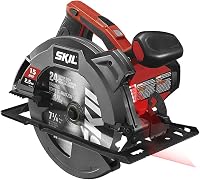
Types of Circular Saws Explained
There are four main types of circular saws: corded sidewinder saws, cordless saws, worm drive saws and track saws. Corded and cordless sidewinders handle general framing and trim, worm drives suit heavy, long rips, and track saws deliver the straightest, splinter-free cuts.
On this page (8 sections)
- What are the main different types of circular saws?
- Corded sidewinders: the general-purpose standard
- Cordless saws: freedom from the outlet
- Worm drive saws: torque for long, heavy rips
- Track saws: straight, splinter-free cuts on a rail
- How blade choice changes what a saw can do
- Safety and setup points that apply to every type
- Which type should you buy?
The different types of circular saws come down to four families: corded sidewinders, cordless saws, worm drive saws and track saws. Each one puts the motor and blade in a different place, and that layout decides what the saw does best.
A corded sidewinder is the all-rounder most woodworkers reach for. A cordless saw trades raw power for freedom from an outlet.
A worm drive saw is built for long, heavy rips in thick lumber, and a track saw runs on a guide rail when straight, splinter-free edges matter.
This guide breaks down each type by how it works, what it cuts well and who should buy it. It also covers blade choices and the safety points that apply to every saw.
If you want the short list of top models first, our circular saw roundup has you covered.
What are the main different types of circular saws?
The four main types are corded sidewinders, cordless saws, worm drive saws and track saws. They differ in motor placement, power source and how you guide the cut.
A sidewinder mounts the motor beside the blade, so the saw stays compact and balanced. A worm drive angles the motor behind the blade and drives it through gears, which gives more torque for heavy work.
A track saw is a circular saw built to ride a straight rail, usually with a plunge action.
Within those families, blade size splits things further. A 6-1/2 inch blade suits trim and light framing, while a 7-1/4 inch blade handles standard 2x lumber.
Bigger blades cut deeper but add weight.
The table below sums up the trade-offs before the sections go deeper.
| Type | Power | Best at | Main trade-off |
|---|---|---|---|
| Corded sidewinder | Corded electric | Framing, trim, general cuts | Needs an outlet and a cord |
| Cordless saw | Battery | Mobility and quick jobs | Power depends on the battery |
| Worm drive | Corded electric | Long rips in thick lumber | Heavier and bulkier |
| Track saw | Corded electric | Straight, splinter-free sheet cuts | Needs rail space and costs more |
How motor placement changes the feel of a saw
A sidewinder's motor sits to the left of the blade on most models, which puts weight over the cut line. That helps you follow a pencil mark with the blade guard as your guide.
A worm drive puts the motor behind the handle, so the saw balances differently. The long body gives you more leverage on a rip, but it also takes more room to swing and store.
These layout differences matter more than raw wattage for most buyers. Hold a saw before you buy if you can, because balance decides how tired your arm gets after a morning of cuts.
Pick by layout first, then compare power and blade size within that family. A saw that feels balanced in your hand cuts straighter than a more powerful one that fights you.
Corded sidewinders: the general-purpose standard
A corded sidewinder is the best first circular saw for most buyers because it delivers steady power without a battery. The motor sits beside the blade, and a 7-1/4 inch blade covers standard framing lumber.
These saws run from a wall outlet, so the cut never weakens as the job goes on. That makes them reliable for long sessions on a deck, a shed frame or a run of shelving.
The trade-off is the cord. It limits where you can work and adds a trip hazard on a busy site.
For a shop or a driveway project near an outlet, though, a corded saw is hard to beat on value.
Many corded sidewinders include a bevel adjustment so you can tilt the base for angled cuts. Depth adjustments let you set the blade to just clear the material, which reduces tearout and keeps the blade safer.
Choose a corded sidewinder when you work near power and want steady, affordable cutting. Skip it only if you regularly cut away from an outlet.
What to check on a corded sidewinder
Look at the amperage rating, the bevel range and the base material. A higher amp rating means more reserve power for thick or wet lumber.
A wide bevel range lets you make angled cuts without a separate tool.
The base or shoe matters too. Magnesium shoes are lighter and resist bending, which helps keep cuts accurate over time.
Steel shoes cost less but add weight.
Check the blade size against the material you cut most. A 7-1/4 inch blade gives you more depth than a 6-1/2 inch blade, which matters when you cut 2x stock at an angle.
Set a bevel limit in your head before shopping. If your projects rarely go past 45 degrees, you don't need to pay for a wider range.
For general work, a corded sidewinder with a solid base and a clear depth scale is the practical pick.
Cordless saws: freedom from the outlet
A cordless circular saw runs on a battery and is the best choice when you cut away from power. It handles trim, sheet goods and light framing without dragging a cord across the work.
The trade-off is power and runtime. A battery saw weakens as the charge drops, and a heavy rip in wet lumber drains it faster.
For quick cuts on a ladder or in a client's finished room, that freedom is worth it.
Battery platform matters as much as the saw. If you already own tools from one brand, buying the saw as a bare tool saves money and keeps you on one charger.
The DeWalt DCS391B is a bare-tool example that runs on the brand's 20V batteries.
Its 0 to 50 degree bevel range covers common angled cuts, and the rubber overmolded grip helps with control. The keyless blade change makes swaps quicker between materials.
Choose cordless when mobility matters more than maximum power. Keep a spare battery charged for longer sessions, and don't expect a compact battery saw to rip thick wet lumber all afternoon.
Picking a blade size and battery for a cordless saw
A 6-1/2 inch blade keeps the saw light and easy to control overhead. It still cuts standard lumber at 90 degrees, though depth drops as you tilt the base.
Battery capacity decides how many cuts you get per charge. A larger pack adds weight but extends runtime.
Match the pack to your typical session rather than buying the biggest one by default.
Match the blade to the work, not the other way around. A fine-tooth blade gives cleaner trim cuts, while a rip blade speeds through long cuts in solid wood.
Our guide on how to choose a circular saw walks through blade and battery pairings in more detail.
Worm drive saws: torque for long, heavy rips
A worm drive saw is the best type for long rips in thick, heavy lumber. Its motor sits behind the blade and turns it through a worm gear, which trades blade speed for torque.
That torque keeps the blade moving through wet or dense wood without bogging down. Framers and deck builders often reach for one when they rip long boards all day.
The cost is weight and size. Worm drives are heavier and longer than sidewinders, so they tire your arm faster and need more room to store.
They also tend to cost more.
The Skilsaw SPT77WML-01 shows the pattern. Its magnesium construction keeps weight down for a worm drive, and its 15 amp motor is built to rip through more lumber in less time.
The cut-ready depth system helps set depth quickly, and the 53 degree bevel goes past the common 45 degree stop. The anti-snag lower guard smooths cuts on small offcuts.
Choose a worm drive when deep, repeated rips are your main job. Skip it for trim, overhead work or small jobs where the extra weight becomes a burden.
Worm drive vs sidewinder: which layout wins?
The worm drive wins on torque and sustained heavy cutting. The sidewinder wins on weight, balance and one-handed control.
For a framer ripping long boards, the worm drive's torque saves time and effort. For a remodeler cutting trim on a ladder, a lighter sidewinder is easier to manage.
Decide by the cut, not by the label. If most of your cuts are short and in thinner stock, a sidewinder serves you better.
If you regularly rip thick lumber, the worm drive pays off.
Blade choice still applies. A rip blade with fewer teeth clears chips fast on a worm drive, while a general-purpose blade covers mixed work.
Our beginner-focused circular saw for beginners guide helps new buyers avoid overbuying on their first saw.
Track saws: straight, splinter-free cuts on a rail
A track saw is the best type for straight, splinter-free cuts in sheet goods. It runs on a guide rail, and its zero clearance edge supports the wood fibers as the blade exits.
That design reduces tearout on plywood, melamine and veneered panels. A plunge action lets you lower the blade into the middle of a sheet, which helps with cutouts and adjusting cabinet openings.
Track saws cost more than a standard circular saw, and you need room to lay the rail. For cabinet work and finished surfaces, the cleaner edge often justifies the price.
The DeWalt DWS520K kit pairs a 12 amp, 1300W motor with a 6-1/2 inch 48-tooth blade. Its depth scale accounts for the rail thickness, so you set the cut depth in one step.
The continuous anti-kickback mechanism and riving knife add safety on rip cuts. The low profile blade guard lets the saw work in tighter spaces, and the kit includes a blade wrench and case.
Choose a track saw when edge quality and straightness matter most. Skip it if you only make rough framing cuts and never need a finished edge.
When a circular saw plus a straight edge is enough
A standard circular saw guided along a straight edge can cut sheet goods. It won't match a track saw for tearout, but it works for rough cuts and budget projects.
The straight edge approach costs less and uses tools you may already own. The downside is setup time, since you clamp the edge and measure offset from the blade to the edge each time.
Use the straight edge method for occasional sheet cuts. Move to a track saw when clean edges and repeatable straightness become routine.
For more on guiding a saw accurately, see our guide on how to use a circular saw.
How blade choice changes what a saw can do
The blade decides what a circular saw cuts, not the saw body alone. A wood blade on a saw won't cut metal safely, and the wrong tooth count leaves rough edges or slows the cut.
Tooth count is the main lever. Fewer teeth clear chips fast for rip cuts in solid wood.
More teeth leave a smoother edge for trim and sheet goods.
Blade material matters too. Carbide-tipped teeth stay sharp longer in wood, while high speed steel blades cost less but dull faster.
Match the blade to the material and the finish you need.
The table below maps common blades to jobs.
| Blade type | Teeth | Best for |
|---|---|---|
| Rip blade | Few, around 18 to 24 | Fast lengthwise cuts in solid wood |
| Combination blade | Medium, around 24 to 40 | Mixed crosscuts and rips |
| Fine finishing blade | Many, around 48 or more | Smooth edges in trim and sheet goods |
| Metal cutting blade | Varies | Cutting metal with the right saw setup |
Matching tooth count to your material
For framing, a lower tooth count cuts faster and throws chips clear. For cabinet plywood, a high tooth count reduces tearout and leaves a cleaner edge.
The DeWalt track saw kit includes a 48-tooth blade for fine finishing. The DeWalt cordless saw ships with an 18-tooth blade that suits faster, rougher cuts.
Start with a combination blade, then add a specialist blade for your main material. One blade rarely does both rough framing and fine trim well.
Swap blades rather than forcing one to do both jobs.
Safety and setup points that apply to every type
Every circular saw type demands the same basic safety habits, whatever the motor layout or power source. The blade spins fast, and kickback is the main risk when the material binds.
Keep both hands on the saw and let the blade reach full speed before touching the wood. Support the offcut side so the material doesn't pinch the blade as it closes.
Set the depth so the blade clears the material by a small amount. That reduces the exposed blade and the chance of tearout underneath.
Kickback, guards and safe cutting habits
Kickback happens when the blade binds and the saw jumps back toward you. A riving knife on a track saw helps prevent binding on rip cuts.
On any saw, a sharp blade and steady feed reduce the risk.
Never reach around the blade or lift the saw mid-cut. Let the lower guard close before you set the saw down.
Keep the cord or battery clear of the cut line.
Treat the guard as a safety feature, not an obstacle. On a track saw, the low profile guard still covers the blade when the saw is lifted.
On a sidewinder, the spring-loaded guard should close as the saw leaves the wood.
Which type should you buy?
Buy the saw type that matches your main material and workspace, not the one with the highest power rating. Most home woodworkers do best with a corded or cordless sidewinder, while specialists should step up.
Here is the decision rule in plain terms:
- Pick a corded sidewinder for steady power near an outlet and general framing or trim.
- Pick a cordless saw when you cut away from power or want a light tool for quick jobs.
- Pick a worm drive when long, heavy rips in thick lumber are routine.
- Pick a track saw when straight, splinter-free sheet cuts matter most.
The different types of circular saws each have a clear best use, so the choice is really about your projects. A beginner with trim and light framing in mind will be happy with a cordless sidewinder.
A cabinet maker chasing clean plywood edges should look at a track saw instead.
If you're still weighing models within a type, our how to choose a circular saw guide covers power, blade size and features in more depth. For a first saw, the circular saw for beginners roundup narrows the field to easy-to-handle picks.
And when you're ready to compare specific tools, the circular saw roundup lines up the top options by type.
Choose the type by your cuts, then compare models within it. That order keeps you from paying for torque or precision you'll never use.
Frequently asked questions
Is a worm drive saw better than a sidewinder?
A worm drive saw suits long, heavy rips in thick lumber because its motor sits behind the blade and the gear drive keeps torque high. A sidewinder is lighter and easier to control one-handed, so it wins for framing, trim and overhead work.
Pick the worm drive only when deep, repeated rips are your main job.
Do I need a track saw for straight cuts?
You need a track saw when straight, splinter-free cuts in sheet goods matter more than portability. A circular saw with a straight edge can cut plywood, but a track saw's zero clearance rail and riving knife reduce tearout and kickback.
For rough framing cuts, a standard circular saw is enough.
What size circular saw should a beginner buy?
A beginner should start with a 6-1/2 inch cordless sidewinder for trim and light framing, or a 7-1/4 inch corded sidewinder for heavier lumber. The smaller blade is lighter and easier to handle.
Choose the larger blade only when your projects regularly involve 2x material and thick boards.
Can a circular saw cut metal or tile?
A circular saw can cut metal or tile only when you fit the correct blade for that material. A wood blade will not do the job safely.
Match the blade to the material and keep the saw's speed within the blade's rating.
For occasional cuts, a dedicated blade turns a wood saw into a metal or tile cutter.
What is the difference between a circular saw and a track saw?
A circular saw is a freehand tool you guide along a marked line, while a track saw runs on a straight guide rail for precise, splinter-free cuts. Track saws cost more and need rail space.
A circular saw is more portable and better for framing, while a track saw shines on sheet goods and finished edges.