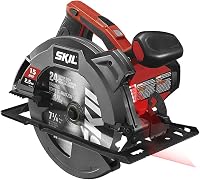
8 Best Mini and Compact Circular Saws (November 2026)
The best mini and compact circular saws include the DeWalt DCS571B 4-1/2 Inch Circular Saw for small workshop projects, the Milwaukee M18 2630-20 Circular Saw for M18 workshop users, and the Ryobi ONE+ P505 5-1/2 Inch Circular Saw for ONE+ home repairs.
On this page (9 sections)
- Which features matter in the best mini circular saw?
- The best mini circular saws by use
- Is a mini circular saw enough for your cuts?
- How should you compare blade size and battery platform?
- When should you choose a compact saw over a standard one?
- How do you set up a mini circular saw for straight cuts?
- Which mistakes cause rough cuts and poor control?
- How do you care for a compact circular saw?
- Which mini and compact circular saw should you choose?
The best mini circular saw here is the DeWalt DCS571B for small-blade woodcutting and square cuts through 2x lumber. Its auxiliary handle, blade brake, and dust port make it a useful starting point for home projects.
Choose by your hardest regular cut, then your batteries. A smaller blade helps only if the saw can still clear your material and sit securely on the work.
This roundup includes true small-blade models and larger compact saws. If you're unsure which type you need, our guide to whether mini circular saws are worth it explains the tradeoffs.
For more battery-powered options beyond this size range, compare our best cordless circular saws.
Our picks at a glance
-
1
 Best for small workshop projects
DeWalt DCS571B 4-1/2 Inch Circular Saw
8.6/10 our score
See it on Amazon -
2

-
3
 Best for ONE+ home repairs
Ryobi ONE+ P505 5-1/2 Inch Circular Saw
8.0/10 our score
See it on Amazon
- 4
 Check it
Makita XSH03Z 6-1/2 Inch Circular Saw
Best for regular LXT woodcutting - 5
 Check it
Makita XSH04ZB Sub-Compact Circular Saw
Best for crowded workbenches - 6
 Check it
DeWalt DCS512B 12V 5-3/8 Inch Circular Saw
Best for DeWalt 12V owners - 7
 Check it
Milwaukee M12 Fuel 5-3/8 Inch Circular Saw
Best for Milwaukee M12 owners - 8
 Check it
Skil PWR CORE 20 Compact Circular Saw Kit
Best for first cordless setups
Which features matter in the best mini circular saw?
Cut depth, grip layout, and battery fit matter most because they determine which jobs you can finish comfortably. A high motor speed or a compact label cannot make up for insufficient capacity.
We compared cutting details, control features, battery platforms, and included equipment. The order favors mini-saw usefulness, while the individual recommendations explain when a lower-ranked option fits your workshop better.
Read the package column before comparing features. A bare tool makes sense with batteries you already use, while a complete kit removes two separate buying decisions.
| Product | Best for | Blade size | Battery platform | Package | Our score |
|---|---|---|---|---|---|
| DeWalt DCS571B 4-1/2 Inch Circular Saw | small workshop projects | 4-1/2 in | DeWalt 20V MAX | Tool only | 8.6 |
| Milwaukee M18 2630-20 Circular Saw | M18 workshop users | 6-1/2 in | Milwaukee M18 | Tool only | 8.4 |
| Ryobi ONE+ P505 5-1/2 Inch Circular Saw | ONE+ home repairs | 5-1/2 in | Ryobi ONE+ 18V | Tool only | 8.0 |
| Makita XSH03Z 6-1/2 Inch Circular Saw | regular LXT woodcutting | 6-1/2 in | Makita 18V LXT | Tool only | 8.0 |
| Makita XSH04ZB Sub-Compact Circular Saw | crowded workbenches | 6-1/2 in | Makita 18V LXT | Tool only | 7.9 |
| DeWalt DCS512B 12V 5-3/8 Inch Circular Saw | DeWalt 12V owners | 5-3/8 in | DeWalt 12V MAX | Tool only | 7.7 |
| Milwaukee M12 Fuel 5-3/8 Inch Circular Saw | Milwaukee M12 owners | 5-3/8 in | Milwaukee M12 | Tool only | 7.6 |
| Skil PWR CORE 20 Compact Circular Saw Kit | first cordless setups | 6-1/2 in | Skil PWR CORE 20 | Battery and charger kit | 7.0 |
The best mini circular saws by use
Choose a saw around your work and existing tools, using the recommendations below to narrow the field. Each option has a clear buyer, along with a reason to skip it.
DeWalt DCS571B: best mini circular saw for small projects
DeWalt DCS571B 4-1/2 Inch Circular Saw: Best for small workshop projects
- 4-1/2 in blade
- Brushless motor
- Removable auxiliary handle
- Electronic blade brake
A small-blade choice for home projects that include square cuts through 2x lumber. Its auxiliary handle, brake, and dust port support a controlled work setup.
Pros
- Cuts 2x lumber at 90 degrees
- Removable auxiliary handle
- Includes rip fence and dust port adaptor
Cons
- Battery and charger sold separately
- 45-degree cutting capacity covers 1x lumber
The DCS571B suits home projects that mix panel cuts with occasional lumber cuts. Its bevel gear design lets the 4-1/2 in blade cut 2x material square and 1x material at 45 degrees.
The removable auxiliary handle matters more than blade diameter when you're guiding a cut. Keep it fitted whenever the task and manual call for that grip, rather than treating the narrow saw as an invitation to work one-handed.
A rip fence, woodcutting blade, blade key, and dust port adaptor are included. The fence is useful for cuts parallel to a straight board edge; it cannot correct a crooked reference edge.
Buy it for small-blade work within those capacities, especially if you already use DeWalt 20V MAX tools. Skip it if bevel cuts through thicker lumber are routine, since its square-cut capability does not carry over to angled cuts.
Milwaukee M18 2630-20 Circular Saw: Best for M18 workshop users
- 6-1/2 in blade
- 3,500 RPM
- Magnesium upper and lower guards
- Aircraft aluminum shoe
A conventional compact saw for M18 users tackling carpentry and home repairs. Magnesium guards and an aluminum shoe make it worth considering for regular workshop use.
Pros
- Uses the M18 battery platform
- Magnesium blade guards
- Soft-grip handle
Cons
- Battery and charger not included
- 7.3 lb stated weight
The Milwaukee 2630-20 suits M18 users who want a conventional compact circular saw for carpentry and repairs. Its 6-1/2 in blade places it toward the larger end of this group.
Magnesium upper and lower guards protect the blade, while the aircraft aluminum shoe provides the base for guiding cuts. A soft-grip handle rounds out a design aimed at general cutting rather than tiny-tool handling.
Its stated weight is 7.3 lb, so don't choose it simply because it appears in a compact roundup. Consider the working weight with your battery and whether you'll carry it between several work areas.
Buy it to extend an M18 setup when a conventional saw layout fits your jobs. Skip it if your main goal is a small-blade companion for light projects, and confirm its cutting capacity before committing to specific thick-stock work.
Ryobi ONE+ P505 5-1/2 Inch Circular Saw: Best for ONE+ home repairs
- 5-1/2 in blade
- Bevel adjusts up to 50 degrees
- Clear lower guard
- Extra side handle
A practical addition to a Ryobi ONE+ home tool collection. The clear lower guard and extra side handle help you see and control the cut.
Pros
- Uses Ryobi ONE+ 18V batteries
- Adjustable bevel
- Rubber overmold grips
Cons
- Battery not included
- Needs a separate capacity check for thicker stock
The Ryobi P505 makes sense for ONE+ users who need a saw for household repairs and occasional building projects. Its 5-1/2 in blade sits between the smallest mini option and the larger compact models.
The clear lower guard gives you a view of the work area, and the extra side handle supports a two-hand grip. Rubber overmold on the handles helps you maintain your hold without squeezing harder than needed.
Its bevel adjustment reaches 50 degrees, useful when a project calls for angled edges. Check depth separately, since the maximum bevel angle tells you where the shoe can tilt, not how much material remains within reach.
Buy it as a home-project addition to ONE+, particularly if visibility and a side handle appeal to you. Skip it if you need a complete battery kit or cannot confirm enough depth for your usual stock and bevel angles.
Makita XSH03Z 6-1/2 Inch Circular Saw: Best for regular LXT woodcutting
- 6-1/2 in blade
- Brushless motor
- 5,000 RPM
- Automatic Speed Change
An option for LXT users doing repeated cutting and ripping. Automatic Speed Change adjusts speed and torque as cutting demands change.
Pros
- Brushless motor
- Automatic Speed Change
- Star Protection system communication
Cons
- Battery and charger sold separately
- Less suited to buyers seeking a tiny-blade saw
The Makita XSH03Z suits LXT users who cut and rip wood regularly. Its brushless motor and Automatic Speed Change provide a reason to consider it beyond simple battery compatibility.
The saw adjusts speed and torque as cutting demands change. That feature supports changing loads, but you still need a steady feed rate and a blade suited to the material.
Makita's Star Protection communication helps protect against overload, excessive battery discharge, and overheating. Treat that as a backup to good cutting habits, not a reason to push through a binding cut.
A 24-tooth blade is included with this bare tool. Buy it for regular LXT woodcutting, and plan a separate finish blade if your projects call for cleaner visible edges.
Skip it if you're mainly shopping for the smallest possible saw. The next Makita is worth closer attention when short body length is the deciding factor.
Makita XSH04ZB Sub-Compact Circular Saw: Best for crowded workbenches
- 10-5/8 in body
- Brushless motor
- Blade-right design
- Electric brake
A short-body option for LXT users who still need useful lumber capacity. It includes a dust extracting attachment and hex wrench.
Pros
- Short body with blade-right layout
- Bevel capacity up to 50 degrees
- Includes dust extracting attachment
Cons
- Battery and charger not included
- Battery choice changes working weight
The Makita XSH04ZB suits an LXT workshop where storage and working space are tight. Its 10-5/8 in body pairs with a 6-1/2 in blade, showing why body size and blade size need separate comparisons.
The maximum cut depth is 2-1/4 in at 90 degrees, and the bevel range reaches 50 degrees. That square-cut depth gives more room for thicker stock than the smaller DeWalt 12V option.
Its blade-right layout deserves attention before buying. Consider where your hands and body will sit while you watch the cut line, rather than assuming either blade side suits everyone.
Makita gives a working weight of 6.4 lb with a 2.0Ah battery. A larger pack changes the carrying weight and balance, so compare the configuration you expect to use.
Buy it for a short-body LXT setup with useful depth. Skip it if you specifically want a tiny blade or prefer a blade-left layout.
DeWalt DCS512B 12V 5-3/8 Inch Circular Saw: Best for DeWalt 12V owners
- 12V MAX platform
- 5-3/8 in blade
- Brushless motor
- Tool-free bevel lever
A compact woodcutting option for an existing DeWalt 12V MAX setup. Its reduced bevel-cut depth makes material thickness an important buying check.
Pros
- Brushless motor
- Tool-free bevel adjustment
- Built-in rafter hook
Cons
- Battery and charger sold separately
- 45-degree capacity will not clear standard 2x lumber
The DeWalt DCS512B fits buyers already using the 12V MAX platform. Its brushless motor and compact design make it worth considering for panel work and smaller woodcutting jobs.
Cut depth is the key limit: it reaches 1-3/4 in at 90 degrees and 1-1/4 in at 45 degrees. It can clear standard surfaced 2x stock square, but that stock is too thick for a full-depth 45-degree cut.
The tool-free bevel lever helps with angle changes, and the built-in rafter hook provides a storage option between tasks. Neither feature removes the need to lock the adjustment and wait for the blade to stop.
Buy it when your projects fit its depth limits and your batteries are DeWalt 12V MAX. Skip it for routine bevel cuts through 2x lumber, or if your existing DeWalt tools use a different battery family.
Milwaukee M12 Fuel 5-3/8 Inch Circular Saw: Best for Milwaukee M12 owners
- 5-3/8 in blade
- Brushless POWERSTATE motor
- REDLINK PLUS intelligence
- Works with M12 batteries and chargers
A smaller-blade addition to an existing M12 tool collection. REDLINK PLUS provides system communication and overload protection.
Pros
- Brushless motor
- Compatible with M12 batteries and chargers
- System overload protection
Cons
- Battery and charger not included
- Confirm cut depth before choosing for thick stock
The Milwaukee M12 Fuel is the platform-focused choice for buyers who already keep M12 batteries charged. Its 5-3/8 in blade makes it a smaller-blade option than the M18 model above.
The POWERSTATE brushless motor works with REDLINK PLUS system communication. Milwaukee uses that system to manage performance and provide overload protection between the tool, battery, and charger.
Choose it because it fits a useful role in your M12 collection, rather than because a voltage label promises a certain result. Battery family, actual cutting capacity, and your workpiece matter more than comparing platform names.
Buy it for an existing M12 setup after confirming depth at your usual cutting angles. Skip it if you need a complete starter package or haven't established that it can clear your thickest regular cut.
An existing charger is a convenience only when the saw itself fits the job.
Skil PWR CORE 20 Compact Circular Saw Kit: Best for first cordless setups
- 6-1/2 in blade
- Includes 2.0Ah battery and charger
- Brushless motor
- Shadow line and electric brake
The simplest starting package here for buyers without compatible batteries. It combines a battery and charger with a shadow line, electric brake, and vacuum adaptor.
Pros
- Battery and charger included
- Brushless motor
- Blade-left layout and shadow line
Cons
- Larger blade than the mini options
- One included battery requires charging breaks
The Skil kit is the clearest starting package for someone without compatible batteries. It includes a 2.0Ah battery, charger, 18-tooth carbide thin-kerf blade, onboard hex key, and vacuum adaptor.
Its blade-left layout and LED shadow line help you see where the blade will cut. Make a scrap cut to learn the reference before using it on a finished part.
The electric brake stops the blade quickly between cuts, though you must still wait for it to stop fully. Skil claims up to 105 cuts in 2x4 pine with the included battery, a task-specific figure rather than a promise for every project.
Buy it to start a cordless setup in one package. Skip it if a tiny blade is your main aim or you already have batteries that make another saw a simpler addition.
For a day of repeated cuts, plan around recharging the single included pack.
Is a mini circular saw enough for your cuts?
A mini saw is enough when it clears your stock at every angle you need. Measure the workpiece rather than relying on its nominal lumber size.
Standard surfaced 2x lumber is usually 1-1/2 in thick. A saw that clears it at 90 degrees may fall short when the shoe tilts for a bevel.
Sheet goods need the same check. Include any layers you intend to cut together, and avoid stacking material beyond the saw's capacity or your ability to secure it.
A small saw can handle straight cuts in panels, but the panel still needs broad support. Saw size does not reduce the space required to hold a large sheet safely.
Choose a larger saw if thick stock and deep bevels are normal work. Don't make repeated flip-over cuts your default workaround for buying too little capacity, since alignment becomes harder and the setup more demanding.
How should you compare blade size and battery platform?
Choose capacity first, then compare the full battery setup. Existing packs can simplify a purchase, but they cannot make an undersized saw suitable for a deeper cut.
Match the blade to the material and finish
Use a blade with the correct diameter, arbor fit, speed suitability, and intended material. A blade that physically fits is not automatically right for the saw or the cut.
For wood, fewer teeth generally favor faster rough cuts, while more teeth can help produce cleaner edges with an appropriate feed rate. Tooth design and blade condition also matter, so tooth count alone should not decide the purchase.
Don't assume a woodcutting saw can cut metal or masonry after a blade swap. Both the saw and blade must be approved for the material.
Compare a complete working package
Count the saw, compatible battery, charger, and any blade your first project requires. A bare tool is convenient only if those other pieces are already covered.
Check the exact battery family, not just the brand. DeWalt 12V MAX and 20V MAX are separate platforms, as are Milwaukee M12 and M18.
Battery size also affects balance and working weight. A larger pack may extend work between charges, but carrying it through a short repair may be less useful than keeping the setup manageable.
Don't rank saws by RPM alone
Motor speed is only one part of cutting performance. Blade diameter, tooth design, material, feed rate, and available power all affect the cut.
The fastest stated RPM here does not guarantee the best saw for every task. Choose based on capacity and work setup before using speed as a tie-breaker.
When should you choose a compact saw over a standard one?
Choose compact when it covers your work and is easier to store, carry, or position. Choose a standard-size saw when its added capacity solves a recurring limitation.
Small shelves, repair parts, and occasional panel cuts are reasonable compact-saw jobs. Long, repeated rips through thick material demand more attention to capacity, support, and charging breaks.
Grip layout matters as much as overall dimensions. Picture both hands on the tool while its shoe stays flat, with your body clear of the cutting path.
A narrow workpiece can be awkward even with a small saw because the shoe has little support. Use a suitable jig or another cutting method rather than balancing the saw on an unstable edge.
For a wider comparison of tool sizes and uses, start with our complete circular saw buying guide.
How do you set up a mini circular saw for straight cuts?
Secure the material, set the depth, and establish a clear guide before starting. A careful setup gives the saw a stable path and keeps your hands away from the cut.
Remove the battery for adjustments. Check blade condition, guard movement, and the manual's instructions before fitting a blade or changing the setup.
Support the workpiece properly. Keep the main piece stable and arrange the offcut support so the closing cut will not pinch the blade.
Set the cutting depth. Follow the manual's guidance for blade projection below the material, rather than leaving the saw at full depth for every job.
Mark the waste side. The blade removes a strip of material, so place that cut width outside the finished measurement.
Check the guide position. Measure the offset between the blade and the edge of the shoe, then clamp the guide where the shoe can follow it.
Make a scrap cut. Confirm the line reference, guide offset, angle, and edge quality before cutting a part that must fit exactly.
Keep clamps outside the saw, battery, and motor path. A guide that clears the blade can still block the body halfway through the cut.
For more detail on offsets and panel support, see how to cut straight with a circular saw. Our comparison of circular saw guides and guide rails helps you choose a suitable guiding method.
Which mistakes cause rough cuts and poor control?
Poor support, the wrong blade, and forcing the feed cause many avoidable problems. Stop and correct the setup when the saw strains, wanders, or binds.
Don't begin with the blade touching the material. Follow the manual's starting procedure and let the blade reach operating speed before entering the cut.
Keep the shoe flat on the work. Twisting the saw to chase a wandering line can bind the blade, so stop safely and reset rather than steering harder.
Do not reach under the workpiece or hold a small offcut by hand. Secure the piece and keep both hands in the positions required for the tool.
Avoid cutting blind into old boards, walls, or installed panels. Check for fasteners, cables, pipes, and anything behind the intended path.
A small blade still needs clearance below the cut. Inspect your support surface so the blade cannot strike a bench, clamp, or hidden object.
If the blade stalls, release the trigger and hold the saw still until it stops. Remove the battery before clearing the problem, and resolve the cause before restarting.
How do you care for a compact circular saw?
Keep the blade, guard, and shoe clean, and replace a damaged blade promptly. Remove the battery before cleaning, inspection, or blade work.
Clear dust from vents and accessible areas using the manual's recommended method. Check that the lower guard moves freely and closes without interference.
Inspect the blade for damaged teeth, cracks, and buildup. A dull or dirty blade can make you push harder, which reduces control and puts more load on the tool.
Check depth and bevel locks before each project. Also inspect the shoe for damage that could prevent it from sitting flat or following a guide.
A dust port helps manage debris when connected to suitable extraction, but it does not collect every particle. Wear appropriate eye, hearing, and dust protection for the task, and keep the work area ventilated.
Our guide to changing a circular saw blade covers the general process. Follow the exact model's instructions for blade direction, fastening, and guard checks.
Which mini and compact circular saw should you choose?
The best mini circular saw is the one that completes your regular cuts without awkward workarounds. Use these decision rules after checking material thickness and bevel depth.
- Choose the DeWalt DCS571B for small-blade home projects that include square cuts in 2x lumber.
- Choose the Milwaukee M18 2630-20 for a conventional compact addition to an M18 workshop.
- Choose the Ryobi P505 for occasional repairs within an existing ONE+ collection.
- Choose the Makita XSH03Z for regular LXT cutting where automatic speed adjustment appeals.
- Choose the Makita XSH04ZB when short body length and useful square-cut depth matter together.
- Choose the DeWalt DCS512B for 12V MAX projects that stay within its bevel limits.
- Choose the Milwaukee M12 Fuel when M12 compatibility fits and you've confirmed the required cutting capacity.
- Choose the Skil kit when you need the saw, battery, and charger together.
Before ordering, write down your thickest common cut, steepest required bevel, and battery family. Those three details will eliminate more unsuitable choices than chasing the highest motor speed.
If this is your first saw, compare the best circular saws for beginners to check which size and layout fit the work you plan to learn.
Our top 3 picks at a glance
-
1
Best for small workshop projects
DeWalt DCS571B 4-1/2 Inch Circular Saw
8.6/10 our score
See it on Amazon -
2
-
3
Best for ONE+ home repairs
Ryobi ONE+ P505 5-1/2 Inch Circular Saw
8.0/10 our score
See it on Amazon
Frequently asked questions
What is the best mini circular saw?
The DeWalt DCS571B is the best mini circular saw here for buyers who want a small blade without giving up square cuts through 2x lumber; its auxiliary handle, electronic brake, and dust port add useful control features. Choose another model if your battery platform or bevel-cut needs make it a better fit.
What blade size should I choose for a compact circular saw?
Choose the smallest saw that clears your material at the angle you need; blade diameter helps narrow the options, but maximum cut depth makes the final decision. Also check replacement blade size, arbor fit, and material suitability, especially if you expect to cut finished panels rather than rough construction lumber.
Are mini circular saws good for 2x lumber?
Some mini circular saws can cut standard 2x lumber in one pass at 90 degrees, but bevel cuts need a separate capacity check. Standard surfaced 2x stock is usually 1-1/2 in thick; measure your actual material and compare that thickness with the saw's depth at the intended cutting angle.
Do compact circular saws come with batteries?
Most saws here are bare tools, so they require a compatible battery and charger bought separately or already in your collection; the Skil kit includes both. Check the exact battery family before ordering, since sharing a brand name does not mean different voltage platforms use the same packs.